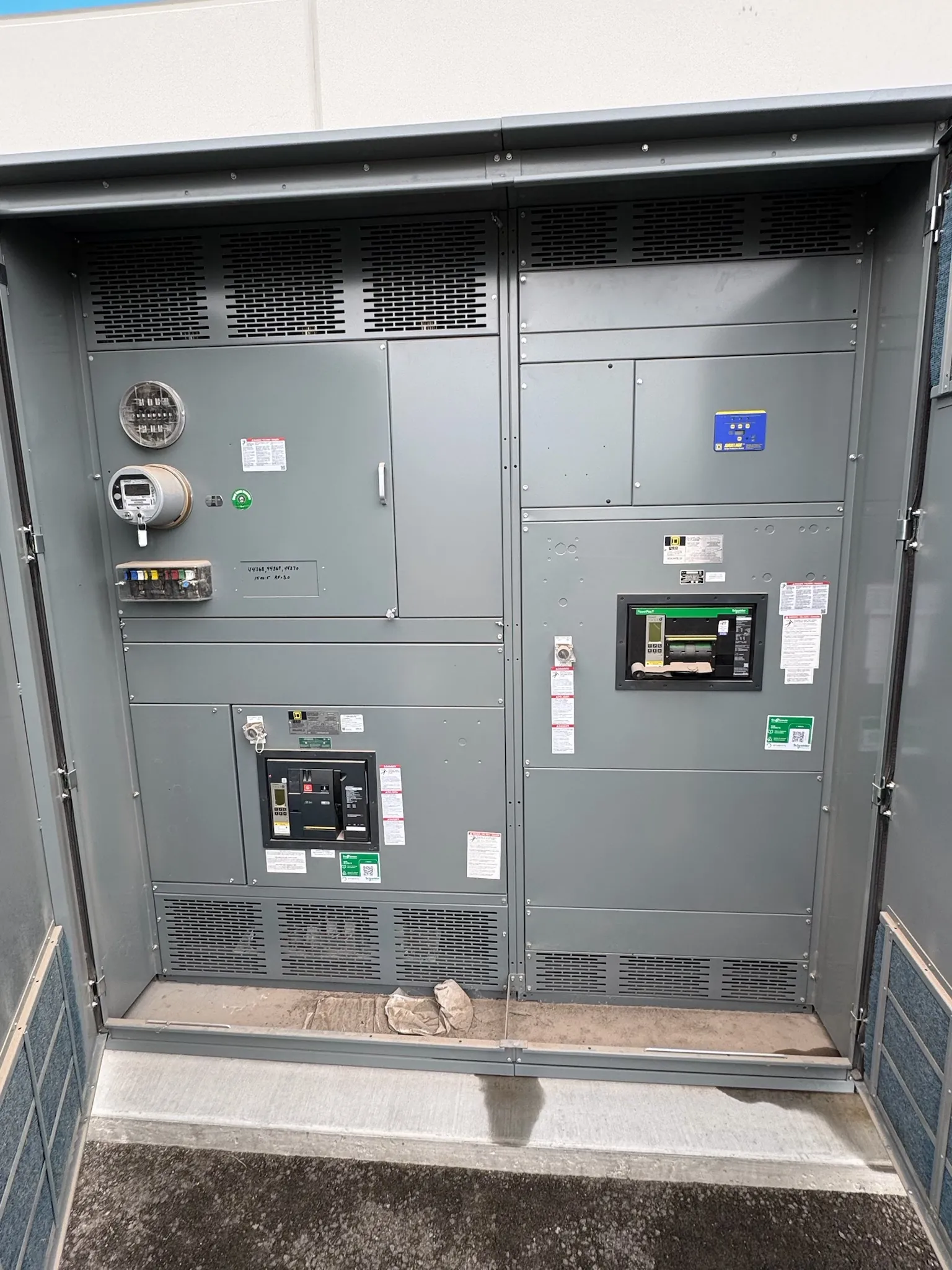
What a 400 A Rating Means for Switchgear and Switchboards
A 400 A designation identifies a current rating associated with a particular part of an assembly, such as a bus or main device. It does not, by itself, describe the equipment’s system voltage, fault-current capability, protective-device settings, or suitability for a specific facility. Those details must be selected and confirmed for the application. A custom assembly is engineered around the complete electrical and physical requirements—not a single ampacity label.
For a Nevada project, start by clarifying what “400 A” means in the design documents: a bus rating, a main protective-device rating, a service or feeder requirement, or another specified value. These terms are related but not interchangeable. The one-line diagram, load information, utility requirements where applicable, and project specifications help establish the intended scope.
Relate the 400 A Bus or Main to Calculated Load
The bus and main device have different functions. The bus carries current through the assembly; the main device provides a means of overcurrent protection and may serve as the assembly’s incoming disconnect. A 400 A bus does not automatically mean the installation can support a 400 A calculated load, nor does a 400 A main rating establish the bus rating. The design must identify each component’s rating and how the assembly is intended to operate.
Load calculations should account for the connected equipment, expected operating patterns, applicable demand assumptions, and the governing project requirements. A qualified electrical engineer or other responsible design professional should determine the calculated load and confirm compliance with applicable codes and standards. The manufacturer can use the approved design information to configure equipment, but cannot determine site demand from the ampacity requested alone.
Check Continuous Duty, Ambient Conditions, and Installation
Whether loads operate continuously matters when selecting equipment and protective devices. The designer must apply the rules and design criteria relevant to the specific installation rather than treating the nameplate value as an unrestricted operating target. Ambient temperature, ventilation, heat from adjacent equipment, enclosure construction, conductor arrangement, and installation location can affect thermal performance and the final configuration.
Indoor and outdoor installations may call for different enclosures and environmental provisions. The room layout, available wall or floor space, cable entry direction, working clearances, and access for maintenance also affect design. In Nevada, site conditions can vary considerably by facility and location; the actual environment and installation arrangement should be documented instead of assumed from the state alone.
Plan Future Expansion Without Overstating Capacity
Future growth may influence the choice of bus rating, main-device arrangement, section layout, and spare spaces or provisions. But a nominal 400 A rating does not guarantee room for later loads. Expansion depends on the calculated demand, allowable loading under the design, available fault-current capacity, physical space, thermal conditions, and the ratings of downstream equipment and conductors.
Discuss likely additions during design, including their expected load, voltage, connection type, and timing if known. An engineer can evaluate whether to provide space or other project-specific provisions while keeping present and future requirements distinct. Reserving a position in an assembly is not the same as confirming that the electrical system can support the future load.
Confirm Protective Devices, Fault Ratings, and Applicable Standards
Protective-device selection and settings require coordination with the system design, including upstream and downstream devices, available fault current, conductor protection, and the facility’s operating requirements. A 400 A device rating alone does not establish suitable settings or selective coordination. The responsible engineer must review the system and confirm the decisions for the specific installation.
Short-circuit ratings are separate from ampacity. The required assembly rating depends on the available fault current at the equipment location and the approved design. Enclosure ratings are also separate: they address specified environmental conditions and must match the installation. Applicable product standards depend on equipment type; UL 891 applies to applicable low-voltage switchboards, not every form of switchgear or other distribution equipment. Ratings, listings, and project requirements must be confirmed for the proposed assembly.
Information Needed to Specify or Quote a 400 A Assembly
Useful quotation inputs include the one-line diagram, system voltage and phase, intended bus and main ratings, calculated load, incoming and outgoing conductor details, protective-device requirements, available fault-current information, enclosure and mounting requirements, and site conditions. Identify metering, control, communications, cable-entry preferences, and expected expansion needs where relevant. Note any governing specifications or required submittals, but have the project team confirm their applicability.
Our U.S.-built custom equipment uses all-American components and can be shipped nationwide, including to Nevada. Lead time depends on the finalized design, component selection, and project requirements; no schedule should be assumed before review. Providing complete, consistent engineering documents helps the manufacturer evaluate the requested configuration and identify details that require resolution before production.