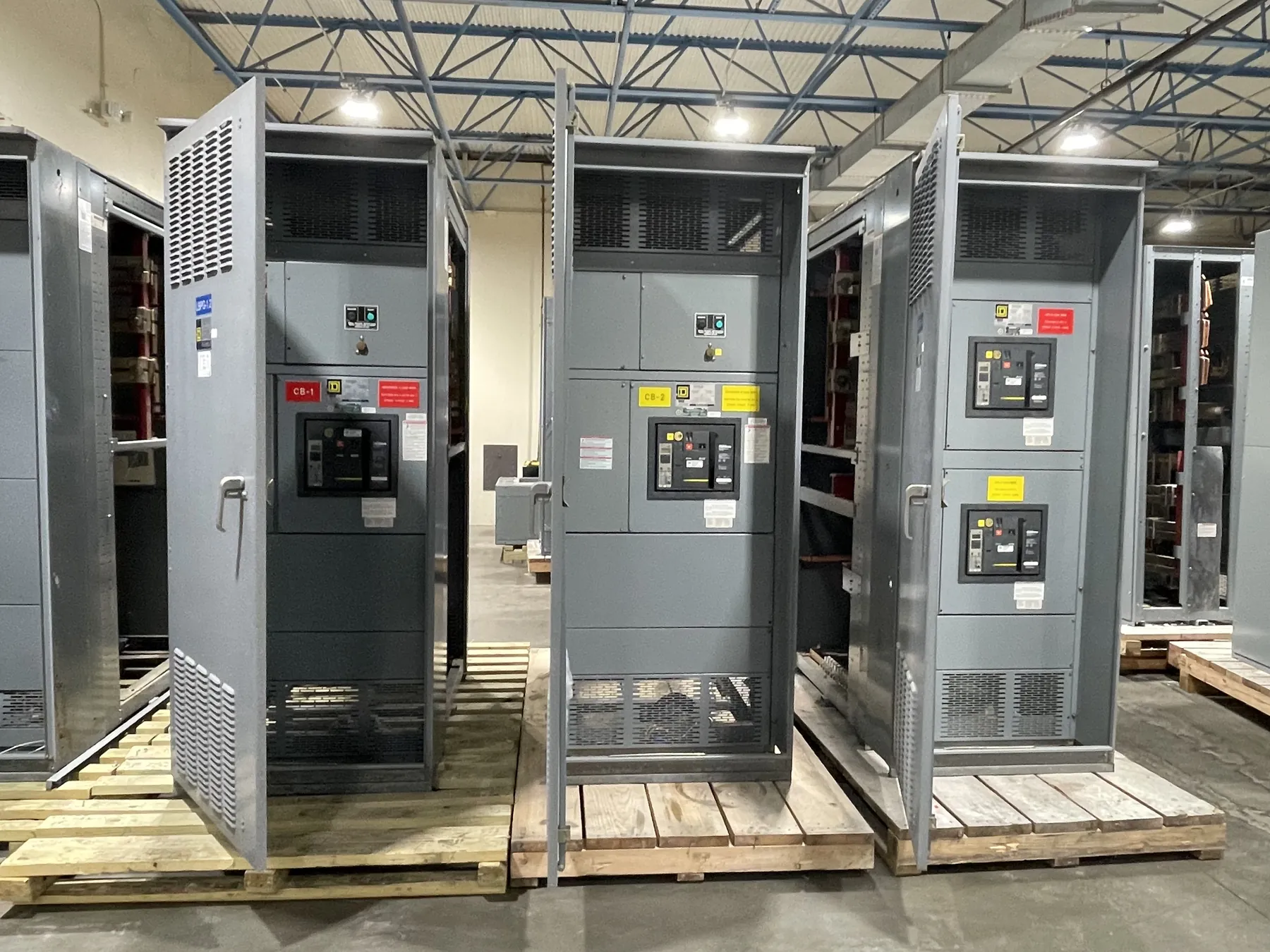
U.S.-Built Switchgear for Nevada Facilities
Nevada projects often combine demanding site conditions with tight construction schedules, long feeder runs, and equipment that must fit an existing electrical room. A U.S. manufacturer serving Nevada can help develop custom switchgear and power-distribution equipment around the project’s electrical requirements, physical layout, and operating needs. The assemblies described here are manufactured in the United States using all-American components and can ship nationwide, including to Nevada. That does not establish a particular delivery date: schedule depends on the approved design, component requirements, production planning, and shipping arrangements.
The right starting point is the function of the equipment, not a product label alone. A project may need a low-voltage switchboard, a switchgear assembly, or a coordinated distribution arrangement with other equipment. Those terms are not interchangeable in every specification. The electrical engineer and equipment manufacturer should confirm the intended application, applicable standards, and boundaries of the assembly before a design or quote is finalized.
Define the Distribution Scope Before Selecting Equipment
Switchgear and switchboards organize, protect, and distribute electrical power, but their configuration depends on the system and the role each section plays. A main distribution assembly may receive power from a transformer or another source and feed downstream panels or equipment. A project may also require multiple sections, provisions for future circuits, or a specific arrangement of incoming and outgoing connections. These choices affect enclosure dimensions, bus arrangement, breaker selection, and the interfaces with adjacent equipment.
For low-voltage switchboards, UL 891 may be relevant when the equipment and project requirements fall within its scope. It should not be treated as a blanket standard for every switchgear product or application. In particular, it does not establish coverage for medium- or high-voltage equipment, busway, or all products described broadly as switchgear. Applicable construction standards, listing requirements, and project specifications must be confirmed for the actual equipment being quoted.
Ratings, System Voltage, and Protection Need Separate Review
A rating is not the same thing as system voltage. Equipment selection may involve voltage, continuous current, short-circuit withstand or interrupting requirements, and other ratings that describe different aspects of performance. The required values depend on the electrical system, available fault current, protective-device coordination, and the equipment’s position in the distribution network. A rating should not be assumed suitable merely because it appears higher than a system voltage or load value.
Breaker type and trip functions also affect how the assembly fits the protection design. The engineer may need to coordinate upstream and downstream devices, account for transformer characteristics, and verify the available fault-current information. If the project has arc-flash requirements, those belong in the broader engineering review; an equipment quote alone cannot determine a facility’s arc-flash risk or establish safe operating practices. Final ratings and protective details require qualified engineering review and confirmation against site information and project documents.
Account for Nevada Site and Facility Conditions
Nevada is not one uniform installation environment. A project’s location, elevation, ambient conditions, dust exposure, indoor or outdoor placement, and enclosure location can influence equipment requirements. The electrical room may also have limited working and installation space, restricted access, existing cable routes, or floor and wall constraints. These conditions matter to enclosure selection, heat management, cable entry, service access, and how equipment is delivered to its final position.
For an existing facility, field dimensions and the relationship to transformers, panels, conduits, and other connected equipment can be as important as the one-line diagram. For new construction, coordination with the electrical-room layout and construction schedule helps identify conflicts before fabrication. Shipping to Nevada is available from a U.S. manufacturer, but unloading, rigging, access to the room, and site receiving arrangements should be planned by the project team. No general shipping statement can substitute for reviewing the destination and installation constraints.
Information That Helps Build a Useful Quote
A complete quotation begins with enough information to distinguish a preliminary budget request from a design-ready equipment package. Useful inputs commonly include the project location, service characteristics, one-line diagram, load or feeder schedule, specified equipment type, and the project’s required standards or specifications. Drawings showing the electrical room, equipment arrangement, cable entry, and adjacent equipment can clarify physical requirements. Where available, include the engineer’s known fault-current and protection criteria rather than asking the manufacturer to infer them.
Also identify the required incoming and outgoing connections, breaker preferences or schedules, enclosure conditions, metering or control provisions, and any planned future circuits. State whether the request concerns new construction, replacement equipment, or an expansion, and share the project milestone dates and anticipated approval sequence. If information is still being developed, clearly mark open items. That helps separate confirmed requirements from assumptions and reduces the risk of quoting an unsuitable configuration.
From Project Review to Manufactured Assembly
Once the project scope is understood, the equipment configuration can be developed for review against the supplied documents and interfaces. The customer and project engineer should resolve questions about ratings, dimensions, connections, protection, applicable standards, and required documentation before the design is released for manufacture. Changes to those inputs may affect the configuration, price, and schedule, so the approved drawings and specification should represent the intended installation as accurately as possible.
Because the equipment is manufactured in the United States and uses all-American components, projects can be discussed directly with a manufacturer rather than routed through a broker. Short lead times are a stated objective, not a guaranteed duration; actual timing must be confirmed for the selected design and current production requirements. For Nevada buyers, the practical next step is to provide the available electrical and layout information, identify what remains undecided, and request confirmation of the proposed equipment scope, ratings, listing applicability, and schedule before procurement.