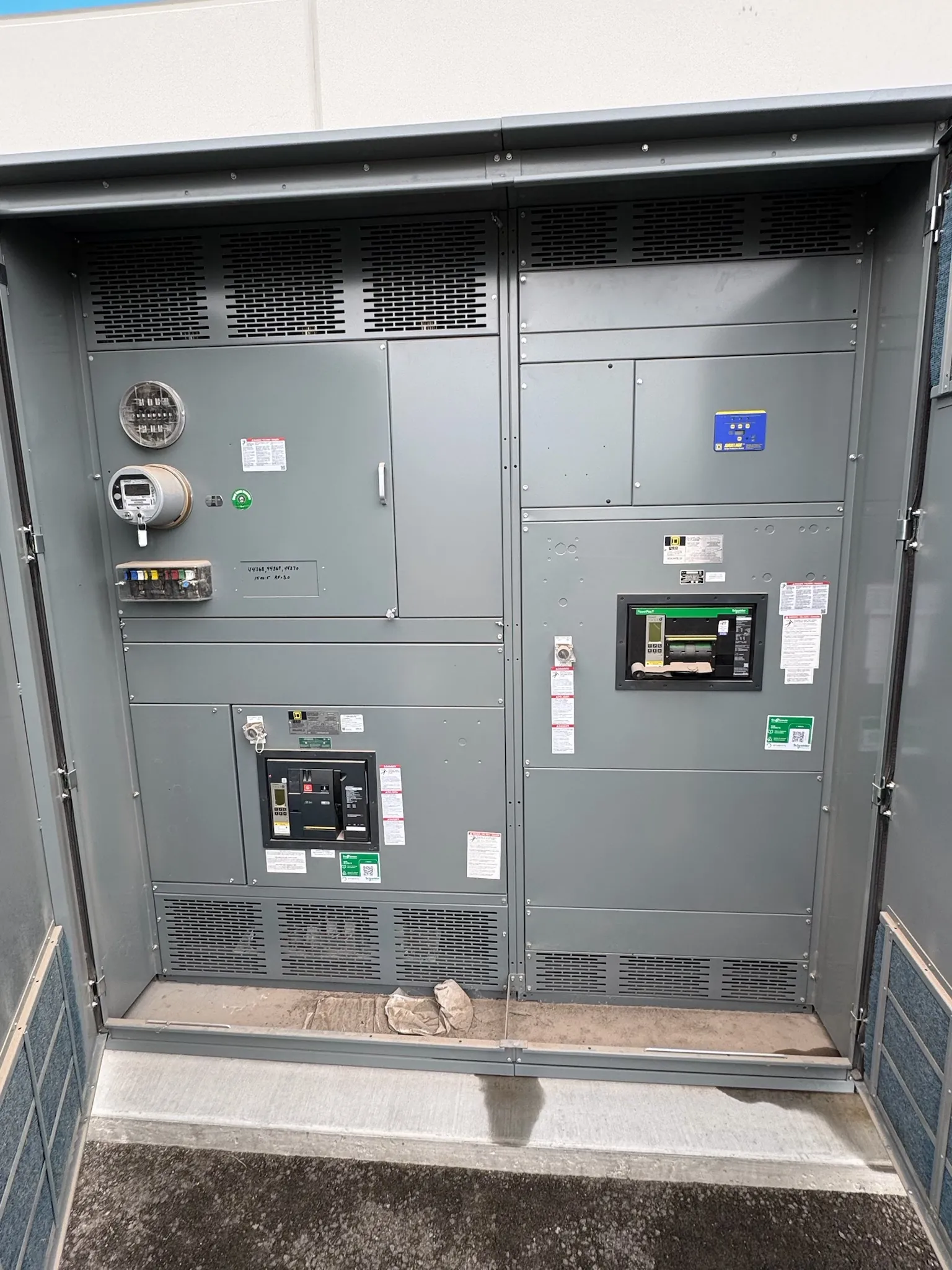
What an Ampacity Specification Describes
A new switchgear or switchboard lineup must carry its intended current under the conditions for which it is designed. The main bus, main device and individual feeders may have different continuous-current ratings, so one number cannot describe the entire assembly. For a Nevada project, specify the ratings at each relevant point and provide the operating conditions the manufacturer needs to assess the proposed construction.
Equipment current ratings are not a substitute for a project load calculation. A qualified electrical engineer should determine the design load, apply the requirements that govern the installation and verify that the equipment ratings fit the resulting duty. A U.S. manufacturer can then review the requested bus, devices and enclosure as an integrated design rather than selecting parts independently.
Develop the Load and Demand Basis
Start with a schedule of connected loads and distinguish continuous operation from intermittent or seasonal duty. Motors, heating equipment, process lines, lighting and other circuits may operate in different combinations. Identify the assumptions behind demand and diversity, including operating hours and the largest credible simultaneous load. Document unusual starting or cycling conditions rather than hiding them in a single estimated total.
Separate each source and operating mode when normal and standby power can feed the same equipment. The load imposed during transfer, maintenance or an alternate configuration may differ from the usual condition. The project engineer should establish applicable conductor and protective-device requirements as well as the desired capacity of the equipment that connects them.
Coordinate Bus, Devices and Feeders
Main bus capacity must be considered alongside the main disconnect or breaker, incoming connections and each outgoing feeder. A larger horizontal bus does not automatically increase the rating of a smaller device or connection. Similarly, feeder space and bus capacity are separate questions: a section may have physical room for another circuit without having sufficient electrical capacity for the additional load.
Ask the manufacturer to identify the continuous-current ratings of the proposed bus and devices on the drawings, along with any constraints on loading or installation. Conductor material, joint design, insulation, spacing and ventilation all form part of the assembly design. Equipment ratings and protective settings should be reviewed together, but they are not interchangeable.
Include Temperature and Installation Conditions
Published equipment ratings depend on stated conditions. Record the expected ambient temperature at the actual installation, whether the assembly is indoors or outdoors, its ventilation and any restricted spaces around it. A Nevada site can impose environmental demands that differ from the assumptions in a standard equipment data sheet; the project should provide its own documented design criteria.
Heat from adjacent equipment, solar exposure, altitude and enclosure construction may also affect the design. Ask the manufacturer whether the proposed assembly and its components require derating or special provisions for the stated site. Do not assume that adding cooling or changing an enclosure will preserve a rating without review of the complete equipment design and documentation.
Plan Spare Capacity Intentionally
Future load growth should be described in terms of the type, size and likely operating pattern of new loads, not just a blanket request for spare capacity. Distinguish installed spare breakers, provisions for future devices, bus capacity and physical space for a later extension. Each choice affects the present configuration, and a future connection may require a new fault and coordination review.
Consider whether a staged buildout, additional process equipment or a second source could change the maximum demand. Provide the manufacturer's design team with the intended expansion scenario and any limits on the electrical room or outdoor pad. An oversized main bus cannot by itself resolve limitations in the utility service, transformer, protective devices or downstream conductors.
Review the Quote and Submittal
A useful request for new U.S.-built equipment includes the one-line diagram, load schedule, system voltage, required main and feeder currents, available fault current, enclosure environment and delivery location. Include the intended schedule and identify required drawings, inspection records and origin documentation if U.S.-made components are specified. The proposed scope should state which equipment and services are included and which remain with others.
Before approving the submittal, the qualified engineer should check current ratings against calculated demand and actual conditions, then coordinate the assembly with upstream and downstream equipment. The installer and site team should also verify cable interfaces and working space. This shared review turns an ampacity figure into an equipment specification that reflects how the system will actually operate.