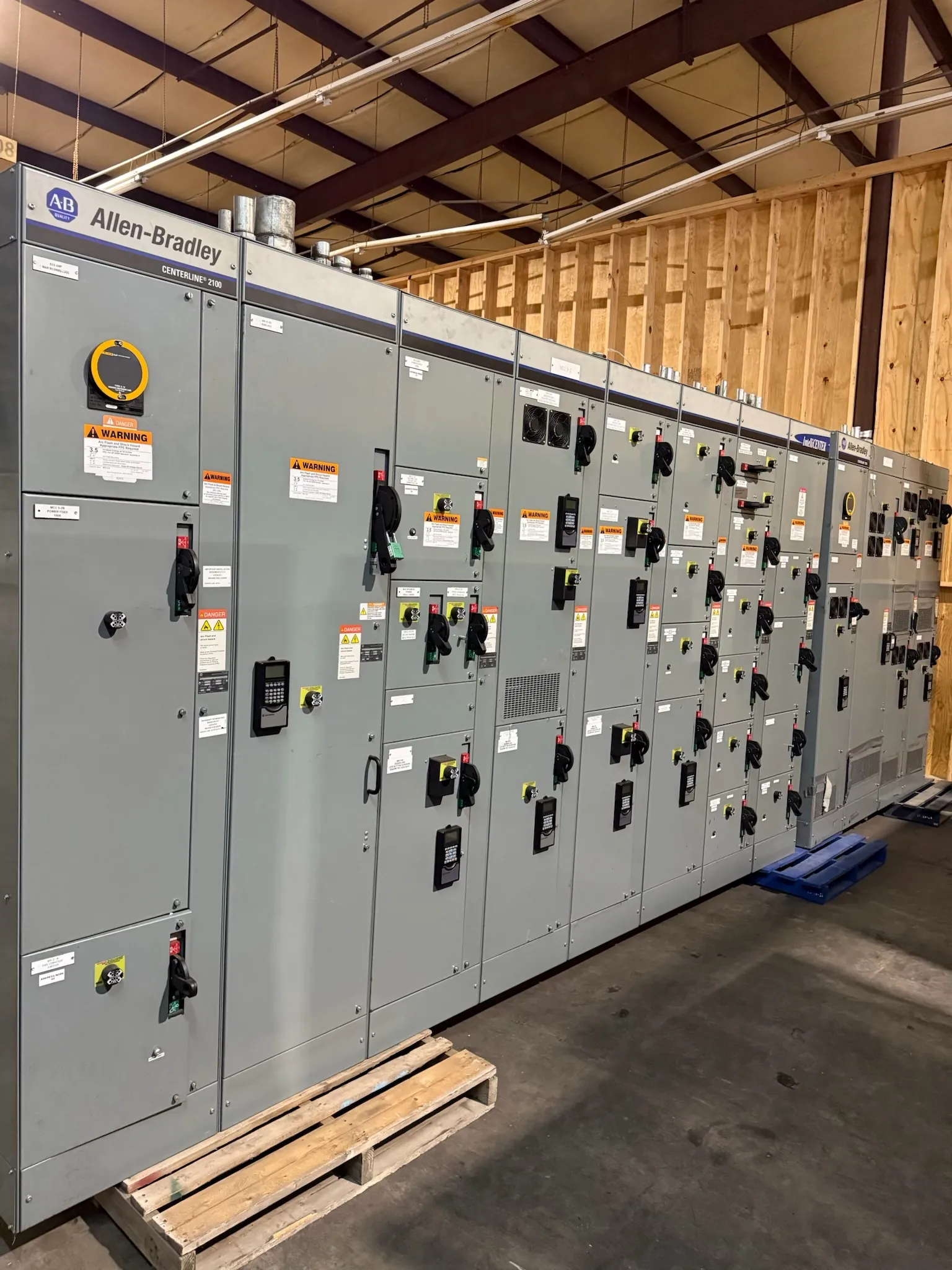
What a 1000 A Rating Means for Switchgear and Switchboards
A 1000 A designation identifies a current rating associated with a particular part of an assembly, such as its bus or main device. It does not, by itself, establish how much load a facility can safely connect, what voltage the equipment serves, or whether every component in the lineup carries the same rating. For Nevada facilities planning new distribution equipment, the first step is to identify exactly what the rating applies to and compare it with the electrical design and site conditions.
A custom assembly can be configured around project requirements, but a 1000 A rating should not be treated as a default product specification or as evidence of a particular available configuration. The manufacturer and the project’s qualified electrical professionals must confirm the proposed design, applicable ratings, listings, and interfaces before equipment is specified.
Relate the Bus and Main Rating to the Calculated Load
The bus rating and the main protective-device rating are related design choices, but they are not interchangeable. The bus carries current through the assembly; the main device provides a defined point of protection and control. A project may call for a 1000 A bus, a 1000 A main, or another arrangement. The required configuration depends on the one-line diagram, load calculation, source arrangement, and applicable electrical requirements—not just the nameplate figure someone expects to see.
Load calculations should account for the facility’s actual and anticipated electrical use, including how loads operate over time and whether any are continuous. Connected equipment totals alone do not establish the required switchboard rating. A qualified engineer or other responsible design professional should determine the design load and applicable factors, then evaluate whether the proposed bus and main arrangement is appropriate.
Account for Continuous Duty and Ambient Conditions — 1000 A Switchgear and Switchboards
Continuous loads can affect equipment selection and protection requirements. The design team should identify loads expected to operate for extended periods and apply the rules relevant to the project’s jurisdiction and equipment configuration. Do not assume that a 1000 A label means the assembly may carry that current indefinitely under every installation condition.
Ambient temperature, ventilation, enclosure construction, nearby heat sources, and installation location can influence equipment application. Nevada sites vary in climate and facility conditions, so the intended indoor or outdoor location, exposure, available working space, and cooling or ventilation arrangement should be documented. Any necessary adjustment or equipment limitation must be confirmed by the equipment manufacturer and qualified engineering professionals for the specific design.
Plan Expansion Without Treating Spare Capacity as Guaranteed
Future expansion may affect the initial choice of bus, main device, section layout, and outgoing feeder provisions. A facility planning additional process loads, building areas, or electrical distribution should describe those plans during design and quotation. Engineers can then assess whether the proposed configuration accommodates the anticipated scope and whether the source, conductors, protective devices, and downstream distribution can support it.
Leaving physical space or unused feeder positions does not automatically create electrical capacity. Future additions may require changes to load calculations, fault-current evaluation, protection coordination, and other parts of the distribution system. A useful specification distinguishes between space reserved for later equipment and capacity that has been analyzed for future operation.
Confirm Protective-Device, Short-Circuit, and Enclosure Ratings Separately
Current rating is only one part of equipment selection. The main and feeder protective devices must be selected and coordinated for the system and loads. The assembly’s short-circuit rating must also be evaluated against the available fault current at its installation point, with appropriate attention to the source and upstream protective equipment. A 1000 A bus or main rating does not establish the short-circuit rating or prove that a proposed device combination is suitable.
Enclosure details require separate review as well. Indoor or outdoor use, environmental exposure, access and cable-entry requirements, and the physical location all affect the specification. The project team should confirm enclosure type and construction for the actual site rather than infer suitability from ampacity. Applicable listings also need confirmation for the particular product and configuration. UL 891 applies to applicable low-voltage switchboards; it should not be read as covering every switchgear product or other equipment category.
Provide the Information Needed to Specify a 1000 A Assembly
For a useful quotation, provide the one-line diagram and load information, system voltage, source and grounding details, expected fault-current data, protective-device requirements, feeder schedule, enclosure location, cable or bus connections, and expansion plans. Identify which component is intended to carry the 1000 A designation and note any project specifications governing listings, dimensions, or interfaces. Missing or preliminary data should be identified clearly so open design questions can be resolved before the configuration is finalized.
We manufacture new custom switchgear and power-distribution equipment in the USA using all-American components and ship nationwide, including to Nevada. Lead time depends on the confirmed design and project requirements; it should be established during quotation rather than assumed from the ampacity alone. Ratings, listings, and interfaces are confirmed for the specific assembly, with qualified engineering and site review needed to determine whether a proposed design fits the installation.