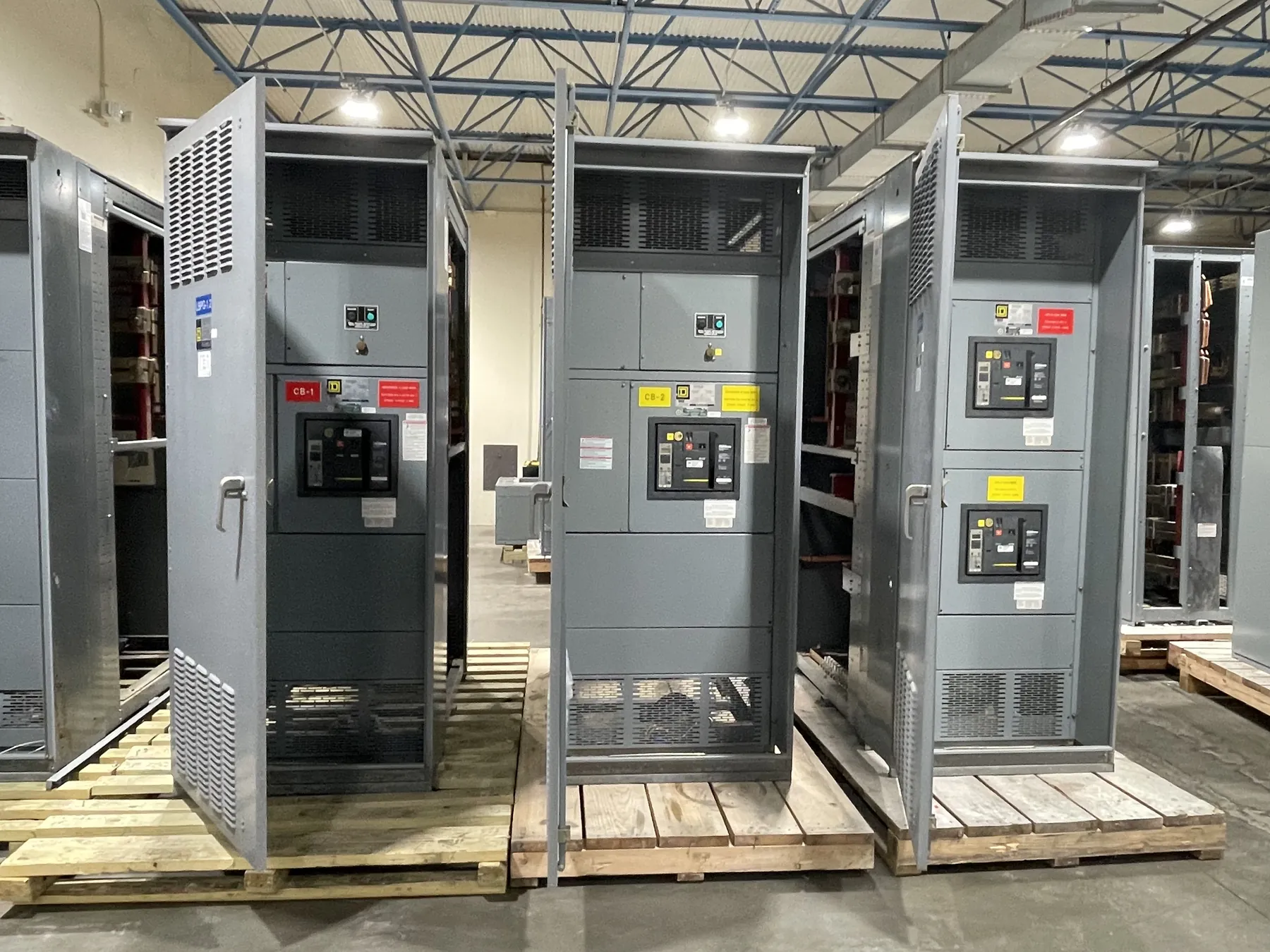
What a 2500 A Rating Means for Switchgear and Switchboards
A 2500 A designation identifies a current rating associated with a specified part of an assembly, such as its bus or main device. It is not, by itself, a complete equipment specification or a statement that the assembly is suitable for every system operating at that current. The design must match the electrical system, calculated load, installation conditions and applicable project requirements. For a Nevada facility, the same engineering questions apply whether the equipment is part of a new building, an expansion or a replacement distribution arrangement.
It is also important to distinguish current rating from system voltage. A 2500 A bus designation does not establish the assembly’s voltage rating, short-circuit capability, protective-device characteristics or enclosure suitability. Those attributes must be selected and confirmed separately for the proposed equipment and installation. A 2500 A configuration should not be assumed available or appropriate before a manufacturer and qualified project professionals review the application.
Relating the 2500 A Bus or Main to Calculated Load
The bus rating and main-device rating are related, but they are not interchangeable descriptions. The bus carries current through the assembly; a main device is selected and configured to provide a particular connection and protection function. The design must account for the calculated demand, the applicable continuous and noncontinuous loads, load characteristics and the project’s governing code requirements. A nominal peak estimate alone is not a substitute for a documented load calculation.
When reviewing a proposed 2500 A rating, engineers need to know what the rating applies to: the main device, the bus, or both. They also need the system one-line diagram, source information, feeder arrangement and the expected operating profile. Motor starting, changing process loads, harmonics or other unusual load behavior may affect equipment selection and coordination. The appropriate design depends on the complete system, not just the ampacity number shown on a preliminary schedule.
Continuous Duty, Ambient Conditions and Installation
Loads expected to operate for extended periods deserve particular attention. The engineer must evaluate continuous-duty requirements and select equipment and overcurrent protection accordingly; the 2500 A label alone does not establish how a particular assembly may be loaded. Applicable equipment instructions, project specifications and code requirements all matter.
Ambient temperature and the physical installation can also affect the design. Heat from adjacent equipment, ventilation, indoor or outdoor placement, altitude, enclosure construction and available working space may be relevant, depending on the product and site. Nevada locations vary in climate and facility conditions, so the installation environment should be documented rather than inferred from the state name. Confirming these details early helps prevent a mismatch between a proposed assembly and the room or site where it must operate.
Future Expansion Without Oversizing by Assumption
Planning for later growth can influence bus arrangement, spare provisions, feeder spaces and the location of future connections. However, choosing a 2500 A rating simply to leave room for expansion may add complexity without resolving future system needs. The design team should identify likely additions, their estimated loads, anticipated timing and whether those loads would operate simultaneously with existing equipment.
Expansion planning also needs to consider available upstream capacity, downstream distribution, protective-device coordination and physical room for additional equipment. A future feeder space does not guarantee that the source, bus, enclosure or protection scheme will support a later load. Documenting a realistic expansion scenario gives the manufacturer and engineer a basis for evaluating the assembly and any required interfaces.
Confirming Protection, Short-Circuit and Enclosure Ratings
Protective-device selection and coordination must be reviewed against the system’s available fault current, source characteristics and downstream devices. The assembly’s short-circuit rating is a separate specification that must be suitable for the installation and confirmed for the proposed configuration. Neither the 2500 A bus rating nor the main rating establishes that short-circuit capability.
Enclosure type and construction also require a separate decision based on location, exposure and project requirements. Voltage rating, phase and wire arrangement, incoming connection method, termination space, cable entry, metering and control needs should be defined with the same care. UL 891 is relevant to applicable low-voltage switchboards, but it should not be treated as a blanket designation for all switchgear or every product. Any applicable listing, standard and product scope must be verified for the specific assembly.
Information Needed to Evaluate a 2500 A Specification
A useful quotation review starts with the one-line diagram, load information, system voltage, source and fault-current data, and the project specification. Include the desired bus and main ratings, protective-device requirements, enclosure conditions, cable or bus connections, metering, control interfaces and anticipated expansion. Also identify the installation location and any access or room constraints that could affect dimensions or arrangement.
As a U.S. manufacturer, we build custom switchgear and power-distribution equipment with all-American components, support short lead times and ship nationwide, including to Nevada. Final product ratings, applicable listings, configuration and schedule depend on engineering review and confirmation of project requirements. A qualified electrical engineer should evaluate system design and code implications, while the manufacturer confirms the proposed equipment details for the specific application.