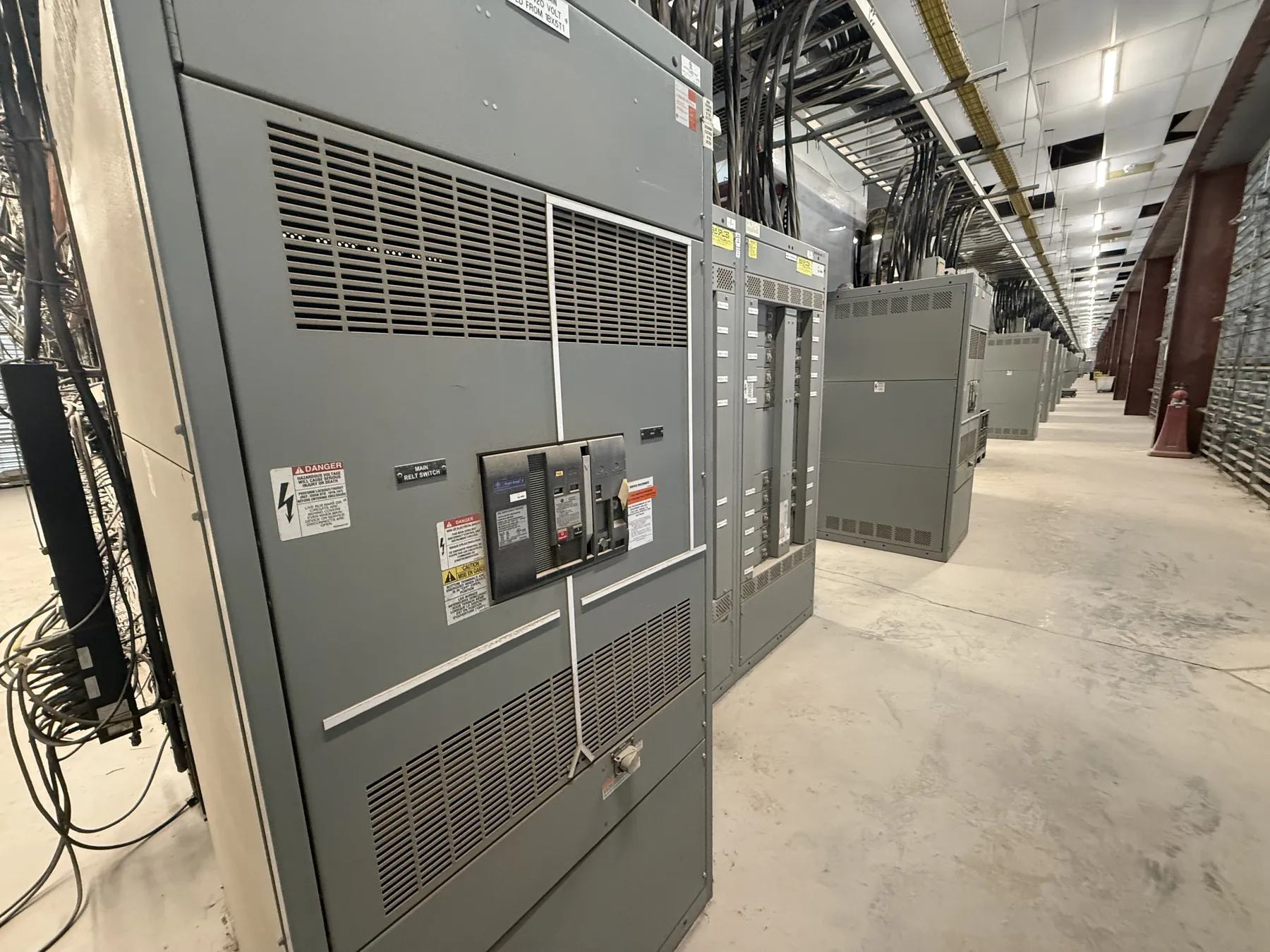
Service Entrance Switchboards for 120/208 V Systems
A 120/208 V service entrance switchboard receives utility power and provides a central point for service disconnecting and distribution. It is commonly considered for facilities with three-phase, four-wire service, where line-to-line voltage is 208 V and line-to-neutral voltage is 120 V. Those voltage values describe the system, not the switchboard’s current or short-circuit ratings. The correct equipment configuration depends on the utility service, the building’s load, applicable requirements, and the specific design approved for the project.
These switchboards are custom manufactured to project requirements using all-American components and built in the United States. Equipment can be shipped nationwide, including to Nevada. For a Nevada installation, the project team should account for the serving utility’s requirements, the local authority having jurisdiction, site access, and the facility’s installation conditions when developing specifications and delivery planning.
Confirm the Service Configuration and Neutral
Before selecting a service section, confirm whether the utility will provide a three-phase, four-wire 120/208 V service and how the service conductors will enter the equipment. A four-wire arrangement includes a neutral for line-to-neutral loads; the neutral’s construction and rating must suit the connected loads and project design. Loads served at 208 V line-to-line and 120 V line-to-neutral should be identified so engineers can assess distribution and phase loading rather than assume a balanced arrangement.
Provide the anticipated load schedule, including major equipment, motor loads, and any significant nonlinear or line-to-neutral loads. That information helps the design team evaluate feeder and branch distribution, neutral requirements, and space for the intended outgoing devices. The required number and type of sections, mains, and distribution devices depend on the approved one-line diagram and equipment documentation—not simply on the nominal service voltage.
Coordinate Utility Metering and the Main Disconnect
Metering arrangements are set by the serving utility and project requirements. Establish whether metering is supplied or specified by the utility, where it must be located, and what compartments, provisions, or access arrangements the switchboard must accommodate. Requirements can differ by utility and project, so they should be confirmed early rather than assumed from another installation. The utility’s metering interface and the switchboard manufacturer’s available construction need to align.
The service main disconnect also needs to match the electrical design and approval requirements. Confirm the intended main-device type and rating, the service conductor arrangement, and any required provisions for the utility or inspection authority. A switchboard’s current rating is distinct from its 120/208 V system voltage. Both must be suitable for the application, and the final device and bus selections require review against the load calculation and project documents.
Establish Available Fault Current and Bus Rating
Request the available fault current at the proposed service point from the utility or responsible project engineer. This value is essential to selecting equipment with appropriate short-circuit ratings and to coordinating the main device and downstream protective devices. Do not infer it from the service voltage, transformer size alone, or a rating used on another site. The source configuration and installation details affect the value, and it must be confirmed for the project.
Bus rating and short-circuit capability are different considerations. The bus must be selected for the calculated service and distribution loads, while the equipment’s short-circuit rating must be suitable for the available fault current and the protective-device arrangement. Where series ratings or other coordination approaches are proposed, qualified electrical engineers must verify that the specific combination is permitted and appropriate for the installation. Final ratings, construction, and any applicable listing must be confirmed in the equipment documentation.
Address Service Grounding and Authority Requirements
Service grounding and bonding provisions must follow the approved electrical design and applicable requirements for the installation. The design team should identify how the service neutral and grounding conductors are arranged at the service equipment, and confirm the required terminals, bonding provisions, and conductor entry details. These choices depend on the service configuration and cannot be settled from a product description alone.
Identify the serving utility and authority having jurisdiction before the switchboard design is finalized. Their requirements may affect metering compartments, service disconnect details, labeling, access, or other construction features. Provide project specifications or written requirements where available. Final acceptance depends on the applicable rules and project review; no generic product description can establish utility approval or code compliance for a particular site.
Information to Include in a Switchboard Inquiry
For a useful quotation and design review, provide the one-line diagram, load information, utility service and metering requirements, available fault current, and the intended main and feeder device details. Include the required bus rating, neutral requirements, conductor entry direction, physical constraints, and any project specifications from the engineer or authority. Note the planned location and installation conditions, including access and space limitations, so the proposed section arrangement can be evaluated.
Custom 120/208 V service entrance switchboards are configured around these confirmed inputs. Before release, review the manufacturer’s equipment documentation for the actual system configuration, ratings, construction, and applicable listing. Ratings and available options vary by design; qualified engineering review and site-specific confirmation are necessary before equipment is specified or installed.