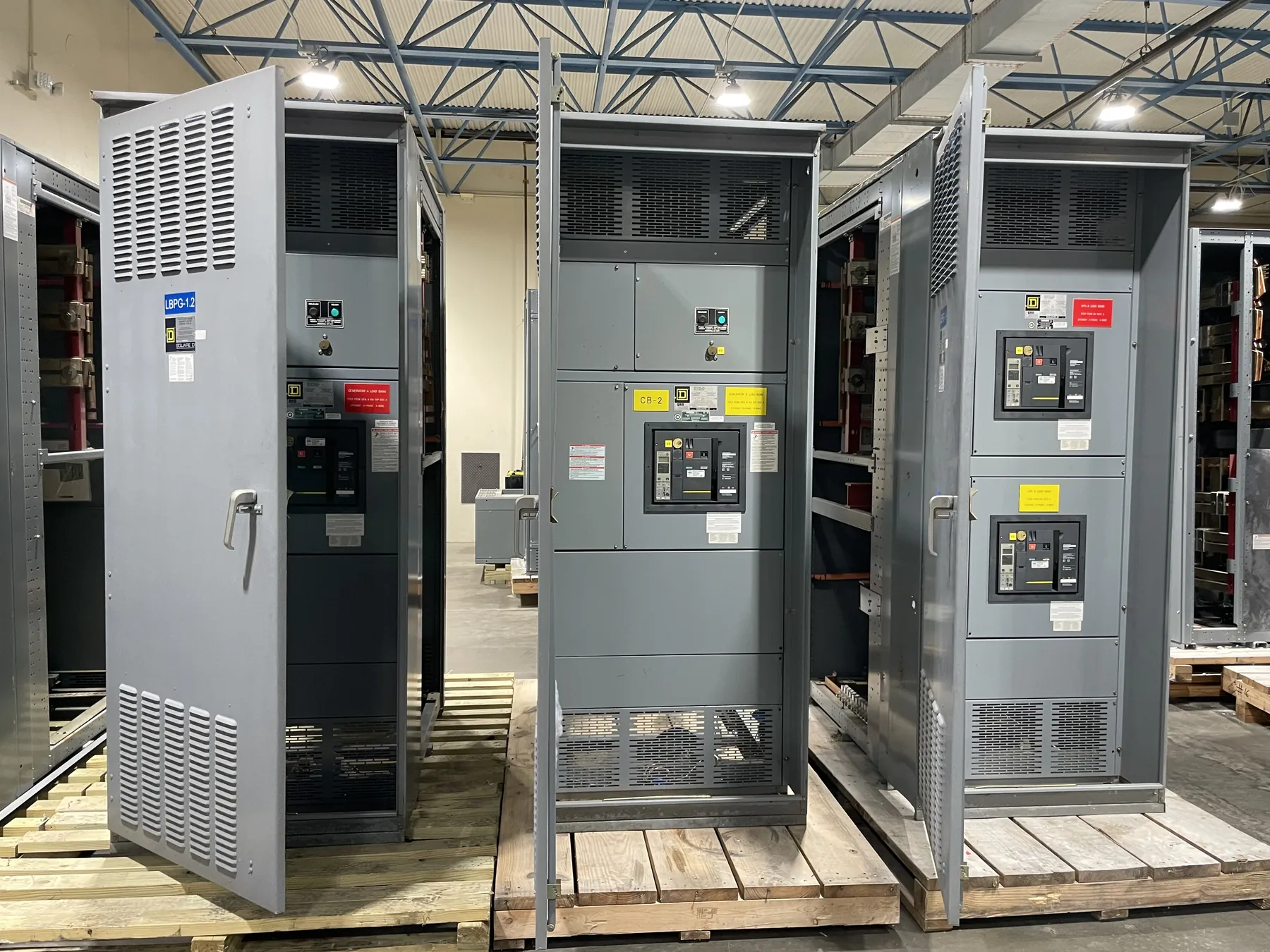
5 kV-Class Metal-Enclosed Switchgear for Medium-Voltage Applications
Metal-enclosed switchgear in the 5 kV class is designed for medium-voltage distribution applications where equipment must control, protect, and isolate power circuits within a grounded metal enclosure. The class designation is not, by itself, a complete voltage specification. The nominal voltage of the connected system and the equipment’s maximum voltage rating are distinct values, and both must suit the application. Insulation level, switching duty, interrupting duty, and the conditions at the installation site also affect selection. A qualified electrical engineer should review the system and project requirements before a configuration is established.
We manufacture new custom switchgear in the United States using all-American components. For Nevada facilities, the enclosure layout and interfaces should account for the electrical room, cable routing, access constraints, and delivery path. Equipment ships nationwide; the project team should confirm site dimensions, unloading arrangements, and the route from the receiving point to the final location.
Choose a Switching and Protective Device Arrangement
A 5 kV-class lineup may use switches with fuses, circuit breakers, or a combination of devices, depending on the circuit function and protection scheme. A switch-and-fuse arrangement can be considered for applications where the selected fuse provides the required overcurrent protection and the switch is suitable for the intended switching duty. Fuse selection must be coordinated with the protected equipment and the available system fault current; the switch rating alone does not establish that coordination.
Breaker-based arrangements offer a different protection and control approach. The specified breaker, associated relaying, and control power must be evaluated together with the system’s protection philosophy. Neither a switch-and-fuse configuration nor a breaker configuration is universally preferable. Feeder purpose, load characteristics, source arrangement, continuity requirements, maintenance strategy, and coordination with upstream and downstream devices help determine the appropriate design. The actual device options and ratings depend on the equipment documentation and the project requirements.
Barriers, Compartments, and Access Requirements
Metal-enclosed construction uses metal enclosures and may incorporate internal barriers or compartments to separate portions of the equipment. The number and arrangement of barriers, doors, removable panels, and cable compartments vary by design; “metal-enclosed” should not be taken to mean that every component is isolated in the same way. Confirm the proposed compartment layout, separation provisions, and access points against the specific assembly documentation.
Access is an operational and facility-layout choice as well as a product detail. Review working space, door swing, cable entry, control wiring access, and the location of adjacent equipment during design. Nevada sites can present differing room dimensions, ambient conditions, dust exposure, and installation logistics, so these conditions should be supplied for engineering review rather than assumed from the state or building type. Do not treat enclosure construction as a substitute for site-specific safety planning or qualified operating procedures.
Fault Duty, Grounding, and Protection Coordination
Fault-duty requirements must reflect the electrical system at the point where the switchgear will be installed. The available fault current, protective-device clearing characteristics, system grounding method, and equipment ratings are related but separate considerations. A short-circuit rating or interrupting rating should not be inferred from the 5 kV-class designation. Confirm the applicable ratings for the proposed assembly and devices using their documentation, then have qualified engineers evaluate whether they match the calculated system conditions.
Grounding details also require deliberate definition. Specify the system grounding arrangement and identify grounding connections, ground bus requirements, and any monitoring or protection functions relevant to the design. Coordination should include upstream and downstream protective devices, transformer characteristics where applicable, and the consequences of the selected protection settings or fuse characteristics. Those decisions require a system study and project review; they cannot be resolved from a product label alone.
Distinguishing Metal-Enclosed from Metal-Clad Construction
Metal-enclosed and metal-clad are not interchangeable descriptions. Metal-clad switchgear has a more specifically defined construction involving metal-compartmentalization features; metal-enclosed switchgear describes equipment housed in a metal enclosure without automatically establishing those same construction details. The intended construction, internal barriers, device arrangement, and applicable standards should therefore be stated explicitly in a specification. A 5 kV-class rating does not determine whether a lineup is metal-clad, nor does the enclosure description establish its electrical ratings.
For low-voltage switchboards, UL 891 may be relevant when the product and application fall within its scope. It is not a blanket standard for medium-voltage metal-enclosed switchgear. Listing status, applicable standards, and construction details must be confirmed for the specific product and project rather than assumed from a general product category.
Voltage, Cable Terminations, and Quotation Details
Before quotation, provide the nominal system voltage and grounding method, required equipment maximum voltage and insulation level, available fault-current information, feeder and main-device functions, and the intended protection approach. Include cable conductor information, quantity and arrangement, termination type, entry direction, and available termination space. Cable termination requirements can influence compartment dimensions and access, so they should be reviewed early. Also identify indoor or outdoor installation, ambient conditions, control and metering needs, and relevant room or site constraints.
Our engineering and manufacturing team uses those inputs to develop a proposed configuration for review. Confirm the final lineup, ratings, device options, barriers, grounding provisions, and termination details in the equipment documentation before release. Short lead times may be supported, but timing depends on the confirmed design and project requirements. For Nevada projects, shipping is available nationwide; the delivery plan and site receiving conditions should be coordinated with the project team.