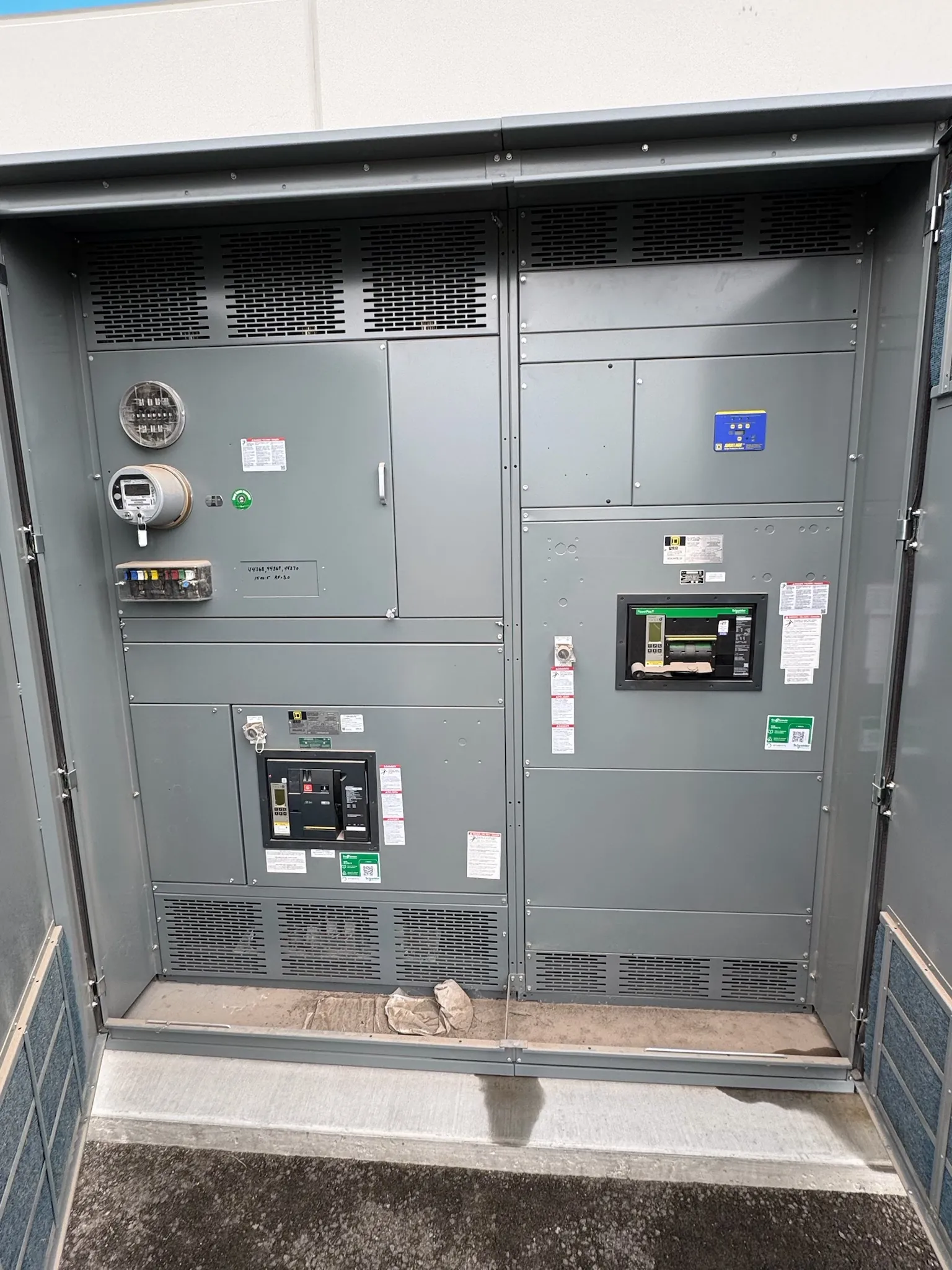
120/208 V Panelboards for Branch-Circuit Distribution
A 120/208 V electrical panelboard distributes power to branch circuits in facilities with a compatible three-phase, four-wire electrical system. The system commonly serves both 208 V line-to-line loads and 120 V line-to-neutral loads, but the panelboard must be selected for the actual source configuration and intended application. A voltage description by itself does not establish the required bus rating, interrupting capability, service suitability, or available options.
For a custom panelboard, begin with the connected loads and the upstream distribution point. The design team can use that information to determine whether the panelboard is intended for lighting and receptacle circuits, equipment loads, or a combination. The equipment documentation and project drawings should identify the actual available configuration and ratings before specifications are finalized.
Phase, Neutral, and Load Distribution
Confirm whether the source is three-phase, four-wire, and whether a neutral conductor is required at the panelboard. Loads operating at 120 V generally depend on a line-to-neutral connection, while 208 V loads use line-to-line connections. The circuit schedule should identify each load’s voltage and phase requirements, along with any neutral or grounding needs. Do not infer these details solely from the nominal 120/208 V designation.
Branch-circuit arrangement affects how loads are distributed across the panelboard. The engineer should review the mix of single-phase and three-phase circuits, planned spare positions, and expected load patterns. A practical layout makes circuits identifiable and supports the facility’s distribution plan, while the final arrangement must follow the project design and equipment configuration. Changes in connected loads can affect loading and distribution, so the circuit schedule should be reviewed as part of the design process.
Main Device, Feeder, and Bus Ratings
Panelboard selection involves distinct ratings that should not be treated as interchangeable. The main device rating, feeder conductors and protective devices, and panelboard bus rating each have a role in the distribution design. A main breaker may be part of the specified configuration, or the panelboard may be supplied for a different upstream arrangement. The correct choice depends on the one-line diagram, protection scheme, and project requirements.
Confirm the intended system voltage separately from the equipment’s current ratings. The available fault current at the panelboard location must also be established from the upstream system information and reviewed by qualified electrical professionals. The specified short-circuit or interrupting ratings need to be suitable for the installation and coordinated with the upstream protective equipment. Do not assume a rating from the nominal voltage or from the appearance of a similar panelboard.
Fault Duty and Upstream Coordination — Electrical Panelboards for 120/208 V
The panelboard operates as part of a distribution system, not as an isolated component. Its protective devices and fault-duty rating must be considered alongside the upstream transformer, feeder, and protective devices. Coordination requirements may affect breaker selection, device combinations, and the configuration available for the project. The engineer should evaluate the system study and applicable project criteria to establish the required ratings and protection approach.
Provide the manufacturer with the available fault-current information and the relevant upstream equipment details. If those values or system conditions are not yet established, they should be identified as pending rather than replaced with assumptions. Final suitability depends on the engineering review, equipment documentation, and site-specific electrical conditions.
Enclosure Selection and Installation Conditions — Electrical Panelboards for 120/208 V
Enclosure selection should reflect the installation location and surrounding conditions. Indoor electrical rooms, service spaces, and other environments can differ in exposure to dust, moisture, corrosion, or physical contact. The project specification should state the required enclosure type and any constraints on dimensions, access, cable entry, mounting, or working space. A suitable enclosure cannot be chosen accurately without considering where and how the panelboard will be installed.
For Nevada facilities, the project team should account for the actual site environment and logistics, including the electrical-room layout, access route, and conditions at the installation location. These considerations can affect enclosure requirements and equipment handling, but do not establish a particular enclosure rating or configuration. Confirm the final selection against the site documents and manufacturer’s equipment details.
Information for a Panelboard Quotation
Clear quotation inputs help establish whether a proposed configuration fits the project. Useful information includes the one-line diagram, circuit schedule, nominal system voltage and phase, neutral requirements, main-device preference, feeder details, required bus and device ratings, available fault current, enclosure requirements, and installation constraints. Identify any specified listing or project requirements explicitly so they can be reviewed for the applicable product and configuration.
We manufacture new custom electrical panelboards in the United States using all-American components, and equipment can ship nationwide, including to Nevada. Available configurations, ratings, listings, and lead-time expectations require confirmation against the project information and equipment documentation. Qualified engineering review and site-specific coordination remain essential before a panelboard is selected for installation.