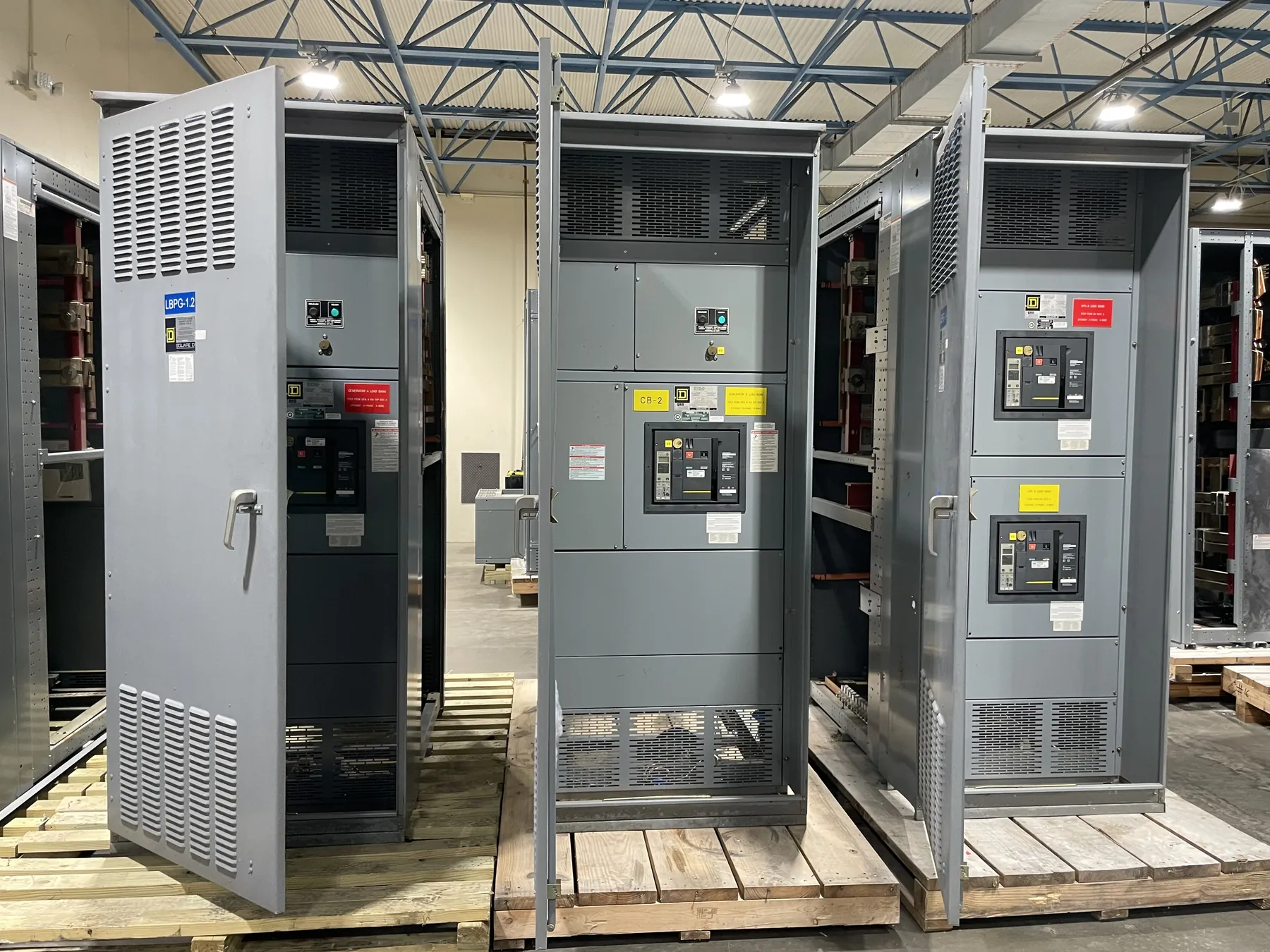
Electrical Panelboards for 277/480 V: Matching the Equipment to the System
A 277/480 V panelboard serves a three-phase, four-wire system when the installation and equipment are designed for that configuration. In this system, 480 V is the nominal line-to-line voltage, while 277 V is the nominal line-to-neutral voltage. Those values describe system voltage, not a panelboard’s current rating or fault-duty rating. Confirm the actual system configuration, grounding arrangement and available equipment options from the project documents and manufacturer’s equipment documentation before specifying a panelboard.
These panelboards can support different combinations of loads, but not every product or arrangement is available in every rating. Selection requires a review of the distribution design, connected loads, protection, space requirements and site conditions. Qualified electrical engineers should determine the design and verify its suitability for the installation.
Branch-Circuit Arrangements for Line-to-Line and Line-to-Neutral Loads
Branch-circuit planning starts with the voltage and phase requirements of each load. A 277 V lighting circuit uses one phase conductor and the neutral in a compatible four-wire system. A 480 V three-phase load typically connects phase conductors without using the neutral. Some equipment has other connection requirements, so the panel schedule and load documentation should identify voltage, phase, poles and neutral needs rather than relying on a general description.
Where single-phase line-to-neutral circuits are distributed across phases, the engineer should evaluate the phase loading and neutral current based on the actual load characteristics. Nonlinear loads, load diversity and the expected operating profile can affect that evaluation. A neutral should not be assumed to be full-size, reduced or unnecessary without engineering review and confirmation that the selected panelboard supports the specified arrangement.
Main and Feeder Ratings: Separate Current Rating from Voltage
The panelboard’s main device, bus and feeder components must be selected for the intended load and the applicable design requirements. The system’s 277/480 V designation does not establish a main rating or branch-breaker rating. Those ratings depend on the calculated load, conductor and protection design, equipment configuration and other project-specific factors. Confirm the available ratings and device arrangements for the particular panelboard under consideration.
A main-breaker panelboard and a main-lug-only configuration have different interfaces with upstream equipment. The choice depends on where the overcurrent protection is provided, how the panel is fed and the distribution architecture. Feeder-breaker quantity, pole count, frame or trip options, and spare spaces also affect the layout. Provide a current panel schedule or preliminary load list so the equipment can be reviewed against the intended circuits rather than selected from voltage alone.
Fault Duty and Coordination with Upstream Distribution
Available fault current at the panelboard is a key input to equipment selection. The assembly’s short-circuit or interrupting capability and the ratings of installed protective devices must be appropriate for the calculated conditions at the installation point. Do not infer fault duty from the nominal system voltage, a breaker’s current rating or an upstream device’s label. The available fault current and the applicable equipment ratings require review by qualified engineering personnel using project-specific system information.
Coordination with the upstream switchboard, transformer, feeder protection and other devices should be evaluated as part of the distribution design. Selectivity goals, protective-device settings and the effects of available device combinations can influence the panelboard configuration. Provide the upstream equipment details and the relevant one-line diagram for review. Any coordination conclusions should be based on the actual devices and project design, not on a generic panelboard description.
Enclosure, Mounting and Facility Conditions
Enclosure selection should reflect the installation location and environmental exposure. Indoor electrical rooms, service spaces and areas subject to dust, moisture or other conditions may call for different enclosure construction. Mounting orientation, access, working space, cable entry direction and available wall or floor area can constrain the design. Nevada facilities may range from conditioned interiors to sites with significant temperature variation or airborne dust; the project team should document actual conditions rather than assume a particular enclosure is suitable statewide.
For a quotation, identify the intended indoor or outdoor location, mounting style, enclosure requirements, feeder entry and exit directions, and any dimensional limitations. Also provide the system grounding details, load schedule, main-device preference, branch-circuit requirements and upstream fault-current information when available. These inputs help determine whether a requested configuration can be offered and what engineering review is needed.
Documentation, Ratings and Configuration Confirmation
Electrical Panelboards for 277/480 V are manufactured to the configuration established for the application; the voltage designation alone does not define a complete product specification. Review the equipment documentation for the supplied panelboard’s system voltage, current ratings, device arrangement, enclosure details and applicable markings. Ratings, listings and project-specific requirements must be confirmed for the actual equipment and installation. UL 891 applies to applicable low-voltage switchboards and should not be treated as a blanket listing standard for panelboards or all distribution equipment.
Our new custom electrical equipment is built in the United States using all-American components, with short lead times supported where project requirements allow. We ship nationwide, including to Nevada. Final configuration and schedule depend on the information provided and the equipment required; confirm available options and project details during quotation and engineering review.