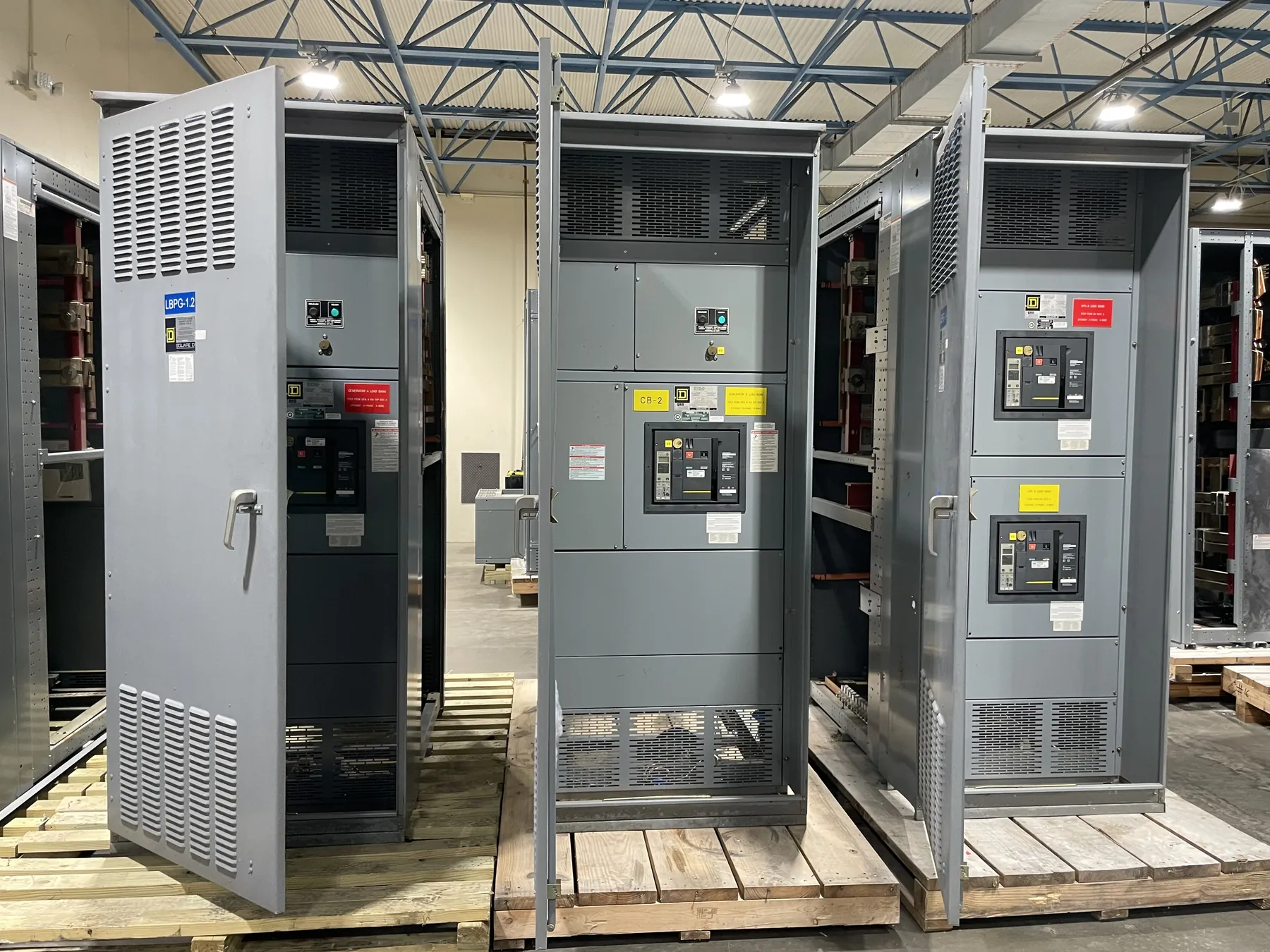
Metal-Enclosed Switchgear for Yerington, Nevada Projects
Metal-enclosed switchgear is a broad equipment category, not a single standard configuration. For a Yerington facility, the lineup may combine switching devices, protective devices, bus, instrument transformers, controls and cable connections within grounded metal enclosures. The arrangement depends on the service, load, fault-current conditions and how operators and maintenance personnel need to access the equipment. A useful specification begins with the electrical one-line diagram and site requirements, not with an assumed enclosure layout.
Projects in and around Yerington may have distinct transportation, access, weather-exposure and installation constraints. Confirm the route from the delivery point to the equipment location, available rigging and handling space, foundation dimensions, and the path for incoming and outgoing conductors. These details can influence shipping sections, entry locations, enclosure dimensions and field connections. Site conditions and installation plans should be reviewed by the project’s qualified electrical and structural professionals.
Switches, Fuses and Breakers: Choosing the Configuration
A switch-and-fuse arrangement and a breaker-based arrangement serve different design needs. Fuses may provide overcurrent protection for a defined circuit, while a switch provides a means of controlling that circuit; fuse selection and coordination must match the system and connected equipment. A circuit breaker combines switching and protective functions, with its trip characteristics and interrupting capability selected for the application. The preferred arrangement depends on load characteristics, available fault current, protection strategy, operating requirements and coordination with upstream and downstream devices.
Specify what each circuit serves and identify any required metering, control power, relaying, interlocks or remote interfaces. If the project anticipates motor starting, transformer energization, sensitive loads or changing operating modes, provide that information for engineering review. Device labels alone do not establish suitability: ratings and protective settings must be evaluated against the system and the complete protection scheme.
Enclosure Barriers, Access and Metal-Clad Distinctions — Metal-Enclosed Switchgear in Yerington, NV
Metal-enclosed describes equipment housed in metal enclosures, but it does not by itself promise a particular internal compartment arrangement. Ask which barriers separate bus, switching devices, cable terminations and control components, and whether the proposed construction supports the project’s access and maintenance expectations. A barrier can affect fault containment, inspection access and the way equipment is serviced; it should be specified in relation to the actual design rather than treated as a generic feature.
Metal-clad construction is a more specific type of switchgear construction with defined compartmentalization and component features under applicable standards. It is not interchangeable with the broader term metal-enclosed. If a specification calls for metal-clad equipment, confirm the required construction and applicable standard with the engineer of record. Conversely, do not assume that a metal-enclosed lineup is metal-clad simply because it has doors, partitions or a metal housing.
Fault Duty, Grounding and System Coordination — Metal-Enclosed Switchgear in Yerington, NV
Fault duty is a central design input. Provide the available short-circuit information at the equipment connection point, along with the source and transformer details used to establish it. The switchgear’s applicable ratings must be checked against that information and the selected devices. A rating is not the same thing as system voltage, and neither should be inferred from a product description. Voltage, continuous-current, withstand or interrupting ratings, and other applicable values require confirmation for the specific assembly and application.
Grounding also needs project-specific review. Identify the grounding method, system configuration, grounding conductor requirements and any neutral or ground-fault protection needs. Coordinate protective-device characteristics with upstream utility or service equipment and downstream loads, using confirmed system data. Final fault-current, grounding, protection and arc-flash decisions belong to qualified electrical engineers working from site information; they cannot be settled by a general equipment description.
Planning Yerington Load Growth and Future Extensions
For a Yerington project, record present demand as well as planned load growth. Identify spare circuits by type and intended use, rather than requesting unspecified “extra space.” A future feeder may need different device ratings, cable provisions, controls or protection from a spare position intended for a smaller load. Also note the physical area reserved for extensions, including working and maintenance access, conductor routing and any limits imposed by walls, doors or adjacent equipment.
Future extension provisions must be designed into the lineup where practical. Confirm whether the intended expansion is an added section, a reserved circuit position or simply space for later replacement, since these are not equivalent. The feasibility of extension depends on the original bus and enclosure design, electrical ratings, site clearances and future system conditions.
Information for a Metal-Enclosed Switchgear Quote
To develop a useful quotation, provide the one-line diagram, system voltage and frequency, available fault-current data, load schedule, protection requirements, preferred device types, cable entry and exit details, and any metering or control interfaces. Include the required enclosure environment, installation location, dimensions, access limitations, shipping and unloading constraints, and the planned spare circuits and expansion approach. Identify requested standards or listings precisely; UL 891 applies to applicable low-voltage switchboards and should not be taken as a blanket designation for all switchgear.
Our U.S.-manufactured equipment uses all-American components and ships nationwide, including to Nevada. Short lead times are supported, but the schedule depends on the approved design, component selection and project requirements. Ratings, construction details, listings and schedule must be confirmed for the specific equipment and project before release.