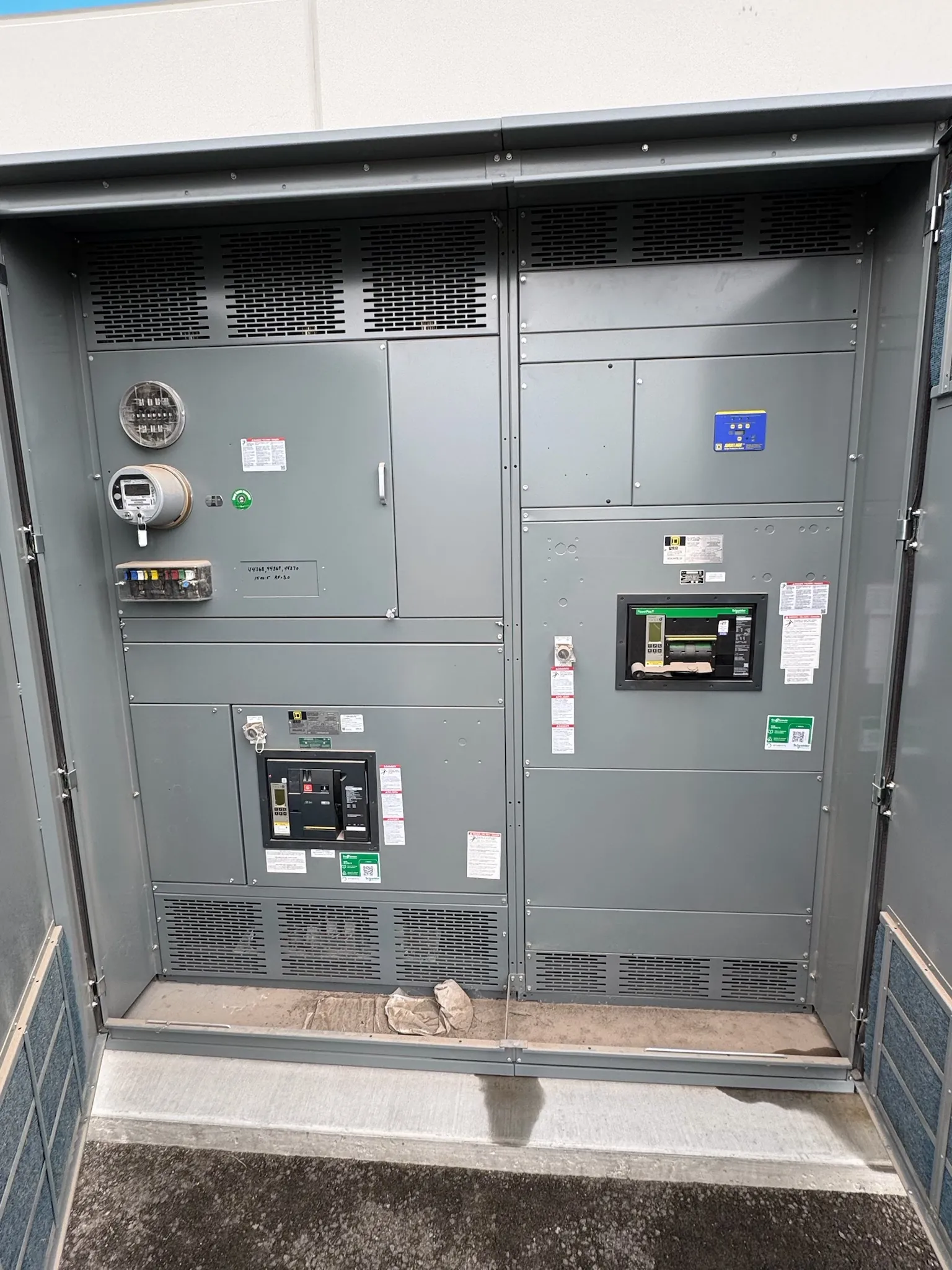
Low-Voltage Switchgear for Winnemucca, NV Projects
Low-voltage switchgear is a substantial part of a facility’s electrical distribution system: it receives power, provides overcurrent protection and switching, and divides supply among downstream loads. For a Winnemucca project, selecting an assembly begins with the electrical design and the conditions at the installation site, not with a catalog description alone. The equipment configuration must suit the service, connected loads, available fault current, operating requirements and space allocated for installation. Our U.S. manufacturing team builds new custom power-distribution equipment using all-American components and ships nationwide, including to Nevada. Final design, ratings and applicable product requirements are confirmed for each project.
Choose a Breaker Arrangement Around Operating Needs
Low-voltage power circuit breaker switchgear can be arranged to suit different source and feeder requirements. The lineup may include incoming breakers, tie breakers, feeder breakers or other devices established by the one-line diagram. A main-and-tie arrangement, for example, can provide a means to connect or separate sections of a system, but its suitability depends on the intended operating scheme, protection design and the consequences of losing a source or bus section. It should not be selected solely as a general redundancy feature.
Drawout breakers may support maintenance and replacement planning by allowing a breaker to be removed from its connected position, while fixed-mounted devices present a different footprint and service approach. The choice affects compartment design, access, maintenance planning and coordination with the facility’s operating procedures. Breaker frame and trip characteristics also require careful selection against the load, conductors, available fault current and protection study. Qualified engineers should establish the application and review interfaces with upstream and downstream equipment.
Evaluate Bus Ratings as Part of the System
Bus ratings describe equipment capabilities; they are not the same as system voltage. Project documents should identify the intended system voltage and the required ratings separately, with applicable conditions and design details confirmed during engineering review. Bus selection must account for the specified continuous current, short-circuit requirements and the arrangement of sources and loads. The rating of one component does not establish the capability of the complete installation.
Bus configuration and section layout also affect how the lineup connects to incoming conductors, transformers, generators, ties or downstream distribution. Confirm cable-entry direction, termination space, conductor routing and any required transition sections before the design is released. Available fault current and protective-device performance should be evaluated for the actual system. Ratings and compatibility depend on the equipment design and project conditions, so they should not be inferred from a nominal voltage or a preliminary equipment description.
Coordinate Protection and Maintainability — Low-Voltage Switchgear in Winnemucca, NV
Coordination is the planned relationship among protective devices, intended to limit the extent of an interruption while meeting the system’s protection requirements. It involves more than choosing breaker sizes. Engineers need information about source characteristics, transformer data, conductor details, downstream devices, available fault current and the intended operating configuration. Selective coordination goals, where required, should be evaluated through the project’s protection analysis rather than assumed from a switchgear label or a general product feature.
Maintainability deserves the same early attention. Consider which breakers may need access, how operators will identify sections and devices, whether the layout allows for planned service, and how future changes might affect feeder space. Physical access, room arrangement and the facility’s maintenance practices can influence the best lineup. Arc-flash assessment and operating procedures are site- and system-specific matters for qualified professionals; equipment selection by itself does not determine them.
Review UL 1558 and Project Requirements
UL 1558 is a standard associated with metal-enclosed low-voltage power circuit breaker switchgear. It may be relevant when the project calls for equipment designed to that standard, but its applicability depends on the specified product and scope. It should not be taken to mean that every switchgear assembly, voltage class or related distribution product is covered, nor does mentioning the standard establish that a particular assembly is listed. Confirm the requested standard, product scope and any listing requirements in the project documents and during quotation and engineering review.
Other requirements may include drawings, environmental conditions, service details, enclosure needs, control interfaces and coordination with adjacent equipment. Applicable ratings, listings and project-specific design details must be verified for the proposed assembly. The electrical design and code requirements should be reviewed by qualified engineers and the authorities responsible for the installation.
Plan Winnemucca Receiving and Installation Logistics — Low-Voltage Switchgear in Winnemucca, NV
Before release, align the equipment layout with the room plan and the route from the delivery point to the final location. Confirm receiving access, unloading arrangements, staging space, floor and doorway constraints, and who is responsible for moving sections into position. Large assemblies may ship in multiple sections; shipping limits, section dimensions, connection points and the planned sequence should be reviewed alongside the installation schedule. Site conditions and shipment configuration determine what handling arrangements are appropriate.
A useful quotation package includes the one-line diagram, equipment schedule, system voltage, required ratings, available fault-current information, breaker and protection preferences, cable-entry details, control requirements, room drawings and delivery constraints. Include the project schedule and receiving contact so manufacturing and shipment planning can be coordinated with site readiness. We build new custom equipment in the United States with all-American components and ship nationwide. Specific design, listing, ratings, section shipping limits and timing are confirmed against the completed project requirements.