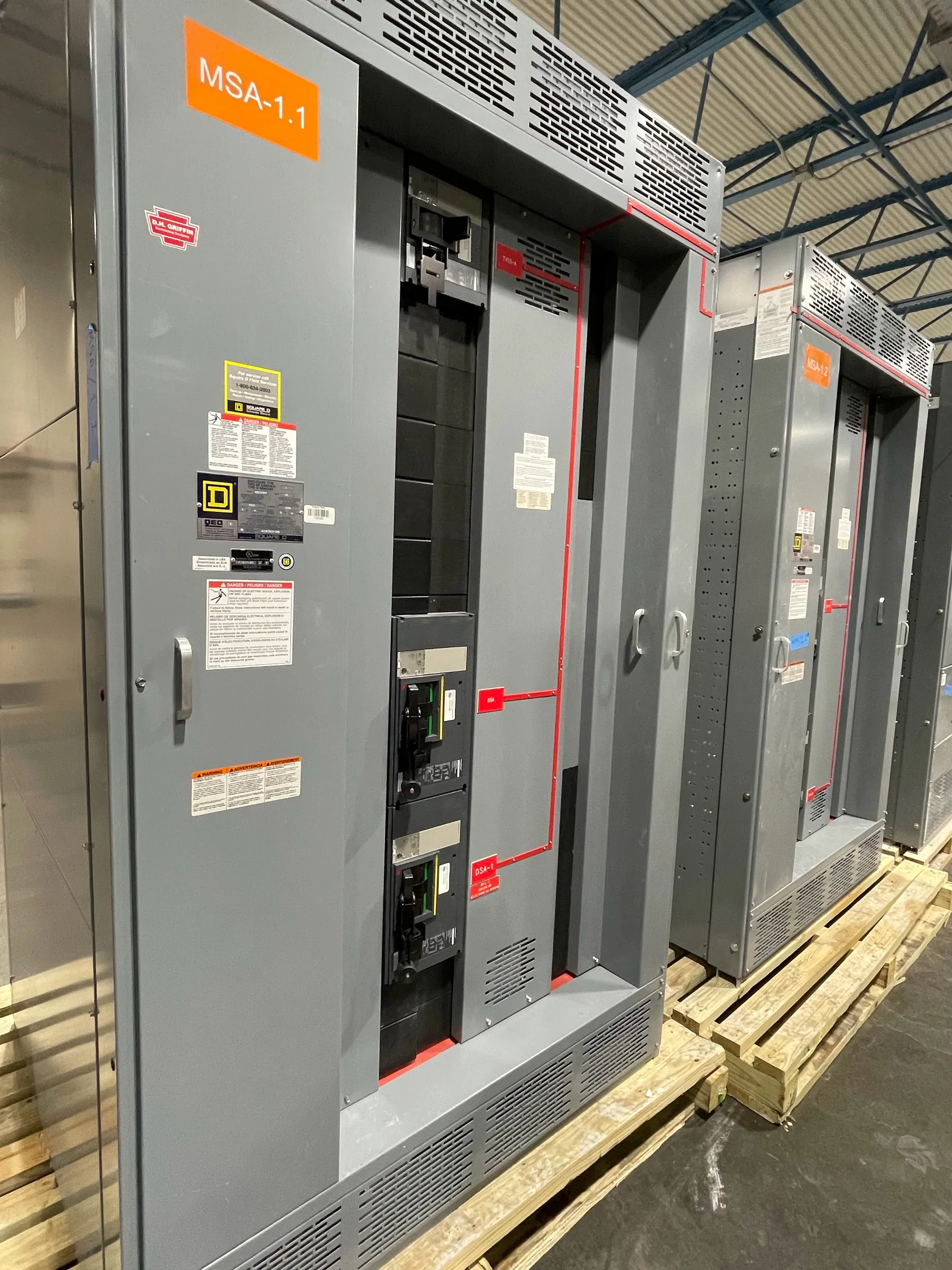
Low-Voltage Switchboards for Winnemucca Projects
Winnemucca facilities may have very different distribution needs, from a new building service to an expansion that adds feeders to an existing system. A low-voltage switchboard should be configured around the project’s actual service conditions, connected loads, and installation constraints—not selected by nameplate voltage alone. We manufacture new custom switchboards in the United States using all-American components and ship nationwide, including to Nevada. Early coordination helps align the electrical design, equipment configuration, and receiving plan before fabrication.
The first design conversation should establish the source and intended use of the board. Is it serving as service equipment, distributing power downstream, or supporting a defined portion of a facility? The answers affect the incoming arrangement, main-device selection, feeder layout, metering provisions, and interfaces with upstream and downstream equipment. Provide available one-line diagrams and project specifications when possible; a qualified electrical engineer must confirm the design against site conditions and applicable requirements.
Service and Feeder Arrangements — Low-Voltage Switchboards in Winnemucca, NV
Service configurations can differ in the number and type of incoming sources, the location of the main device, and the way power is distributed to outgoing circuits. Feeder sections must accommodate the project’s planned loads and connected equipment, while leaving room for required conductors, terminations, and specified protective devices. The number of feeder spaces alone does not establish that a board is suitable: device types, conductor entry, cable routing, and section arrangement also matter.
For a quotation, identify the service or distribution application, source arrangement, main and feeder requirements, metering needs, and any specified enclosure or access conditions. Include the one-line diagram, equipment schedule, and governing project specification if available. Changes to feeder quantities or device frames can affect the physical layout and the coordination required with transformers, panelboards, motor-control equipment, or other distribution assemblies.
Bus Sizing and Available Fault Current — Low-Voltage Switchboards in Winnemucca, NV
Bus selection must reflect the board’s required current rating and the project’s documented conditions. The bus rating is not the same as system voltage, and neither value by itself establishes suitability. Load calculations, demand assumptions, temperature and enclosure conditions, conductor arrangements, and the specified configuration may all require engineering review. A larger nominal rating is not a substitute for confirming the complete application.
Available fault current is another essential input. It depends on the source and the electrical system between that source and the switchboard; it cannot be inferred from the system voltage or from a typical installation. The project team should provide the applicable fault-current information and required equipment withstand or short-circuit ratings for review. Protective-device selection and coordination must be evaluated with the upstream source and downstream equipment. Final ratings and configuration require confirmation by qualified engineers using project-specific data.
Where UL 891 May Apply — Low-Voltage Switchboards in Winnemucca, NV
UL 891 is a standard that may apply to low-voltage switchboards when the product configuration and project requirements fall within its scope. It does not apply to every product category or establish that any particular switchboard is listed. It should not be treated as a blanket qualification for medium- or high-voltage equipment, busway, or unrelated assemblies.
When a project requires a listed switchboard, identify that requirement in the specification and request project-specific listing documentation for the proposed equipment. The applicable product configuration, ratings, and documentation must be confirmed; a standard reference in a general description is not proof that a particular assembly is listed. The design team should also verify how the required listing relates to the project drawings, specifications, and authority review.
Winnemucca Receiving and Installation Planning
For a Winnemucca delivery, plan the route from the receiving point to the final installation location as part of equipment coordination. Confirm site access, delivery-hour restrictions, staging space, door and corridor clearances, floor or platform constraints, and the equipment’s intended movement path with the project team. These conditions can influence how sections are arranged for shipment and how they can be handled at the site.
Switchboard sections have shipping and handling limits that must be confirmed for the specific design. Coordinate those limits with the available unloading equipment, receiving crew, staging area, and installation sequence. Align the planned shipment and receiving window with the construction schedule rather than assuming that a complete assembly can be handled as one piece. We support short lead times, but the schedule depends on the final scope, approved information, and project coordination; no delivery date should be assumed before confirmation.
Information to Coordinate Before Release
Before the design is finalized, bring together the electrical engineer, equipment supplier, installing contractor, and site team to resolve open interfaces. Confirm service and feeder arrangements, bus and fault-current requirements, enclosure and termination details, and any required listing documentation. Check that drawings and specifications agree, and identify who will review submittals and approve deviations. The project team remains responsible for the site-specific electrical design and applicable code determinations.
For a useful quotation, provide the latest one-line diagram, equipment schedule, project specification, required ratings, and anticipated receiving conditions. Flag known access or unloading constraints early, especially if they could affect section dimensions or shipment sequence. With those details, a custom low-voltage switchboard can be developed for the documented Winnemucca application and coordinated with the broader distribution system, subject to engineering and project review.