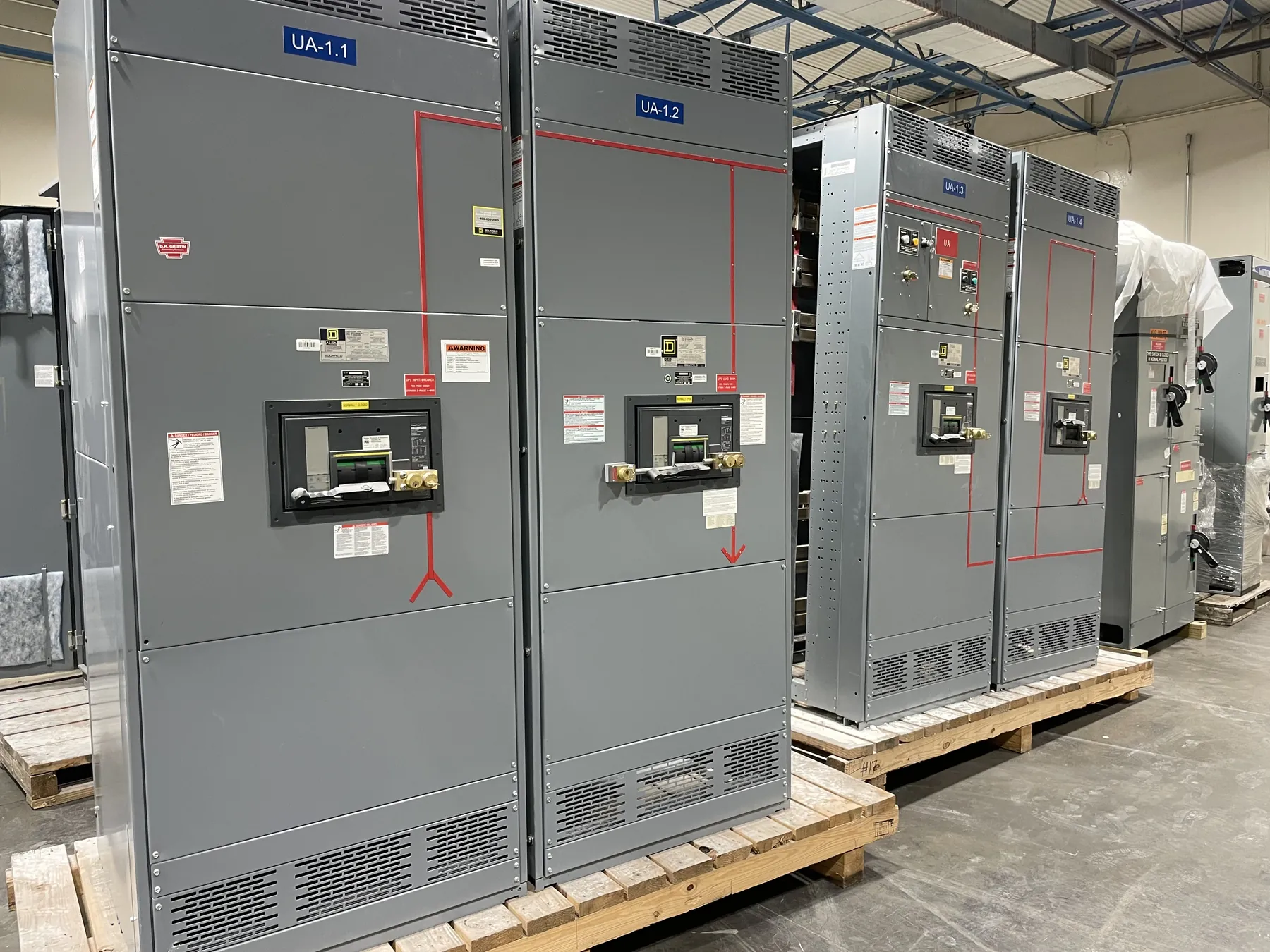
Service Entrance Switchboards for Tonopah Projects
A service entrance switchboard is where a building’s electrical service, metering arrangement and main overcurrent protection come together. For a Tonopah project, its configuration should be developed around the serving utility’s requirements, the facility’s load and the conditions at the installation site—not selected by enclosure size alone. Early coordination helps establish which equipment belongs in the service section, how the service will be metered and what information the design team needs before equipment ratings are finalized.
Custom switchboards manufactured in the United States can be configured for a project’s defined service arrangement and shipped to Nevada. The design process starts with verified project documents and interfaces. A preliminary equipment description is not a substitute for utility review, site information or engineering confirmation of the final design.
Confirm Metering, Main Disconnect and Utility Interfaces
Metering requirements can affect the switchboard’s section layout, compartment provisions and external connections. Confirm whether the utility requires a particular metering arrangement, equipment interface, access provision or service configuration. The utility’s service requirements should be available to the project engineer and equipment manufacturer before the design is released for production. Assumptions about metering can lead to revisions even when the main distribution concept appears settled.
The main disconnect also needs a clearly defined role in the service design. Its type, rating, pole arrangement and relationship to downstream distribution depend on the approved one-line diagram, system characteristics and applicable project requirements. Clarify which devices are included in the service switchboard and which are elsewhere in the distribution system. This makes the boundary between the service equipment and the facility’s downstream equipment easier to review.
Grounding, Fault Current and Equipment Ratings
Service grounding and bonding details must follow the project’s engineered design and applicable requirements. The design team should identify the system grounding method, bonding points and intended neutral arrangement. These details influence the service section and its connection to the rest of the electrical system. They should be resolved with the qualified electrical engineer and relevant authorities rather than inferred from a general equipment description.
Available fault current at the equipment location is essential to selecting and verifying the service switchboard’s short-circuit and interrupting-related ratings. The equipment rating is not the same thing as the system voltage, and a voltage description by itself does not establish whether the assembly is suitable for the available fault current. Provide the source information, calculated fault-current value and any applicable upstream protective-device details for engineering review. Ratings, product configurations and any required listing status must be confirmed for the specific assembly and project; UL 891 applies to applicable low-voltage switchboards, not every type of switchgear or every service arrangement.
Account for Tonopah Site Conditions
Tonopah’s elevation and local weather make site-specific environmental information important, but a city name alone is not enough to define equipment conditions. Confirm the actual installation altitude, expected ambient temperature range, indoor or outdoor location and enclosure exposure. The design team can then assess whether the specified equipment ratings and enclosure arrangement are appropriate for the site. Do not assume standard environmental conditions or a particular derating from a broad regional description.
Access matters as well. Identify the delivery route, receiving arrangements, installation location, available clearance and any restrictions on moving equipment into the building. These practical details may affect section arrangement, shipping configuration and the sequence for placing the switchboard. For projects outside major distribution corridors, coordinate the receiving window and site access with the project team early; no specific route or delivery schedule should be assumed until logistics are reviewed.
Prepare a Useful Quotation Package — Service Entrance Switchboards in Tonopah, NV
A focused quotation request helps the manufacturer evaluate the intended configuration without filling gaps with unverified assumptions. Useful inputs include the current one-line diagram, service voltage and phase, frequency, utility metering criteria, main disconnect requirements, available fault current, grounding details, load information and downstream feeder needs. Include the project specification, required ratings or listing criteria, and any identified authority review requirements.
Also provide the intended indoor or outdoor setting, altitude, temperature limits, enclosure expectations, physical space constraints and access information. Note which details remain pending, such as utility approval or final fault-current calculations. Clear separation between confirmed requirements and open items makes it easier to identify what can be quoted and what must be resolved before final design approval.
Coordinate Reviews Before Releasing the Design
Service entrance equipment sits at a critical boundary among the utility, the facility and the distribution system. The electrical engineer, utility representative, equipment manufacturer and applicable authorities should review the relevant interfaces before the design is finalized. Confirm service and metering requirements, equipment ratings, grounding provisions, enclosure conditions and installation constraints against the actual project documents.
Custom-built equipment made with all-American components, manufactured in the United States and shipped nationwide can support a Tonopah project without implying a local factory or office. Lead time depends on the confirmed design, required components and project schedule; it should be established through a project-specific quotation rather than assumed. Final suitability and approval remain tied to qualified engineering review and the requirements of the site and authorities having jurisdiction.