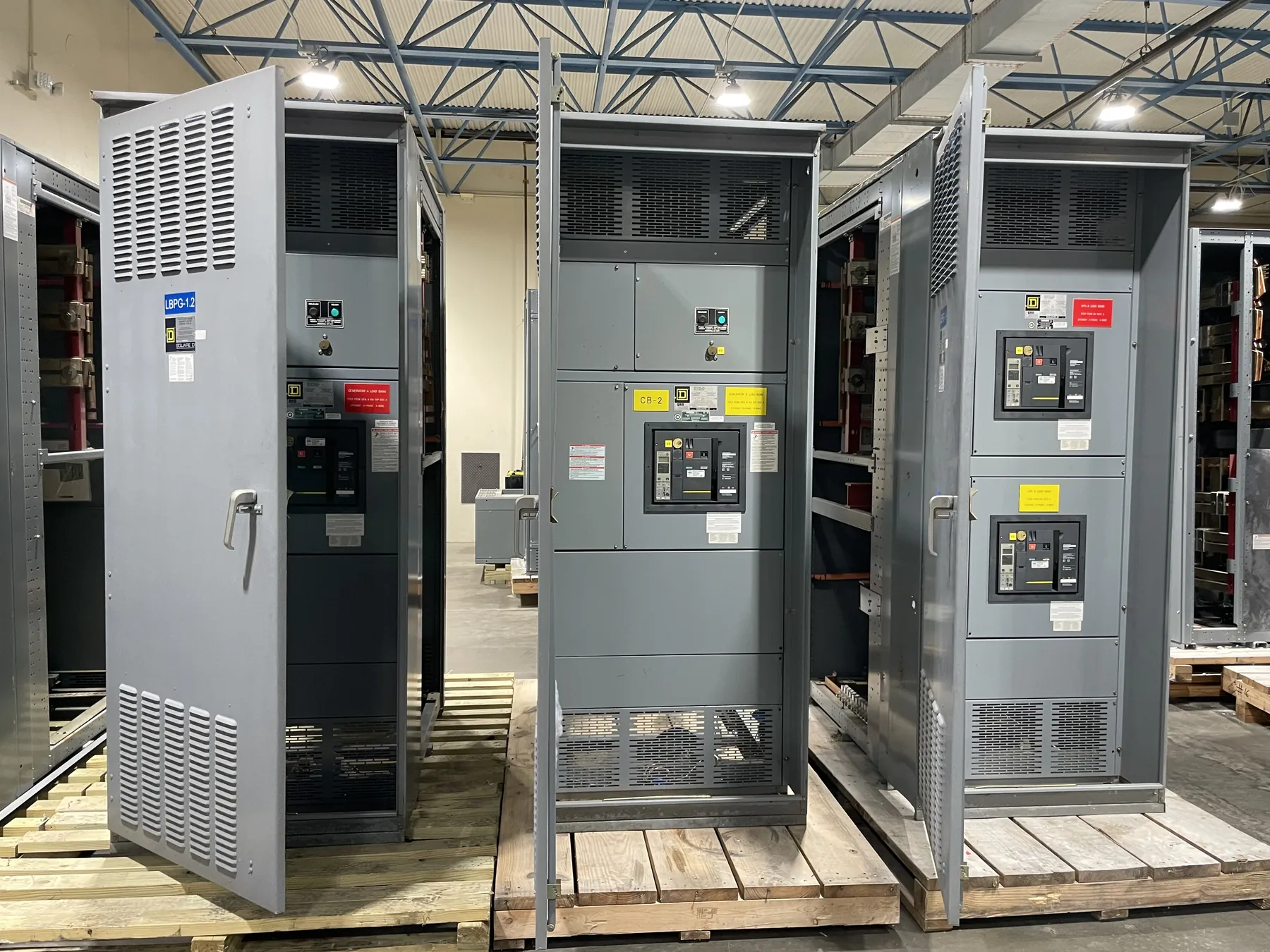
Manufacturing Switchgear for Tonopah Production Facilities
Manufacturing operations depend on electrical distribution that fits the actual production process, not just the equipment schedule. For a Tonopah facility, a custom switchboard or related distribution assembly can be planned around incoming service, production loads, motor-control interfaces, branch circuits and the way operators need to maintain or expand the system. The right arrangement depends on the facility’s electrical design and operating priorities; equipment selection should be reviewed by qualified electrical engineers against site conditions and applicable requirements.
Start by identifying what the assembly must serve: production lines, process equipment, HVAC, compressed air, building loads and other essential systems. A load list should distinguish continuous and intermittent demands, motor starting characteristics and any planned operating combinations. Those details help determine feeder arrangement and protective-device requirements. They also reveal where a production change could affect the distribution design, rather than leaving important assumptions until equipment is already being specified.
Coordinate Motor Loads, Controls and Upstream Interfaces
Motors can shape both the electrical and physical layout. The project team should identify motor sizes and control methods, expected starting behavior, control-voltage needs, and whether drives or other power-electronic equipment are part of the process. Drives may introduce coordination questions involving protection, heat dissipation, harmonics and the equipment supplied by the assembly. Motor-control functions may be integrated into a distribution lineup or provided separately; the best choice depends on the process, maintenance approach, available space and the responsibilities assigned to each vendor.
Document the connection between the new equipment and the existing or planned system. Useful inputs include the service characteristics, available fault-current information, upstream protective devices, grounding approach and required control or monitoring signals. The switchgear manufacturer, electrical engineer, utility or service provider, and equipment suppliers may each own different parts of that interface. Confirming those boundaries early helps avoid mismatched assumptions about connections, protection and controls.
Plan Feeder Capacity and Future Production Changes
Future feeder space is valuable only when it is designed with realistic growth in mind. Discuss likely additions such as another production machine, a process line, or an increase in building support loads. A design can reserve physical space, plan for spare devices, or provide other expansion provisions, but each approach has different implications for enclosure size, cost, bus capacity and coordination. Empty space should not be treated as proof that the assembly can support any future load; the electrical design must establish the capacity and limits.
Likewise, ratings are not interchangeable with system voltage. Voltage, current, short-circuit withstand or interrupting requirements, and device ratings must be selected for the specific application and coordinated with the system. Applicable listing requirements also depend on the equipment type and intended use. UL 891 applies to certain low-voltage switchboards; it should not be read as covering every switchgear assembly or other distribution product. Confirm the requested product classification, ratings and listing expectations during engineering and quotation.
Build Shutdown and Changeover Needs into the Plan
In a production facility, installation timing can be as consequential as the equipment layout. Identify which loads must remain in service, which can tolerate an outage, and whether work will be staged around a planned shutdown. The facility team and its qualified electrical contractor should determine the installation and changeover sequence, including temporary arrangements if the project requires them. This planning informs lineup configuration, cable-entry locations, termination access and the division of work among contractors and equipment suppliers.
Provide the manufacturer with available drawings, one-line diagrams, site photographs or dimensional information, plus known constraints on delivery access and placement. A Tonopah project may involve travel and coordination across a broad service area, so confirm the receiving location, unloading responsibilities, route constraints and access windows rather than assuming standard site conditions. These details can affect packaging, equipment sections and delivery planning, but they do not replace a site review.
Account for Tonopah Site Conditions Before Final Design
Tonopah’s location makes it especially important to verify the conditions at the actual installation point instead of relying on a city-level assumption. Confirm site altitude, expected ambient temperature range, indoor or outdoor exposure, ventilation, dust or moisture concerns, and enclosure location. These factors can influence equipment ratings, thermal performance, enclosure construction and derating considerations. The final selection should follow the manufacturer’s applicable limits and a qualified engineering review.
Also verify room dimensions, working clearances, door and aisle constraints, floor conditions, conduit or cable approaches, and the route from receiving area to final placement. If the assembly will be outdoors or in a harsh production environment, specify the exposure and enclosure requirements clearly. Access and environmental details can be as important to a workable installation as the electrical schedule.
Prepare a Useful Manufacturing Switchgear Quotation Package
A focused quotation request helps align the proposed assembly with the project rather than leaving key items open. Include the one-line diagram, load and feeder schedules, system voltage, available fault-current data, requested ratings and listing requirements, control and monitoring needs, physical layout constraints, and anticipated expansion provisions. Note shutdown or phasing preferences, site conditions, delivery access and any known coordination responsibilities. If information is preliminary, label assumptions and identify who will confirm them before release for manufacture.
We manufacture new custom switchgear and power-distribution equipment in the United States using all-American components, and we ship nationwide, including to Nevada. Lead-time planning depends on the finalized scope, design review and project coordination; discuss schedule needs with the quotation package rather than relying on an assumed duration. Clear inputs give the engineering and manufacturing teams a practical basis for developing equipment suited to Tonopah production loads and the facility’s operating needs.