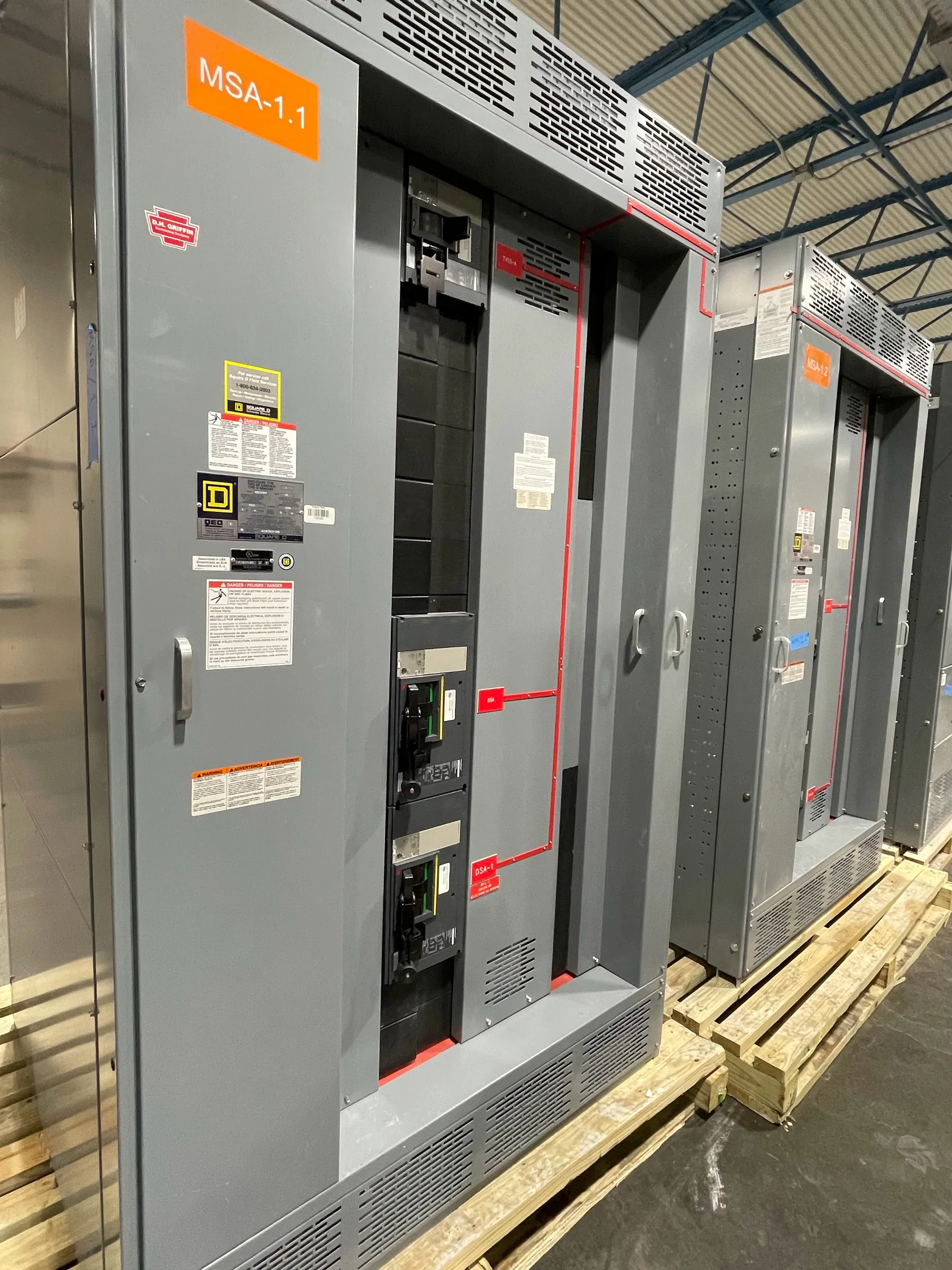
Planning Switchgear for a Tonopah, Nevada Project
Tonopah projects can involve long equipment routes, remote job sites, and site conditions that differ from those at a manufacturer’s facility. These factors belong in the specification and delivery plan from the start—not as assumptions made after equipment is built. We manufacture new custom switchgear and power-distribution equipment in the United States and ship nationwide, including to Nevada. The appropriate design depends on the electrical system, installation environment, and project requirements confirmed by the customer’s qualified engineering team.
Early coordination helps define what the equipment must do, where it will be installed, and how it will connect to the rest of the distribution system. A useful initial scope identifies the application, one-line diagram, nominal system voltage, required ratings, incoming and outgoing connections, and installation location. Those details are starting points for engineering review, not a substitute for it.
Confirm Site Conditions Before Selecting the Enclosure
Tonopah’s location makes it especially important to verify conditions at the actual installation site rather than use a city name as a design specification. Confirm the equipment’s elevation above sea level, expected ambient temperature range, exposure to dust or moisture, indoor or outdoor placement, and any ventilation or space constraints. Actual altitude and temperature limits can affect enclosure, component, and rating selection; their effect must be evaluated against the specific equipment design and applicable requirements.
Also document how the equipment will be positioned and maintained. Clearances, access doors, cable entry, conduit routing, floor or pad conditions, and available working space can influence enclosure dimensions and connection arrangements. If the site is exposed to weather or airborne contaminants, describe the exposure and requested enclosure conditions for engineering review instead of assuming that a standard enclosure will be suitable.
Define System Voltage, Ratings, and Distribution Interfaces
System voltage and equipment ratings are related but are not interchangeable. The specification should identify the system voltage and separately state the required ratings and functions for the proposed assembly. Depending on the application, the design may need to address continuous current, available fault current, bus configuration, protective devices, metering, control power, and the arrangement of incoming and outgoing circuits. Qualified engineers must verify these selections against the system study, installation conditions, and governing project requirements.
For low-voltage switchboards, UL 891 may be relevant when applicable to the product and project. It does not apply to every type of switchgear or establish that a particular assembly is listed. Confirm the intended equipment category, required listing, and project acceptance criteria with the responsible engineer and authority having jurisdiction. Voltage class, ratings, listing scope, and system compatibility all require confirmation for the specific design.
Coordinate Connections, Controls, and Adjacent Equipment
Switchgear is one part of a larger electrical installation. Provide interface information for transformers, generators, utility or service connections, downstream panels, protective relays, monitoring systems, and any other equipment that affects the assembly. Identify conductor sizes and types, entry direction, termination space, neutral and grounding requirements, and whether the project calls for particular control or communications interfaces. Final compatibility depends on reviewed drawings and the requirements of the connected equipment.
Protection and coordination decisions should be made by the project’s qualified electrical professionals using the system information available for the site. Do not rely on a generic equipment description to settle fault-duty suitability, arc-flash requirements, protective-device settings, or code compliance. Provide relevant studies and design criteria for review, and allow time for drawing coordination before release for manufacture.
Prepare a Complete Quotation and Submittal Package
A clear request helps identify design questions before they affect schedule or installation. Include the one-line diagram, equipment schedule, project specifications, site conditions, and required delivery location. Add the expected quantity, preferred enclosure arrangement, cable-entry details, control and metering scope, required documentation, and any project-specific inspection or listing requirements. If information is preliminary, label it as such so open items can be tracked rather than treated as confirmed requirements.
Quotation and lead-time discussions depend on the equipment scope, design review, component requirements, and the completeness of project information. We support short lead times, but an actual schedule must be confirmed for the specific configuration and current production plan. Submittal drawings should be reviewed by the responsible parties before manufacturing proceeds; changes after approval may affect design, cost, or timing.
Plan Delivery and Site Access in Tonopah
For a Tonopah destination, provide the precise delivery address and describe the final route from the receiving point to the installation location. Confirm road and site access, unloading equipment, delivery-hour limits, staging area, gate or escort requirements, and whether the equipment must be moved through a doorway or along a restricted path. The ship-to address alone may not reveal a difficult final approach, so share relevant access limits early.
Coordinate the shipment with site readiness and the construction schedule. Verify that the receiving area can accommodate the equipment and that the installation team has the approved drawings and interface information. U.S.-built equipment can ship to Nevada from our manufacturing operation, but no local facility or project installation is implied. Final equipment selection, ratings, listing requirements, delivery arrangements, and schedule should all be confirmed for the individual project.