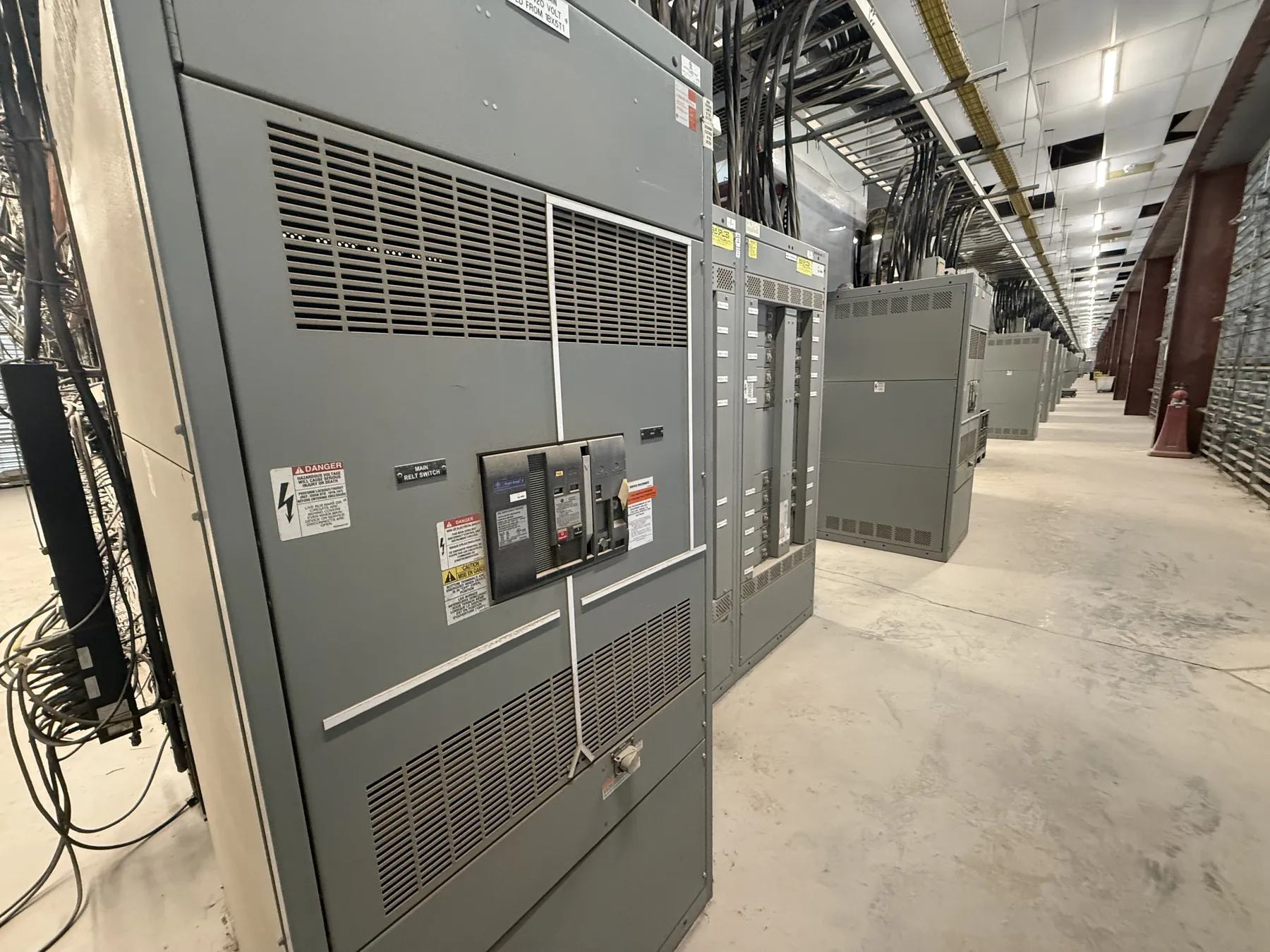
Low-Voltage Switchgear for Tonopah, Nevada Projects
Low-voltage switchgear can serve as a central point for receiving and distributing power in a commercial, industrial, institutional, or infrastructure facility. For a Tonopah project, equipment selection should begin with the electrical design and site conditions—not with a generic product description. The one-line diagram, system voltage, available fault current, load requirements, protection scheme, and installation environment all affect the appropriate arrangement. Our U.S.-built assemblies use all-American components, are manufactured new to project requirements, and can ship nationwide, including to Nevada.
Tonopah’s location makes delivery planning part of the project conversation. Confirm the route from receiving point to the electrical room, unloading provisions, door and corridor clearances, floor access, and whether the equipment must be moved in sections. These details can influence lineup dimensions, section configuration, and the delivery plan. They should be established with the project team rather than assumed from the city name.
Choose a Breaker Arrangement Around the System
Low-voltage power circuit breaker switchgear is commonly arranged with drawout breakers, but the lineup design still depends on the required sources, feeder count, load priorities, and operating scheme. A project may require a main breaker, feeder breakers, a tie breaker, or provisions for additional distribution sections. Whether sources operate independently or have a permitted transfer or paralleling arrangement must be defined by the electrical design and control requirements.
Compare breaker frames and trip-unit functions against the actual load and protection study. Interrupting and withstand capabilities, continuous-current ratings, sensor or rating-plug selections where applicable, and available protection functions must match the system and application. A breaker’s ampere rating is not the same as the system voltage, and neither alone establishes that an assembly is suitable for a particular installation. Final selections require review of the system data, equipment design, and applicable project requirements.
Maintainability Depends on More Than Drawout Construction
Drawout breakers can support inspection, testing, and replacement planning, but they do not eliminate the need to design for access. Consider how personnel will reach breaker compartments, operate and maintain the equipment, and bring replacement components to the lineup. The project team should also identify any provisions for future feeders, spare breaker positions, metering, and control devices before the lineup is finalized. Reserved space is useful only when its dimensions and electrical interfaces are coordinated with the intended future equipment.
For Tonopah facilities, confirm the room’s actual dimensions and environmental limits, including the expected temperature range and altitude at the installation site. Altitude can affect equipment application and ratings; enclosure choice must also suit the room and its conditions. Do not rely on assumed regional averages. Provide the manufacturer with site-specific information so any required rating review or design adjustment can be addressed before release.
Bus Ratings, Fault Duty, and Coordination
Bus selection involves more than choosing a nominal current value. The design team should establish the required bus ratings, system voltage, short-circuit withstand duty, source configuration, and connection points from project documents. Main, tie, and feeder devices must be considered together with the bus and the available fault current at the equipment. A rating that appears adequate in isolation may not address the complete system duty or the project’s operating conditions.
Protection coordination should be evaluated across upstream and downstream devices using the project’s fault-current and coordination studies. Trip settings and device characteristics affect which breakers respond to a fault and how the distribution system behaves. Equipment configuration should align with those studies; it cannot substitute for them. Provide the latest one-line diagram and study information, and have qualified electrical engineers confirm the protection design and settings for the site.
UL 1558 and Applicable Product Requirements — Low-Voltage Switchgear in Tonopah, NV
UL 1558 is a standard associated with low-voltage metal-enclosed switchgear when applicable to the product and project. Its relevance depends on the equipment scope and specified construction. It should not be treated as a blanket claim that every switchgear assembly, voltage class, component, or installation is listed or approved. Low-voltage switchboards may be subject to different product requirements, including UL 891 where applicable; that standard does not cover all switchgear or other distribution products.
Identify the required standard, listing scope, and documentation in the project specification and confirm them for the proposed assembly. Ratings, listings, and other compliance details are product- and configuration-specific. They require confirmation during engineering review rather than inference from a general product category.
Information to Provide for a Tonopah Quotation
A useful quotation request includes the one-line diagram, project specifications, system voltage, source and load details, available fault-current information, required bus and breaker ratings, protection-study requirements, metering and control interfaces, and any specified listing or standard. Include enclosure and room conditions, site altitude, expected temperature limits, lineup dimensions, cable-entry preferences, and delivery access information. Note any planned future sections or operational constraints that could affect arrangement.
With these inputs, the design can be reviewed against the project’s electrical and installation requirements before equipment details are finalized. Short lead times may be supported by the manufacturing program, but schedule depends on the approved configuration, engineering information, and project needs. Confirm the required schedule and shipment arrangements for the specific Tonopah destination.