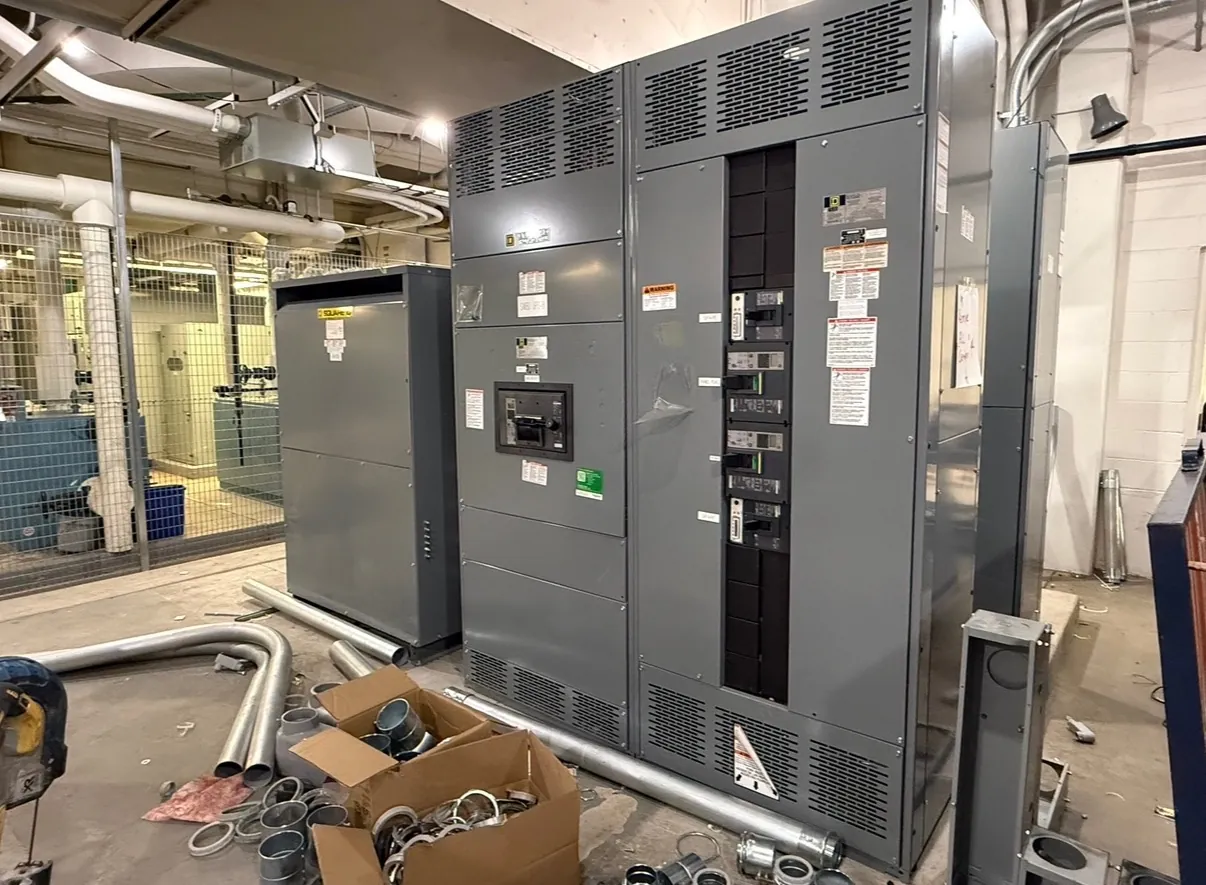
Metal-Clad Switchgear for Tonopah, Nevada Projects
Metal-clad switchgear is a medium-voltage assembly intended to organize switching, protection and connections within separated compartments. For a Tonopah project, the equipment should be selected around the actual one-line diagram, system conditions and installation environment—not a city name or a nominal voltage alone. Confirm the required system voltage, continuous current, interrupting duty and control scheme with the project’s qualified electrical engineer. These are distinct design inputs: a voltage class does not, by itself, establish the assembly’s current or fault-interrupting ratings.
We manufacture new custom switchgear and power-distribution equipment in the United States using all-American components, with nationwide shipping. A quotation can address the project’s specified configuration and interfaces. Final equipment details remain subject to engineering review, applicable standards, and confirmed site conditions.
Compartments, Barriers and Maintainability
Metal-clad construction separates major functional parts—such as the bus, circuit breaker, cable connections and low-voltage controls—into grounded metal compartments. The barriers help limit exposure between sections and support an organized arrangement, but they do not remove the need for project-specific safety, access and maintenance planning. The proposed lineup should be checked against the intended operating approach and the facility’s procedures.
Compartment layout affects more than footprint. Cable entry direction, termination space, phase arrangement, control wiring routes and access for inspection can all influence the lineup. In a constrained electrical room, confirm door and panel clearances, aisle dimensions, overhead obstructions and the path for moving equipment into position. If future extensions are contemplated, identify them early; provisions for expansion must fit the bus arrangement, protection scheme and available room rather than being assumed from a general product description.
Withdrawable Breakers and Their Interfaces — Metal-Clad Switchgear in Tonopah, NV
Withdrawable circuit breakers can be moved between defined connected, test and disconnected positions, depending on the equipment design. This arrangement can support inspection or testing without removing the breaker from its compartment, but the project must specify compatible mechanisms, interlocks, control connections and position indication. Confirm the breaker type and ratings against the switchgear assembly; a breaker’s individual nameplate does not establish the complete lineup’s rating.
Useful quotation inputs include the one-line diagram, breaker functions and quantities, bus configuration, incoming and outgoing cable details, metering and control requirements, and any specified protective devices. Clarify whether the design calls for particular control power, remote indications, communications, or integration with existing equipment. Interfaces should be coordinated with the owner’s control-system requirements and the devices actually used elsewhere in the facility.
Grounding, Protection and Relay Coordination — Metal-Clad Switchgear in Tonopah, NV
Grounding choices depend on the source, transformer connections and operating philosophy. The engineer should establish the system grounding method and available ground-fault information before protection settings or equipment details are finalized. The switchgear grounding bus and enclosure bonding arrangement must suit the specified system and installation, while cable grounding and termination requirements need to be coordinated with the connected equipment.
Relay coordination is a system study, not a setting selected in isolation. It considers upstream and downstream protective devices, transformer characteristics, conductor limits, fault-current conditions and the desired response to different fault types. Provide available study results or the information needed for the project engineer to develop them. Protection functions, instrument-transformer ratios, relay inputs and trip circuits should be reviewed together so that the specified scheme is technically compatible and can be commissioned as intended.
IEEE C37.20.2 and Project-Specific Ratings
For metal-clad switchgear, the project specification should identify the applicable edition and requirements of IEEE C37.20.2. The engineer and manufacturer should confirm the proposed equipment’s construction, ratings and specified features against the standard and the project documents. Do not assume that a standard reference alone establishes compliance for every option, rating or application; the final submittal should make the applicable scope clear.
System voltage, rated maximum voltage, continuous current, short-circuit or interrupting capability, and control ratings are separate items that require confirmation. Required listings, tests, documentation and any additional project standards should likewise be stated and reviewed for the specific assembly. Low-voltage switchboard standards such as UL 891 are not a substitute for the applicable requirements for medium-voltage metal-clad switchgear.
Tonopah Site Conditions and Quotation Planning
Before enclosure and rating selections are finalized, confirm the actual installation altitude and the equipment’s permitted temperature limits. Site elevation and ambient conditions may affect applicable ratings or require engineering review; do not infer them from a broad regional description. Also identify indoor or outdoor placement, exposure to dust or moisture, ventilation, heating or cooling provisions, and any enclosure requirements stated by the project.
Access arrangements matter in Tonopah as they do at any remote or constrained site. Confirm the delivery route, unloading method, equipment-room entry dimensions, staging area and whether the lineup must be moved in sections. Share these constraints with the manufacturer before design release so shipping configuration and installation planning can be considered together. Complete project documents, confirmed site data and a coordinated one-line diagram give the engineering team a sound basis to develop a proposal for new metal-clad switchgear.