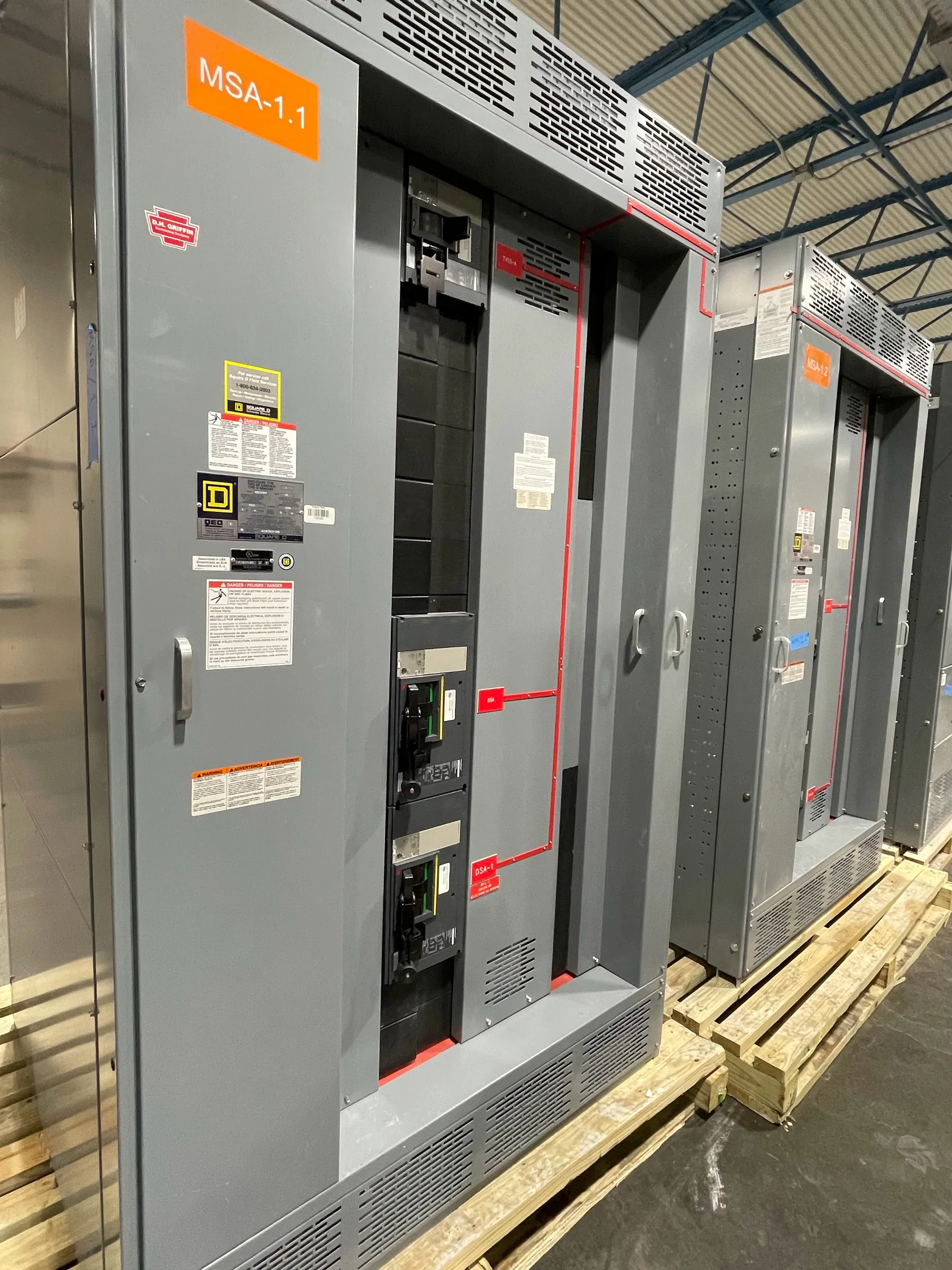
Automatic Transfer Switches for Tonopah, Nevada Projects
An automatic transfer switch (ATS) changes a connected load from one power source to another when its controls determine that transfer is called for. For a Tonopah facility, the right arrangement depends on the normal and alternate sources, the loads that must remain supplied, and how the complete electrical system responds to a source interruption. Switchgear and power-distribution assemblies for these projects are manufactured new in the United States using all-American components and can ship nationwide. Final equipment selection still requires project-specific engineering review; the city name alone does not establish operating conditions or ratings.
Transfer Transition and Source Sensing — Automatic Transfer Switches in Tonopah, NV
Transfer behavior should be specified in terms of the connected system, not just a preference for “fast” or “automatic” switching. An open-transition ATS disconnects one source before connecting the other, so the load experiences an interruption during the changeover. A closed-transition design briefly connects sources in parallel while transferring, which can require additional controls and must be suitable for the sources, protection scheme and applicable utility requirements. The permitted transition method must be confirmed by the project’s electrical engineer and relevant authorities.
Source-sensing settings are another important decision. Controls may monitor conditions such as voltage and frequency and initiate transfer when configured limits are not met. Return-to-normal logic, time delays and retransfer behavior affect how the system responds to a temporary disturbance and how often the load changes sources. The engineer should define which source is preferred, what constitutes an unacceptable source condition, and whether transfer and retransfer are automatic or require a separate operating decision. These settings should coordinate with the generator or alternate-source controls and the facility’s protection design.
Load, Withstand and Short-Circuit Coordination
Specify the ATS by the electrical load it must carry and the fault conditions it must withstand—not by system voltage alone. Load-current rating, system voltage, number of poles, frequency and applicable short-circuit withstand or closing ratings are separate items that must match the installation. A switch’s withstand capability is not a substitute for short-circuit protection, and the selected device must be coordinated with upstream overcurrent protective devices and the available fault current at its point of installation.
For a quotation, provide the normal and alternate source characteristics, intended load, one-line diagram, protective-device information and any known available fault-current data. Identify whether the load is motor-heavy, includes electronic equipment, or has other characteristics that affect transfer behavior. The engineering team needs these details to assess the ATS and its interfaces as part of the distribution system. Ratings, listings and configuration remain subject to review and confirmation against the actual project documents.
Neutral Switching and Grounding Arrangement — Automatic Transfer Switches in Tonopah, NV
Whether the ATS switches the neutral is a system-grounding decision, not an interchangeable accessory choice. The answer depends on the source arrangement, how each source is grounded, and the grounding and bonding design. A switched-neutral configuration can be appropriate in some separately derived source arrangements; other systems may call for a solid neutral. Choosing incorrectly can affect fault-current paths and protective-device operation. Provide the grounding details for both sources and have a qualified engineer verify the pole arrangement and grounding scheme before equipment is finalized.
Also identify control-power needs, generator start contacts, remote status or alarm interfaces, and any required connection to a facility monitoring system. These interfaces can affect control wiring, terminal provisions and coordination with equipment supplied by others. Clear responsibility for each connection helps avoid assumptions at installation and commissioning.
UL 1008 and the Equipment Scope
UL 1008 is the standard applicable to transfer-switch equipment where required by the project and governing requirements. It applies to the transfer equipment; it should not be treated as a blanket certification for every component, switchboard or complete installation. Confirm whether the specified ATS configuration and ratings have the required listing, and distinguish that documentation from ratings for the larger assembly or system. Listing needs should be stated in the inquiry so they can be reviewed for the actual product scope; no particular listing or approval should be assumed before confirmation.
Tonopah Site Conditions and Quotation Details
Before finalizing the enclosure and ratings for a Tonopah installation, confirm the actual site altitude and the equipment’s permitted temperature limits. These conditions can affect suitability and may call for review of applicable derating or enclosure details. Do not assume that a general location reference establishes the conditions at the equipment pad or inside the electrical room. Share the installation location, indoor or outdoor placement, environmental exposure, available footprint, cable-entry direction and access constraints.
Include delivery access and handling arrangements in the project information as well. Remote or constrained sites may require coordination around receiving, unloading, equipment-room entry and the sequence of work, but those arrangements depend on the facility and shipment plan. A useful inquiry includes the one-line diagram, source and load data, transition preference, neutral and grounding information, required interfaces, environmental conditions, documentation needs and target project schedule. With those inputs, the manufacturer can review the requested new ATS configuration and identify details requiring engineering confirmation before release.