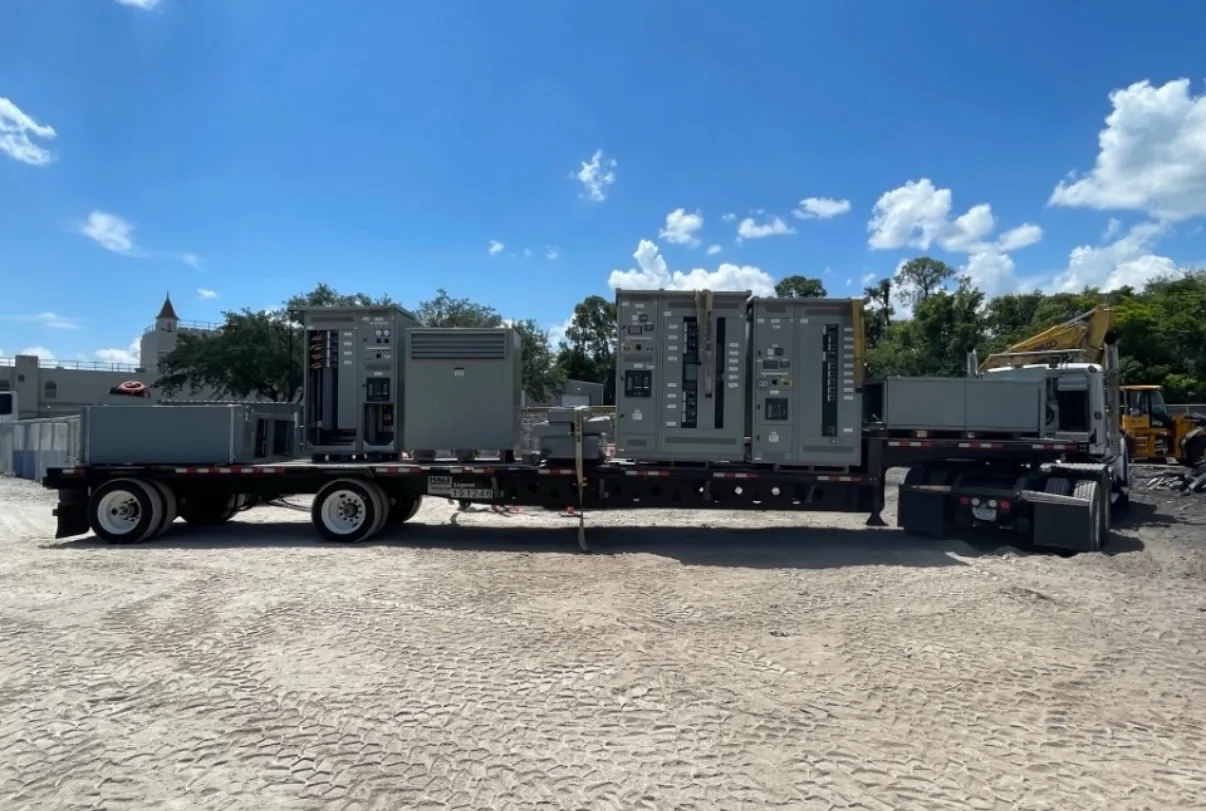
Medium-Voltage Switchgear for Tonopah Projects
Medium-voltage switchgear connects and protects portions of a power system where equipment must manage voltage, fault duty and switching requirements beyond the low-voltage switchboard range. For a Tonopah project, the right assembly depends on the actual one-line diagram, utility or upstream source information, connected loads and site conditions—not on the city name alone. We manufacture new custom power-distribution equipment in the United States using all-American components and ship nationwide, including to Nevada. Project-specific engineering is needed to establish a suitable design and confirm ratings before equipment is finalized.
Early discussions should identify the equipment’s role: for example, whether it serves an incoming service, a transformer primary, a distribution point or a dedicated load. Those functions can call for different switching arrangements, protective devices and cable interfaces. A preliminary equipment description is not a substitute for reviewing the complete system and applicable project requirements.
Confirm Voltage Class and Fault-Duty Requirements
Start by identifying the system’s nominal voltage and the equipment voltage class required for that system. These terms are related but are not interchangeable: an equipment rating must be appropriate for the system, and the rating alone does not define every insulation or operating requirement. The design team should also establish the expected available fault current at the switchgear location and the duration or clearing conditions relevant to the protection scheme.
Fault-duty selection must account for the source and upstream protection, not just the connected load. Utility data, transformer characteristics, conductor information and changes planned elsewhere in the facility can affect the study. A qualified engineer should evaluate the system and verify that the proposed assembly and protective devices suit the calculated conditions. Do not infer fault capability from voltage class, enclosure appearance or a general product description.
Insulation, Environment and Tonopah Site Conditions
Insulation level and clearances must be selected for the application and equipment design. These choices relate to the voltage class and specified withstand requirements, while enclosure construction and installation conditions can affect how the equipment is arranged and maintained. Final values require engineering review against the project documents and applicable requirements.
Tonopah’s location makes it especially important to confirm the actual installation elevation rather than assume a site value from the city. Altitude can affect insulation and cooling considerations, so the engineering review should use the project’s actual site elevation and the equipment manufacturer’s applicable limits. Confirm the expected temperature range, whether the installation is indoors or outdoors, exposure to dust or moisture, ventilation, and any heating or environmental controls. These details help establish whether enclosure and equipment ratings need adjustment. They should be provided as project conditions, not treated as automatic reasons for a particular design.
Protective Relays and Coordination Interfaces — Medium-Voltage Switchgear in Tonopah, NV
Relay functions should follow the protection philosophy and system study. Depending on the application, the design team may need to address overcurrent protection, ground-fault detection, transformer protection, metering, communications or interlocking. The exact functions, settings and device interfaces require review by qualified engineers; selecting a relay from a feature list alone does not establish coordination or protection performance.
Provide available information about upstream and downstream protective devices, current transformers, voltage transformers, trip circuits, control power and any required signals to a plant control system. Coordination should consider the full path from the source through the switchgear to downstream equipment. Confirm communication protocols and point lists with the controls team early, because interface needs can influence component selection, wiring and compartment layout.
Cable Terminations, Layout and Access
Cable entry direction, conductor type and termination arrangement affect compartment design and installation planning. Quote documents should identify incoming and outgoing cable locations, the number and size of conductors where known, shield and grounding requirements, and any preference for top or bottom entry. Confirm termination requirements with the cable and termination suppliers; available space and bend requirements should be checked against the actual conductors and installation plan.
For Tonopah delivery and installation planning, verify the route from the delivery point to the final room or pad, including access openings, turning space, floor or foundation conditions, and any lifting or staging constraints. Also confirm working clearances and the space needed for cable work and future maintenance with the site design team. These are facility-specific details, not assumptions that can be resolved from a shipping destination.
Information to Prepare for a Project Quote — Medium-Voltage Switchgear in Tonopah, NV
A useful request for quotation includes the one-line diagram, system voltage, available fault-duty information or study, equipment function, relay and metering requirements, cable termination details, enclosure location, actual altitude, temperature limits and access constraints. Include applicable project specifications, required interfaces and the schedule milestones that affect design, approvals and delivery planning. If some data is not yet available, identify it as an open item so it can be reviewed rather than guessed.
Our assemblies are custom manufactured in the USA, with nationwide shipping available. Product ratings, configuration, listing status where applicable, and project-specific details must be confirmed during engineering review. UL 891 concerns applicable low-voltage switchboards; it should not be applied as a general claim for medium-voltage switchgear. Final equipment suitability depends on qualified engineering, site review and the requirements established for the Tonopah installation.