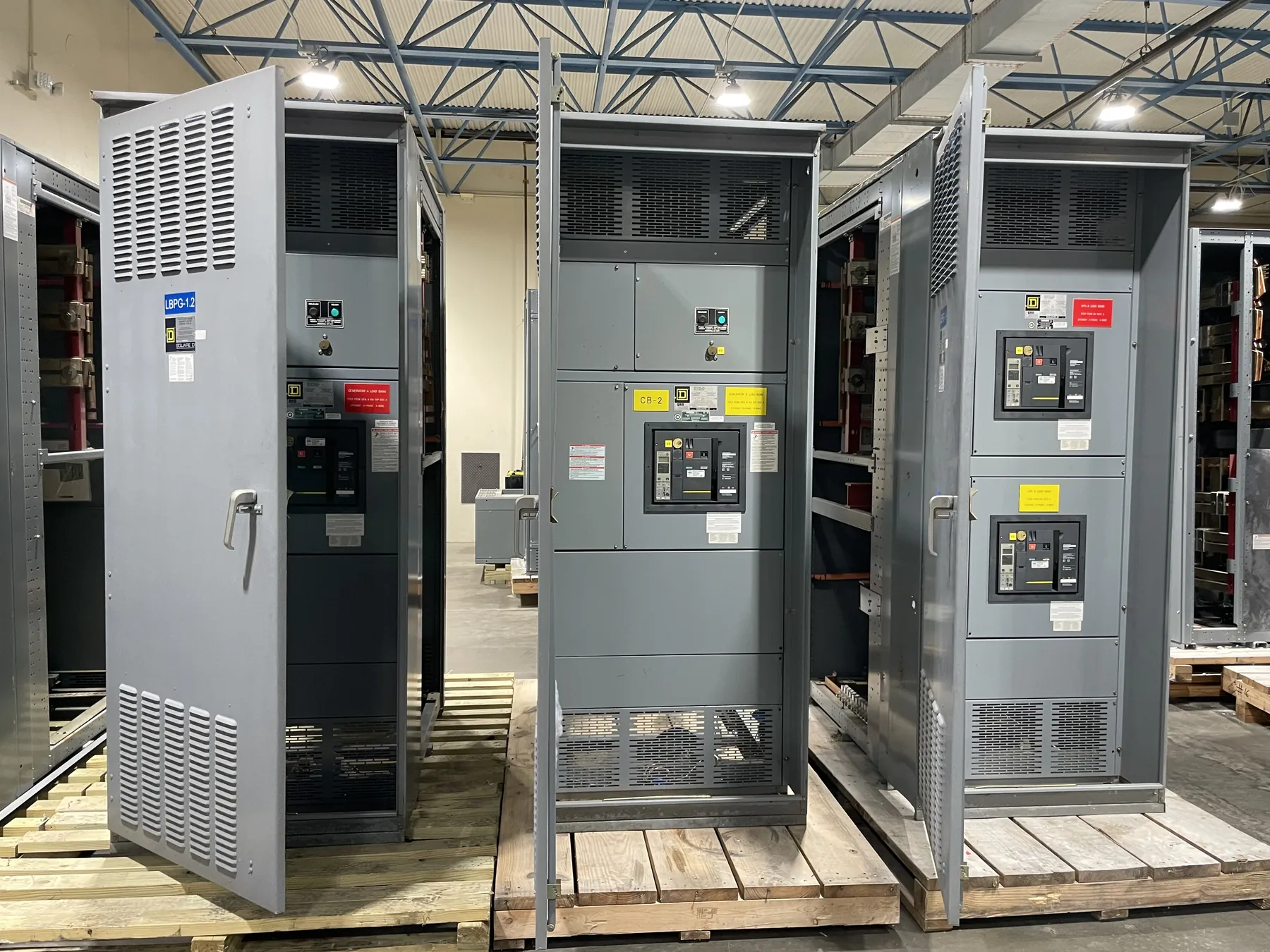
Metal-Enclosed Switchgear for Reno Projects
Planning metal-enclosed switchgear for a Reno facility starts with the electrical system it must serve, the site conditions and the equipment’s intended role. This construction can house switching and protective devices in a metal enclosure, with the arrangement selected for the project’s operating and maintenance needs. The term does not, by itself, specify voltage class, interrupting capability, internal barriers or access design. Those details must be established from the one-line diagram, equipment schedule and applicable engineering requirements.
Reno-area project conditions also deserve direct review rather than assumptions based on the city name. Confirm the installation elevation and the ambient-temperature design criteria at the actual equipment location, then compare them with the proposed equipment’s applicable ratings and manufacturer requirements. Indoor electrical rooms, outdoor enclosures and spaces affected by heating, ventilation, dust or restricted access may call for different enclosure and interface decisions. Site review helps identify these conditions before the equipment design is finalized.
Switch, Fuse and Circuit-Breaker Configurations
A key selection is whether the lineup uses switches with fuses, circuit breakers or a combination suited to the distribution scheme. A fused-switch arrangement may provide a compact means of switching and overcurrent protection for a defined application, while breaker-based sections may support different protection, operation and coordination requirements. Neither choice should be made solely by comparing device labels: the system voltage, available fault current, load characteristics, protection strategy and upstream and downstream devices all matter.
Project documents should identify feeder and main functions, the number and type of sections, expected loads, and any required metering or control interfaces. For breaker configurations, clarify the intended breaker type and operating arrangement. For fused sections, specify the fuse class or characteristics required by the design where known, and identify who is responsible for final selection. The manufacturer can use these inputs to develop a configuration for engineering review; qualified project engineers must confirm that the selected devices and settings suit the system.
Metal-Enclosed Is Not Metal-Clad
Metal-enclosed and metal-clad describe different construction concepts; the terms should not be treated as interchangeable. Metal-enclosed switchgear generally refers to switching or protective devices housed in a metal enclosure, but the term alone does not promise a particular compartment arrangement or degree of separation. Metal-clad construction has more specific compartmentalization characteristics associated with its applicable product standards and equipment class. The exact distinction depends on the design and applicable standard, not a sales shorthand.
When comparing proposals, request the construction description and drawings, including how compartments are arranged and what barriers separate devices, bus and cable areas. Ask how access is intended to occur and which components are accessible from the front, rear or both. These details affect footprint, cable entry, room layout and maintenance planning. Do not infer a construction class, listing or performance feature from the phrase “metal-enclosed” alone; confirm the product’s documentation and project requirements.
Barriers, Grounding and Access Planning
Barrier design is a practical choice tied to the specified construction, equipment function and access needs. Internal partitions may separate sections or components, but their presence and performance must be confirmed for the actual design. Review the general arrangement and section drawings to understand where bus, switching devices, instrument compartments and cable terminations are located. If future extension, cable routing or restricted room access is important, raise it during design rather than after the lineup dimensions are fixed.
Grounding interfaces need equally clear treatment. Provide the project grounding approach and identify requirements for the equipment ground bus, incoming and outgoing connections, and any bonding interfaces. The project engineer must verify the grounding design against the installation and system requirements. Access planning should cover working space, door and panel clearances, cable bending space, equipment delivery route and the room’s ventilation or environmental constraints. This is design coordination, not a substitute for site-specific safety procedures.
Fault Duty, Ratings and Coordination
Fault-duty selection must be based on the available fault current and the protective-device coordination study or other engineering direction for the project. Confirm the required ratings for each relevant part of the assembly and verify that devices, bus and connections are appropriate for the application. A current or voltage rating is not the same thing as system voltage, and a rating stated for one component does not automatically establish the rating of the complete lineup.
Coordinate the proposed equipment with upstream protection, downstream loads, transformer data, grounding method and any specified operating sequence. Changes to the source, conductor length, protective devices or system configuration can affect the engineering review. Applicable listings and standards also depend on product type and construction; UL 891 applies to applicable low-voltage switchboards, not automatically to all metal-enclosed switchgear or other voltage classes. Confirm the equipment’s ratings, listing status and standards coverage for the exact proposed design.
What to Provide for a Reno Quote
For a useful quotation, provide the one-line diagram, system voltage, available fault-current information, load and feeder schedule, required device arrangement, project specifications and target installation conditions. Include site elevation and ambient-temperature criteria, indoor or outdoor location, enclosure requirements, cable entry and termination details, room constraints, control or metering interfaces, and any schedule or shipping considerations. If documents are preliminary, identify what remains subject to engineering confirmation.
Our U.S. manufacturing business builds new custom power-distribution equipment using all-American components and ships nationwide, including to Nevada. Lead time depends on the approved design, components and project requirements; it should be confirmed during quotation and order review. Final ratings, construction, listings and interfaces require confirmation against the project documents and qualified engineering review. Clear inputs help align a Reno installation’s site conditions with a workable equipment design.