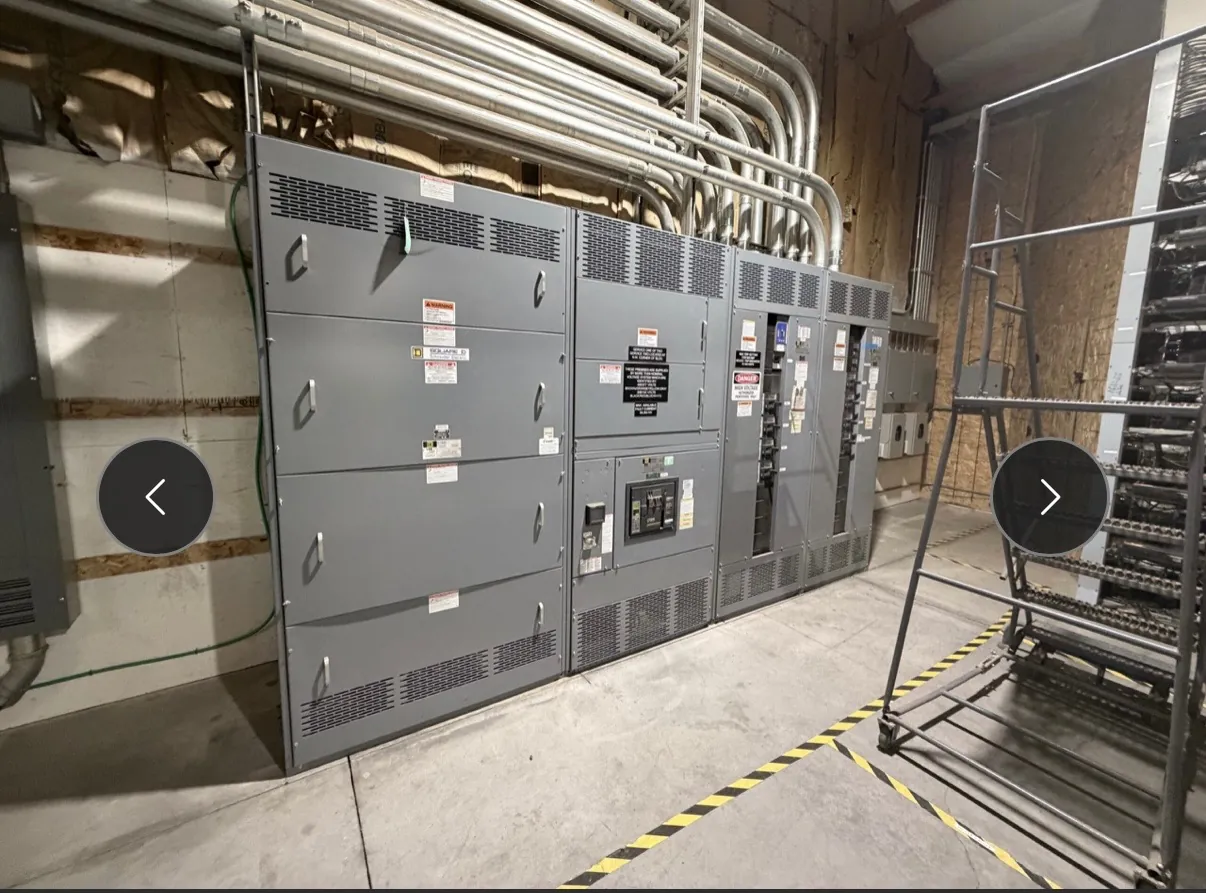
Airport Switchgear for Reno Facilities
Airport electrical distribution has to support a mix of public, operational, and safety-related functions without treating every load as equally critical. For a Reno project, the distribution plan may involve terminal areas, airfield support facilities, baggage systems, maintenance spaces, communications, and other airport-specific loads. Their actual arrangement and importance depend on the facility. Custom switchgear and power-distribution equipment can be configured around the project’s documented one-line diagram and operating requirements; equipment selection should follow engineering review, not assumptions based on a generic airport layout.
Our U.S.-manufactured assemblies use all-American components, are built in the USA, and can ship nationwide, including to Nevada. We manufacture new equipment for customer projects. Scope, ratings, configuration, and schedule are established through project-specific review; no particular lead time or delivery date should be assumed before quotation and coordination.
Separate Critical Loads and Normal Distribution
Start with the loads that must remain available, those that may be interrupted briefly, and those that can be shed or restored later. The facility’s engineers and operators can use those categories to develop feeder arrangements, identify suitable distribution points, and determine where selective isolation or future expansion matters. For example, a terminal’s public-area loads and a dedicated operational system may have different continuity requirements and should not automatically share the same distribution strategy.
Demand, motor starting, load growth, available fault current, and coordination with upstream and downstream protective devices all affect equipment selection. The switchboard or switchgear rating is not the same thing as the system voltage. Confirm the required voltage, current and interrupting ratings, enclosure and environmental conditions, and other nameplate details against the project documents. Applicable product standards and listings must also be confirmed for the specific equipment; UL 891 applies to relevant low-voltage switchboards, not every type of switchgear or distribution product.
Coordinate Emergency-Source Interfaces
Emergency and standby power arrangements depend on the facility’s design and the loads intended to receive alternate power. The distribution package may need defined interfaces for an alternate source, transfer equipment, generator controls, protective devices, metering, or remote status signals. These are project interfaces to coordinate, not assumptions that a particular source or transfer scheme is included in every assembly.
Clarify which equipment is furnished by others, where the electrical boundary falls, and what control and indication points must be available to airport operations. Engineers should verify the source characteristics, transfer sequence, grounding approach, fault-current contribution, and protective-device coordination. Changes to an emergency-source arrangement can affect both equipment ratings and the approved design, so interface details should be resolved before fabrication documents are finalized.
Plan Phased Outages Around Airport Operations — Airport Switchgear in Reno, NV
Airport work often has to fit within restricted outage windows and active-facility constraints. A replacement or expansion may need to preserve portions of an existing distribution system while feeders are transitioned in stages. The project team should identify which sections can be isolated, what temporary arrangements are acceptable, how shutdown boundaries are defined, and who authorizes each phase. Those decisions belong to the facility’s qualified electrical professionals and operations stakeholders.
For a quotation, provide the current one-line diagram, load schedules, equipment schedules, available fault-current information, protective-device requirements, and any phasing or tie-in constraints. Include known dimensions, cable entry and exit preferences, connection details, control requirements, and the expected scope split between the manufacturer and installing contractor. If existing drawings are incomplete, note that limitation early so the project team can determine what field verification is needed.
Account for Reno Site and Installation Conditions
Reno’s location makes it especially important to check the actual installation altitude and the project’s ambient-temperature design criteria against the equipment ratings. Do not substitute general regional assumptions for site data. Temperature, ventilation, enclosure placement, exposure to dust or moisture, and indoor versus outdoor installation can influence equipment configuration and operating limits. Qualified engineers should establish the applicable criteria and confirm whether any rating adjustments or design measures are required.
Access also deserves early attention. Airport security procedures, delivery routes, receiving hours, staging space, equipment-room openings, floor and handling limitations, and restrictions on work near active operations can affect shipment planning and installation sequencing. These conditions vary by facility. Share the site’s actual access and receiving requirements during project coordination; nationwide shipping does not determine when a shipment can be accepted or moved through a controlled airport site.
Coordinate Documents, Ratings, and Manufacturing Scope
Before release, align the approved electrical design with equipment ratings, physical arrangement, connection points, labeling needs, and control interfaces. Confirm which drawings and submittals are required, who reviews them, and how revisions will be handled. Any specified listing, standard, or project acceptance requirement must be checked against the exact product and scope rather than presumed from a general equipment description.
A clear request package helps the manufacturer evaluate the intended configuration and identify open questions. Include the project location, installation conditions, schedule milestones, outage phases, source interfaces, and any airport-specific access or coordination rules. Final design decisions, code compliance, arc-flash assessment, and suitability for the site require qualified engineering review and site-specific information. With those inputs defined, custom airport distribution equipment can be developed to match the documented needs of a Reno facility.