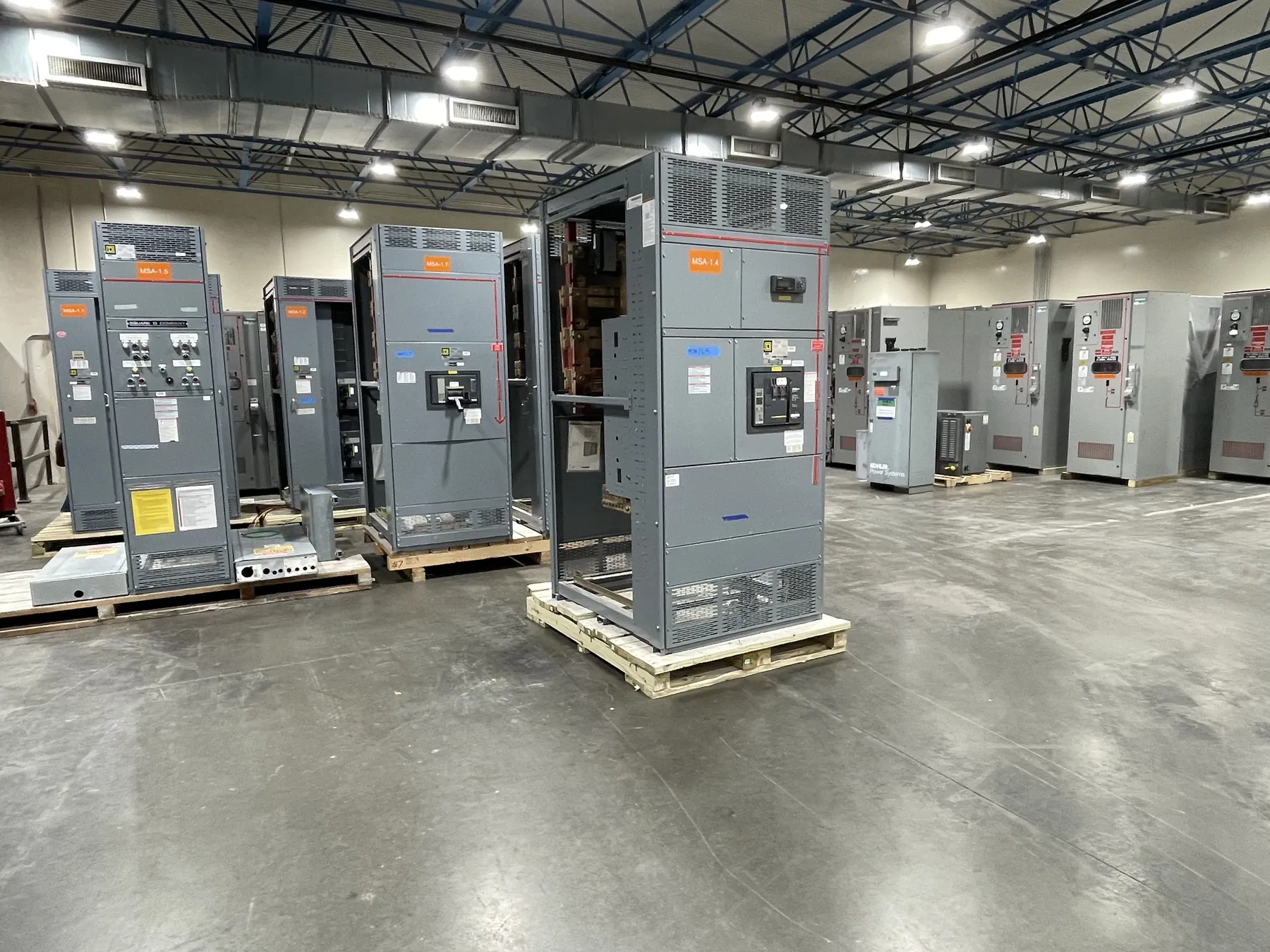
Low-Voltage Switchgear for Reno, NV Projects
Reno-area facilities may need low-voltage switchgear for new construction, equipment additions, or replacement of aging distribution systems. The right configuration depends on the electrical design and the conditions at the installation—not just the nominal system voltage. Our U.S.-manufactured assemblies use all-American components, are built in the United States, and ship nationwide, including to Nevada. We manufacture new custom power-distribution equipment for customer projects.
Early planning should establish how the lineup connects to the source, what loads it serves, how the facility expects to operate and maintain it, and what constraints apply in the electrical room. A switchgear arrangement that suits one service entrance or industrial process may not fit another. Project-specific ratings, construction details, applicable standards, and listing requirements need confirmation against the design documents and site conditions.
Choose a Power Circuit Breaker Arrangement Around the Operating Plan
Low-voltage power circuit breaker switchgear can be arranged to meet a facility’s distribution and operational needs, but the breaker layout is only one part of the decision. The engineer and equipment manufacturer should review the incoming source, feeder count and functions, anticipated load expansion, protection scheme, and whether the project requires provisions for alternate sources or ties. Each added section or connection affects the lineup’s footprint, interfaces, and coordination requirements.
Consider how maintenance access and equipment isolation are intended to work within the facility’s approved operating plan. Breaker accessibility, compartment arrangement, cable-entry direction, and the space available for future work can influence the design. These choices do not replace a site-specific safety assessment or qualified engineering review. They help define an assembly that can be integrated into the facility’s operating and maintenance strategy.
Review Bus Ratings, System Conditions, and Coordination Together
Bus ratings are equipment characteristics, not another way of stating system voltage. The specified bus must be appropriate for the project’s electrical design and expected operating conditions. Selection and confirmation may involve the system voltage, current requirements, available fault current, protective-device characteristics, and other design inputs established by the responsible electrical engineer. Do not assume a rating from a nearby installation or from a general product description applies to a Reno project.
Protection coordination also needs to be considered across the connected distribution system. Breaker and trip-unit selections, settings, and upstream and downstream devices affect how protection is intended to operate. Coordination studies and fault-current information are engineering inputs, not decisions that can be made from a location or product name alone. Provide the applicable study criteria and one-line diagram for review, and identify any constraints on selective coordination or continuity of service.
Account for Reno Installation Altitude and Ambient Temperature
Reno’s location makes it especially important to document the actual installation altitude and the ambient-temperature design criteria for the equipment location. Those are site and enclosure conditions to verify—not assumptions to settle from the city name. The equipment ratings and design need to be checked against the actual conditions identified for the project. If the switchgear will be indoors, in a conditioned room, or in another environment, describe that setting and any relevant temperature limits or ventilation requirements.
Room dimensions, access routes, floor and anchorage details, conduit or busway entry points, and clearance constraints can also affect the lineup design and delivery planning. Nevada shipments can be coordinated as part of a nationwide project, but the purchaser and project team should confirm receiving access, unloading arrangements, storage conditions, and installation sequencing at the site. No delivery date or local installation condition should be presumed before those details are reviewed.
Clarify UL 1558 Applicability and Project Documentation
UL 1558 may be relevant to low-voltage switchgear, depending on the product scope and project requirements. Its applicability should be confirmed for the specific assembly and specification. Do not infer that a product is listed, or that a standard applies to every configuration, based solely on a general equipment description. Any requested listing, construction feature, or submittal requirement must be reviewed and confirmed for the proposed equipment.
For quotation and engineering review, provide the one-line diagram, system voltage and source information, required bus and breaker ratings, available fault-current data, protection and coordination criteria, feeder schedule, and preferred arrangement. Include the installation altitude, ambient-temperature criteria, room and access details, cable-entry preferences, and any required standards or listing language. Complete inputs help identify design questions early; final ratings and interfaces remain subject to engineering review and project-specific confirmation.
Build a Reno-Specific Scope Before Equipment Is Finalized
A clear scope connects electrical requirements with the physical realities of the facility. Confirm how the switchgear interfaces with transformers, downstream distribution, controls, metering, and any project-specific communications or auxiliary circuits. Identify who is responsible for studies, settings, field connections, and acceptance requirements so that the equipment design aligns with the broader electrical package.
Our custom manufacturing approach supports defined project requirements rather than a one-size-fits-all lineup. The practical next step is to share the available drawings and design criteria for review, resolve open questions with the project’s qualified electrical professionals, and confirm the ratings, configuration, applicable standard, and site conditions before release. This process helps keep the proposed low-voltage switchgear grounded in the needs of the Reno installation.