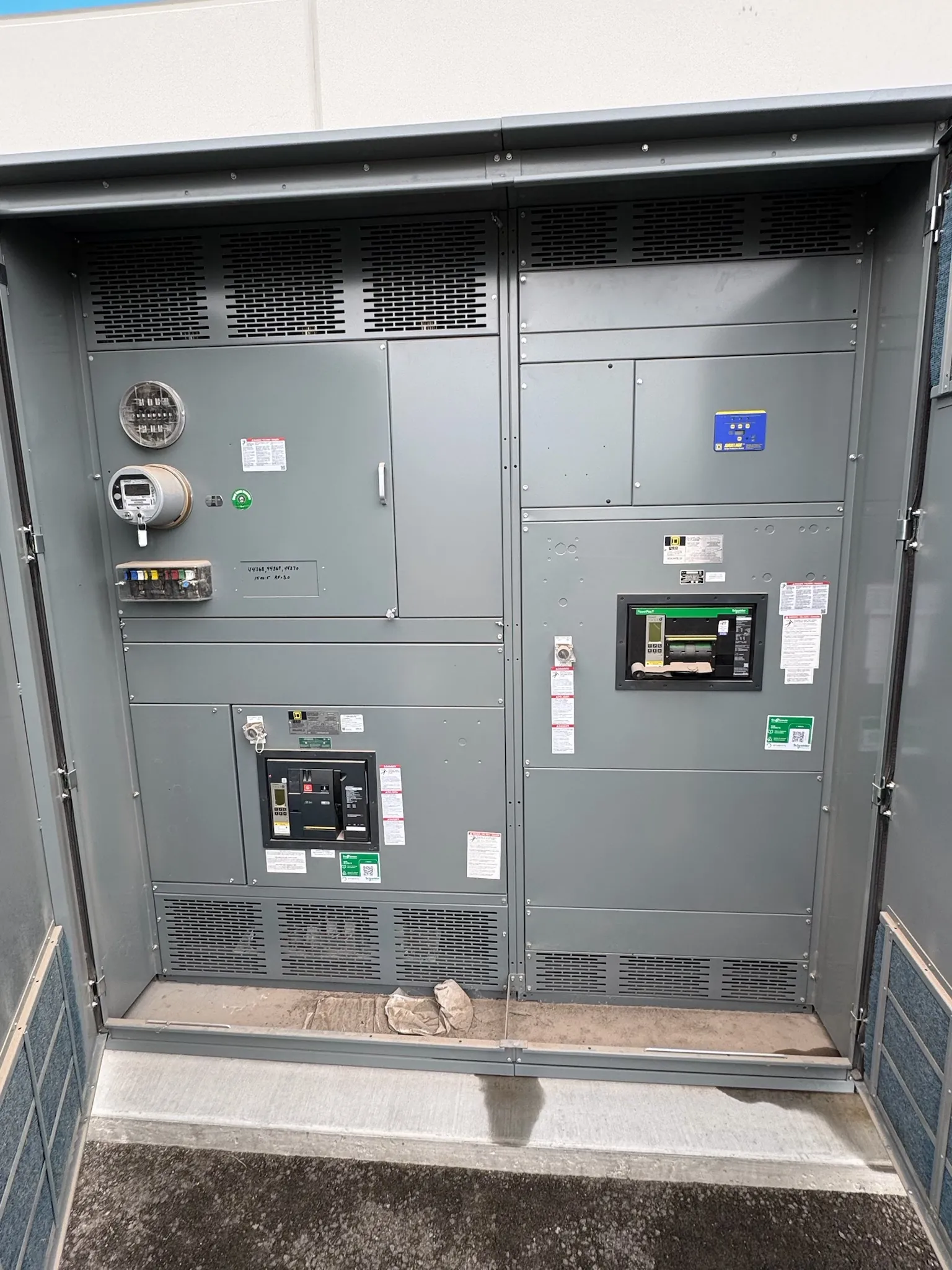
Metal-Clad Switchgear Design for Reno Projects
Metal-clad switchgear is a medium-voltage assembly in which major primary components are separated into grounded metal compartments. For a Reno project, that compartmentalization can support organized equipment layout and help limit exposure between sections, but it does not replace a site-specific safety review or determine operating practices. The required configuration depends on the electrical system, protection scheme, room layout, maintenance approach and applicable project specifications.
New custom metal-clad switchgear is manufactured to defined electrical and mechanical requirements rather than selected by city name alone. A quotation and design review should establish the system voltage, required ratings, lineup arrangement, incoming and outgoing connections, control power, protection functions and interfaces with other equipment. A rating is not the same as system voltage, and every proposed rating, listing and project detail requires confirmation by qualified engineering review.
Compartments, Lineup Layout and Service Access
Metal-clad construction separates functions such as bus, circuit breakers, cable terminations and low-voltage controls into designated compartments, with the precise arrangement governed by the design. The lineup may include incoming sections, feeder sections, metering or other specified sections. Their order affects cable routing, access, room dimensions and the location of control and protection devices. Drawings should show how the proposed lineup connects to the site distribution system and how it fits the electrical room.
Compartment boundaries and doors, barriers, shutters and interlocks are design features that must be evaluated as part of the complete assembly. The project team should confirm required access clearances, cable entry direction, working space, floor openings, conduit or bus connections, and any overhead or rear-access constraints. These details matter in Reno facilities where existing rooms, building structure and equipment routes may limit the available footprint. Final installation conditions need review against applicable codes and project requirements.
Withdrawable Breakers and Equipment Interfaces — Metal-Clad Switchgear in Reno, NV
Withdrawable circuit breakers can be moved between defined connected, test or disconnected positions as supported by the particular design. This arrangement may aid inspection or replacement planning, but it also affects compartment dimensions, interlocking, control connections and the procedures established by the facility. Confirm breaker type, continuous-current and interrupting requirements, control voltage, trip and close functions, auxiliary contacts, and any required accessories before design release.
Breaker selection must match the system’s fault conditions and protection strategy—not simply the nominal voltage. The engineering team needs available fault-current information, upstream protective-device data, downstream equipment requirements and the intended operating configuration. Connection details at the lineup ends are also important: incoming sources, transformers, generators, transfer equipment, cable terminations and grounding conductors may each impose different requirements. Interfaces should be documented early to avoid assumptions about who supplies or connects adjacent equipment.
Grounding, Protection and Relay Coordination — Metal-Clad Switchgear in Reno, NV
Grounding design links the switchgear enclosure and grounding bus to the facility grounding system while accounting for the specified system grounding method. The design review should address incoming and outgoing grounding connections, ground-fault sensing where required, and compatibility with transformers or other sources. Grounding provisions must be coordinated with the site electrical design; a switchgear lineup alone cannot establish the correct grounding arrangement for a facility.
Relays and other protective devices need settings and functions based on a short-circuit and coordination study prepared or reviewed by qualified engineers. The study considers source conditions, transformer characteristics, conductor and equipment limits, fault levels, and downstream devices. Coordination is a system-level decision: settings intended to isolate a fault selectively must also satisfy equipment protection and project requirements. Provide available one-line diagrams, device data and study criteria for review; do not treat a relay model or factory configuration as confirmation of final settings.
IEEE C37.20.2, Ratings and Reno Site Conditions
IEEE C37.20.2 is the applicable standard to identify when the project specifies metal-clad switchgear within its scope. The project team should confirm the required edition, construction and rating criteria, and any additional owner, utility or code requirements. Referencing the standard does not establish that a particular assembly is listed, certified or compliant; those claims and the exact product scope must be confirmed for the proposed equipment.
For a Reno installation, verify actual site elevation and the ambient-temperature design criteria against the equipment ratings and manufacturer’s design basis. Do not assume that city-level conditions fully describe a site: indoor room temperature, ventilation, heating, cooling and operating environment may differ. Where conditions fall outside the applicable design basis, engineering review is needed to determine whether the equipment selection or design must change. Ratings and environmental suitability require confirmation for the specific project.
Information for a Reno Switchgear Quotation
Useful quotation inputs include the one-line diagram, system voltage and grounding, available fault-current data, required continuous and interrupting ratings, lineup dimensions, cable or bus connection details, control and relay requirements, and the intended source and feeder arrangement. Include project specifications, applicable IEEE requirements, site elevation, ambient criteria, room drawings and delivery-site constraints. These inputs help define scope and identify unresolved engineering questions before manufacture.
The manufacturer builds new custom power-distribution equipment in the United States using all-American components, supports short lead times and ships nationwide, including to Nevada. The actual schedule depends on confirmed design details and project requirements; no specific delivery date should be assumed before review. Clear drawings and timely resolution of interfaces support a more reliable design and quotation process.