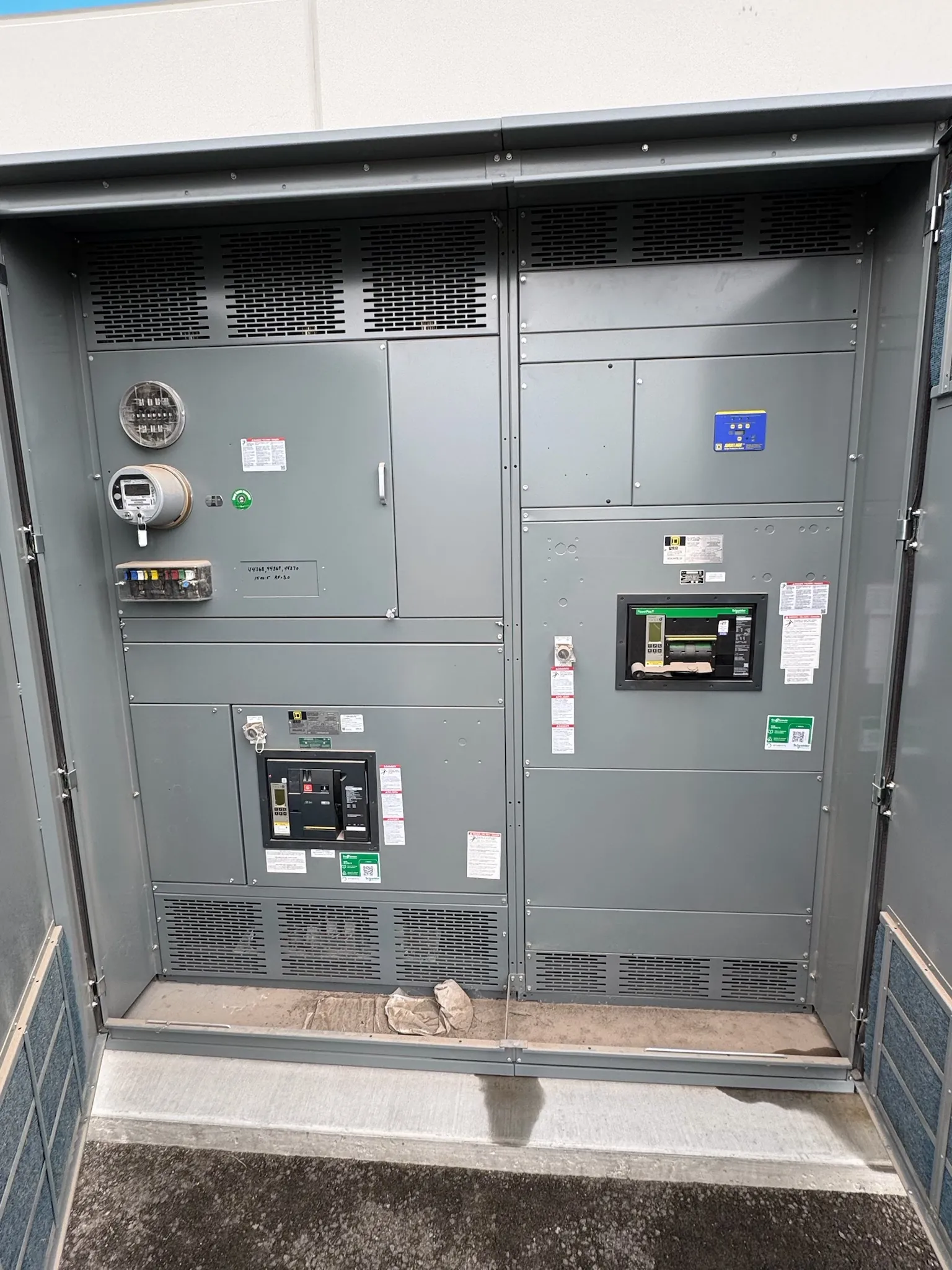
Metal-Enclosed Switchgear for Pahrump, NV Projects
Metal-enclosed switchgear may suit a Pahrump facility when a project needs a coordinated arrangement of switching or interrupting devices, bus, barriers and cable connections in metal enclosures. The right configuration depends on what the equipment must control and protect, how it connects to the source and downstream loads, and the conditions at the installation site. A useful first step is to establish the service voltage, grounding approach and available short-circuit current at the proposed connection point. These inputs shape equipment selection; they are not interchangeable with a product’s current or interrupting ratings.
We manufacture new custom switchgear and power-distribution equipment in the United States, using all-American components, and ship nationwide, including to Nevada. For a Pahrump project, shipping and placement should be considered alongside electrical design. Confirm the route into the facility, unloading arrangements, access to the equipment area, and any space or environmental constraints that could affect enclosure layout or installation planning. Site conditions and project requirements need review before a design is finalized.
Switch, Fuse or Breaker: Start With the Protection Scheme
A switch-and-fuse arrangement and a circuit-breaker arrangement serve different protection and operating strategies. A fused switch combines a switching function with fuses selected for the application. A breaker-based configuration uses circuit breakers as the interrupting devices and may be considered where the project requires a different protection, control or coordination approach. Neither choice is automatically preferable: the appropriate solution depends on load characteristics, source conditions, downstream devices, operating needs and the protection study.
When requesting a quotation, identify the intended function of each section, the connected loads, the source arrangement and any required switching or metering provisions. Provide available protective-device information where known, including upstream and downstream equipment details. A qualified engineer should evaluate fuse or breaker selection and coordination against the site’s fault-current information and system design. Equipment ratings and final configuration require confirmation for the specific application.
Barriers, Compartments and Access Affect the Layout
Metal-enclosed describes an enclosure arrangement, not a single universal internal construction. The number and placement of barriers, the separation between functional areas, and the access provisions can vary by design. These choices influence how components are arranged, how cables enter and terminate, and how maintenance access is planned. More separation may affect dimensions, interfaces and cost; a compact layout may impose different access or cable-routing constraints. The preferred balance should follow project requirements rather than an assumed standard layout.
Clarify which parts of the assembly need barriers, how operators and maintenance personnel are expected to access equipment, and whether cable compartments, control compartments or metering provisions are required. Door and panel arrangements also need to work with the room or outdoor installation area. Do not infer an access classification or safety characteristic from the phrase “metal-enclosed”; request the applicable construction details and confirm them during engineering review.
Metal-Enclosed Is Not the Same as Metal-Clad — Metal-Enclosed Switchgear in Pahrump, NV
Metal-clad switchgear is a more specific construction category, generally associated with compartmentalized assemblies and defined separation of major components. Metal-enclosed is a broader description and does not by itself establish that the equipment has metal-clad construction or any particular internal barrier arrangement. The terms should not be used as if they were synonyms on a specification or purchase order.
If a project specification calls for metal-clad equipment, state that requirement explicitly and have the proposed design reviewed against the applicable construction expectations. If the project calls for metal-enclosed switchgear, describe the required switching devices, barriers, access and interfaces instead of relying on the product name alone. Applicable standards and construction details depend on the equipment type and project; UL 891 applies to relevant low-voltage switchboards, not universally to switchgear or other equipment.
Fault Duty, Grounding and System Interfaces — Metal-Enclosed Switchgear in Pahrump, NV
Available short-circuit current at the installation point is a key design input. It helps determine whether the proposed equipment and protective devices are suitable for the system conditions, but it must be established from reliable project information and reviewed by qualified engineers. Do not substitute a general site assumption or the equipment’s voltage rating for a fault-duty evaluation. Confirm the basis and location of the available-current value, along with any relevant changes to the source or transformer arrangement.
Grounding also needs to be defined for the actual system. Provide the intended grounding method, source configuration and relevant neutral or ground connections so the equipment interfaces can be evaluated correctly. The design review should account for protective-device coordination, upstream and downstream equipment, cable terminations, control connections and any metering or communications requirements. Ratings, listings, standards applicability and final design details require confirmation for the specified assembly and site.
Information to Prepare for a Pahrump Quote
A useful quotation package distinguishes project requirements from assumptions. Include the service voltage, grounding approach, available short-circuit current, source details, intended switch or fuse or breaker functions, load information, preferred barrier and access arrangement, cable entry and termination needs, and any controls or metering interfaces. Drawings, specifications and known constraints at the equipment location help identify space, routing and installation questions early.
Because a Pahrump installation may have site-specific access, exposure and logistics considerations, share the planned indoor or outdoor location and any relevant enclosure or placement requirements. The manufacturing team can use the project documents to develop a proposed configuration and identify information needing resolution. Short lead times are supported, but timing depends on the approved design, component requirements and project details. Final ratings and suitability should be confirmed through engineering review before equipment is released for manufacture.