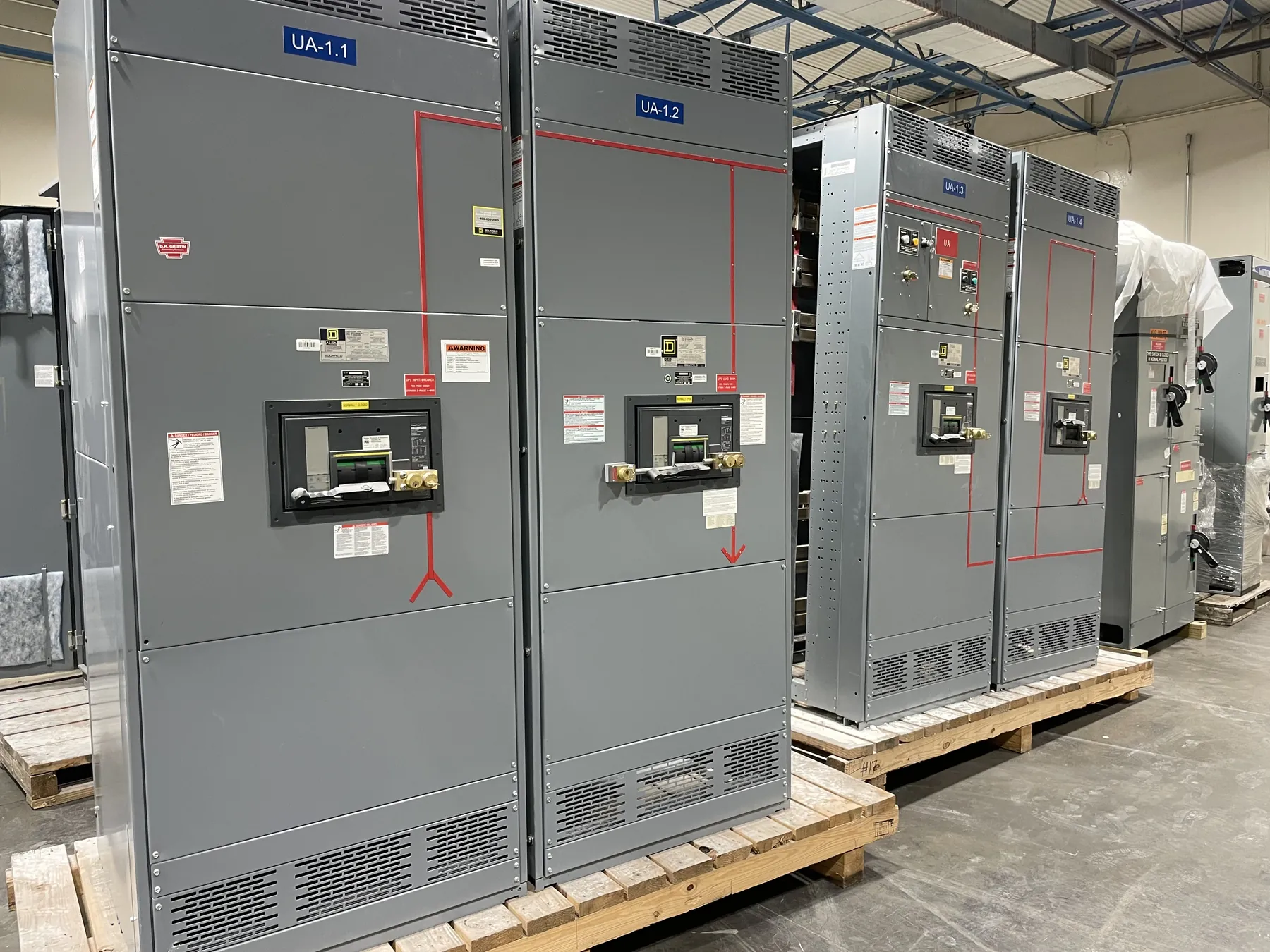
Airport Switchgear Planning for Pahrump, Nevada
Airport electrical distribution has to support more than the terminal. Depending on the facility and its operations, loads may include airfield lighting, communications and navigation systems, hangars, maintenance areas, fuel-related equipment, security systems, and building services. A Pahrump airport project should begin by identifying which loads are essential to continued operations, which can be interrupted, and which require a defined emergency-source interface. The right switchgear configuration depends on the facility’s electrical design and operating requirements, not simply on the airport label.
For projects in Pahrump, confirm the actual site conditions before equipment selection. Verify the service voltage, grounding approach, and available short-circuit current at the proposed connection point. Also establish how the facility is supplied, where the equipment will be installed, and whether existing distribution must remain in service during construction. These details influence equipment ratings, compartment arrangement, incoming and outgoing connections, and the coordination work required from the project’s electrical engineer.
Separate Critical Airport Loads by Operating Need
A useful load schedule distinguishes operationally critical systems from loads that may be shed or restored later. For example, airfield lighting and communications may have different continuity requirements from office loads, workshop receptacles, or nonessential building services. The project team should identify required operating modes and the consequences of losing each load. That information helps determine how feeders are grouped and whether distribution sections should serve different functions.
Grouping loads is a design tradeoff. Consolidating feeders may simplify the distribution arrangement, while separating functions can make isolation and phased work more manageable. The choice also affects the number and type of outgoing devices, spare provisions, space needs, and future expansion options. Equipment should not be specified with assumed spare capacity or a presumed load profile; the engineer needs project-specific load data and a coordinated one-line diagram.
Coordinate Emergency Sources and Transfer Interfaces — Airport Switchgear in Pahrump, NV
Where a project includes a generator, alternate utility source, or other emergency supply, define the interface early. The design team should document the source characteristics, transfer arrangement, required interlocking or control functions, and which loads are intended to transfer. Switchgear and switchboards may form part of a larger system, but their selection alone does not establish that the overall emergency-power design will perform as intended.
Compatibility depends on the complete installation, including upstream protection, downstream equipment, controls, and the sequence of operation. Confirm how normal and emergency sources connect, what equipment is furnished by others, and which party is responsible for controls and integration. Any transfer scheme, protective-device setting, or operating sequence requires review by qualified electrical professionals against the facility design and applicable project requirements.
Plan Phased Outages Around Airport Operations — Airport Switchgear in Pahrump, NV
When replacing or adding distribution equipment at an operating airport, outage planning can shape the equipment layout and construction sequence. Identify circuits that must remain available, acceptable outage windows, temporary-power needs, and dependencies between airport systems. The project team should determine whether installation can proceed in stages and whether existing feeders or raceways can be reused. These decisions may affect section arrangement, termination access, cable routing, and the division of work between the equipment supplier and installing contractor.
Provide the anticipated outage phases and constraints with the design package. A switchgear quotation cannot establish an outage plan or guarantee continuity of service; those depend on site conditions, construction planning, approved switching arrangements, and coordination among the owner, engineer, contractor, and relevant service providers. Avoid assuming that a single shutdown will be feasible or that temporary connections are available without site review.
Confirm Ratings, Protection, and Equipment Scope
Equipment ratings must match the system conditions at the installation point. A voltage rating is not the same as system voltage, and a device’s interrupting or withstand rating must be evaluated in relation to the available fault current and the protective-device arrangement. Confirm the required current ratings, enclosure and installation conditions, incoming source details, feeder requirements, and any environmental or access constraints in the project documents. Ratings, listings, and product scope require confirmation for the specific design.
UL 891 applies to applicable low-voltage switchboards; it should not be treated as a blanket designation for every switchgear assembly or for medium- or high-voltage equipment. The engineer and manufacturer should confirm which product standard and listing requirements apply to the proposed equipment. Protective-device coordination, grounding, and fault-current assumptions also require engineering review rather than selection by location or application alone.
Prepare a Useful Pahrump Project Quotation Package
A complete request for quotation can include the one-line diagram, load and feeder schedules, service and grounding information, available short-circuit current, source and transfer details, required ratings, enclosure conditions, cable-entry preferences, and project phasing. Include site access and delivery constraints where known, such as receiving hours, unloading arrangements, equipment-room access, and restrictions on staging or movement. Pahrump site logistics vary by facility, so these details should be confirmed with the project team rather than assumed.
The manufacturer builds new custom power-distribution equipment in the United States using all-American components, with short lead times and nationwide shipping. Final configuration, applicable listings, ratings, schedule, and shipping arrangements depend on the approved project requirements and must be confirmed during quotation and engineering review.