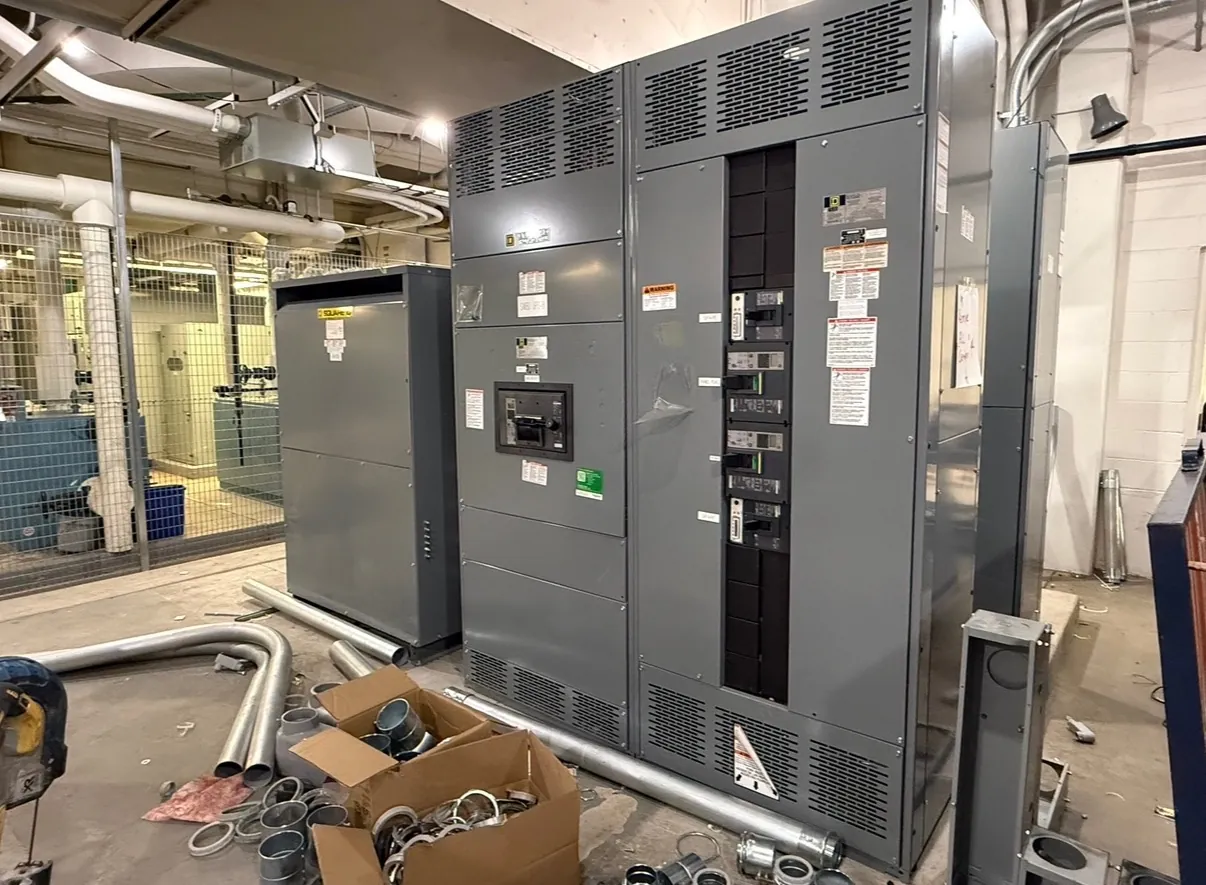
Planning switchgear for a Pahrump project
For a commercial, industrial, municipal, or other facility in Pahrump, switchgear selection starts with the electrical service and the work the equipment must perform. A replacement lineup, a new building distribution system, and an expansion to existing electrical infrastructure can have different requirements even when they serve similar loads. The design team should establish the project scope and identify the equipment interfaces before requesting a quotation. U.S.-built custom distribution equipment can be specified for a Pahrump site and shipped from the manufacturer; that does not imply a local factory or completed local installation.
Begin by documenting the utility or upstream source, the intended service voltage, phase and wire configuration, and the grounding approach. Confirm available short-circuit current at the equipment location rather than relying on a general area estimate. These details influence the equipment configuration and interrupting or withstand requirements. A voltage designation alone does not establish the necessary short-circuit rating, and a rating is not itself the system voltage. Have the responsible electrical engineer verify the system data and design basis.
Confirm site electrical data before specifying ratings
Short-circuit current depends on the source and the electrical path to the proposed lineup, including transformers, conductors, and upstream equipment. If the source arrangement or transformer information is still changing, note the assumptions and obtain an engineering review before finalizing ratings. Also identify the protection devices upstream and downstream, their relevant settings or characteristics when available, and the intended coordination objectives. Protection coordination is a system-level design task; choosing switchgear from a single fault-current figure does not establish that the complete installation will coordinate as intended.
Grounding needs the same care. State whether the project uses a grounded or other system arrangement, how the equipment is expected to connect to the grounding and bonding network, and what the one-line diagram shows at the service and distribution points. Do not infer grounding details from a building address or a common regional practice. The engineer of record and project team should resolve any uncertainty against utility information, site drawings, and applicable project requirements.
Choose a lineup around loads and interfaces
Prepare a load schedule that distinguishes present loads from planned additions. Identify the feeder count and characteristics, major motor or other significant loads, control-power needs, metering expectations, and any transfer or tie functions included in the project scope. These inputs help determine the lineup arrangement, device types, bus configuration, enclosure needs, and space for future work. Leaving room for expansion may be useful, but it should be balanced against available electrical-room space and a defined growth plan rather than treated as an automatic requirement.
For a low-voltage switchboard, ask whether the proposed assembly is intended to comply with UL 891 and confirm the exact product scope and listing status for the offered configuration. UL 891 applies to applicable low-voltage switchboards; it should not be read as a blanket statement covering all switchgear or other equipment. The project documents should distinguish product ratings, system voltage, and any required listing or approval. Ratings, listing details, and the suitability of a configuration require confirmation for the actual equipment and application.
Account for Pahrump facility and delivery conditions
Before the lineup is finalized, review the electrical-room layout, access route, doorway and turning clearances, floor and anchoring conditions, working space, ventilation, and environmental conditions at the installation location. Site temperature, dust exposure, moisture, and other conditions may affect enclosure or installation decisions, but those needs should be established from project information rather than assumed for every Pahrump facility. Check how the equipment will be received, moved from the delivery point, and placed. Shipping nationwide can support a Nevada project, while unloading, rigging, indoor staging, and installation arrangements should be assigned clearly among the project parties.
Existing infrastructure can also constrain the design. Record the available footprint, cable entry direction, conduit or busway interfaces, and any limits on shutdowns or construction sequencing. Where new equipment connects to existing gear, confirm dimensions and electrical interfaces from reliable drawings or field verification by qualified personnel. Do not assume that an older lineup can accept a new section without engineering review.
Prepare a useful quotation package — Switchgear for Pahrump, NV
A complete inquiry gives the manufacturer enough information to identify open design questions early. Include the one-line diagram, equipment schedule, load and feeder information, service and grounding data, available fault-current study or source data, required ratings, enclosure and room conditions, and relevant project specifications. Provide requested drawings, connection details, and any owner or engineer requirements for documentation, inspection, or testing. If an input is not yet established, label it as pending instead of presenting an estimate as a confirmed site value.
Clarify the requested delivery point, receiving access, target project milestones, and who will coordinate freight and site handling. These details help the team discuss a realistic manufacturing and shipment plan without implying a guaranteed lead time. The manufacturer can review the supplied scope, identify information needed to develop the configuration, and confirm applicable ratings and product details for the quotation.
Coordinate design through shipment and installation
Custom equipment depends on timely agreement about drawings, interfaces, and project requirements. The project team should review submittals against the approved electrical design, resolve comments, and confirm final connections and dimensions before release to manufacture. Any change to source data, loads, fault-current information, or room layout should be communicated for review because it may affect the proposed equipment. U.S.-built assemblies using all-American components and nationwide shipping can serve projects in Pahrump, but site-specific engineering, code compliance, installation, and acceptance remain matters for qualified professionals and the authorities responsible for the project.