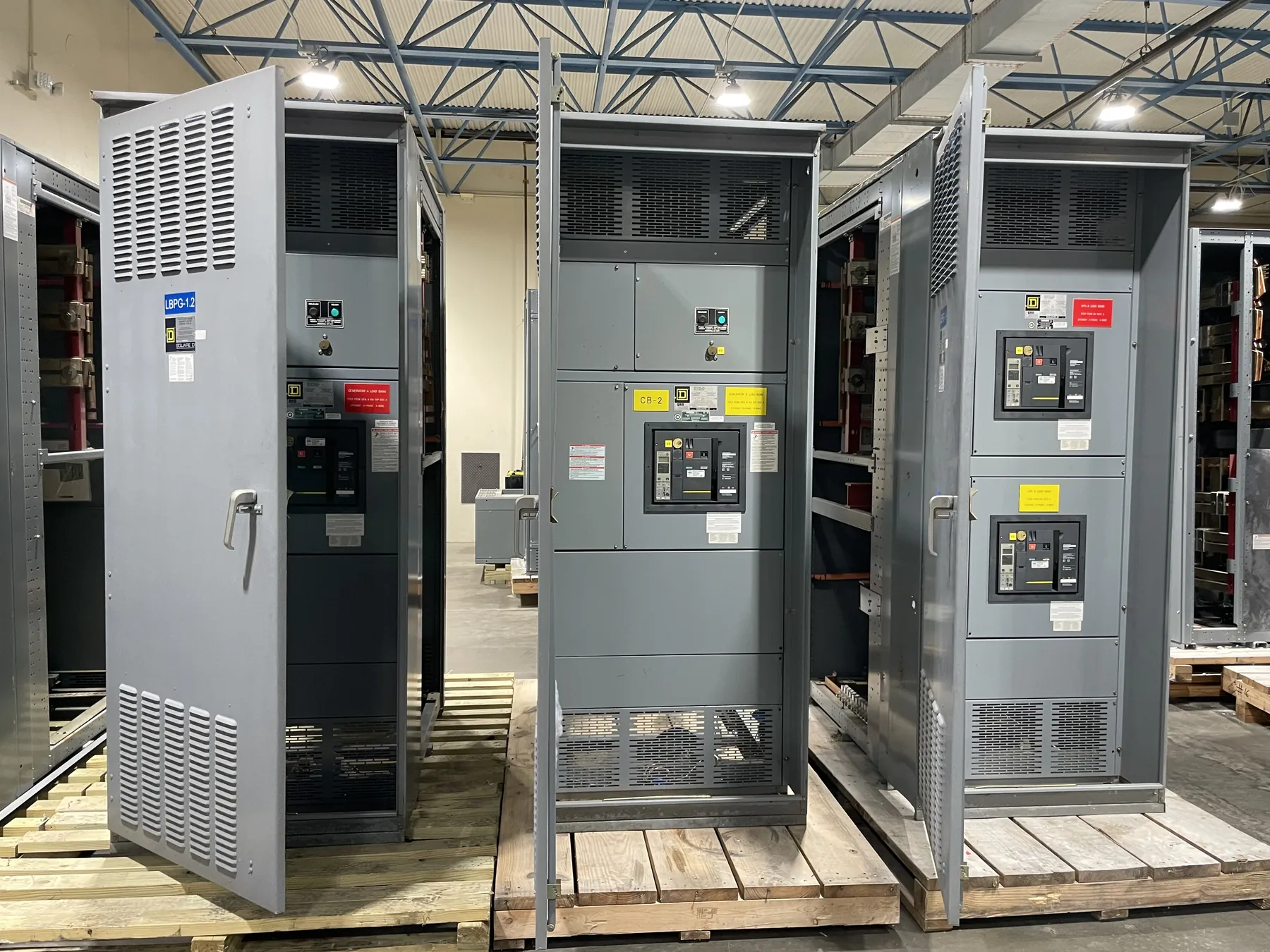
Service Entrance Switchboards for North Las Vegas Projects
A service entrance switchboard is the point where an electrical service enters a facility and connects to its main distribution. Its configuration affects utility metering, the main disconnect, grounding and bonding, and the outgoing feeders that serve the building. For North Las Vegas projects, these interfaces should be established before the lineup is dimensioned or equipment is released for manufacture. A switchboard arrangement that works on a single-line diagram still has to fit the electrical room, cable paths, access provisions and approval process at the actual site.
We manufacture new custom switchboards in the United States using all-American components. Each project is developed from its electrical requirements and physical constraints; the exact arrangement, ratings, applicable listings and required documentation must be confirmed for the project. UL 891 applies to applicable low-voltage switchboards, not automatically to every service entrance assembly or electrical product. The project team should identify the equipment and listing requirements that apply before specifying them.
Resolve Metering, Main Disconnect and Grounding Interfaces
Start with the serving utility’s service requirements and the project’s electrical design. Metering may affect the location and arrangement of the service section, compartments, instrument provisions and access. The utility’s requirements should be documented by the project team rather than assumed from a typical layout. Confirm whether the specified metering approach is compatible with the proposed switchboard configuration and the authority’s review process.
The main disconnect configuration also needs to match the service design, required switching arrangement and project documents. Service grounding and bonding are related but distinct design considerations: the grounding electrode system, service bonding point and downstream neutral treatment must be coordinated by qualified electrical professionals. Identify the intended service configuration and document the interface clearly so equipment details align with the electrical design. These decisions cannot be finalized from a city name or product label alone.
Confirm Available Fault Current and Equipment Ratings — Service Entrance Switchboards in North Las Vegas, NV
Available fault current at the service affects the interrupting and withstand requirements for the equipment and its protective devices. Obtain the applicable value and study assumptions from the responsible electrical engineer or other qualified project professional. The switchboard’s ratings must be selected and coordinated against that information, the system design and the governing project requirements. Do not treat a rating as a system voltage, or assume that a voltage or amperage description by itself establishes adequate fault-current performance.
Quotation documents should distinguish the system voltage and phase from equipment ratings and should identify the requested main device, feeder devices, bus arrangement and other specified features. Where the design depends on coordination, protection settings or selective operation, include the relevant engineering requirements for review. Ratings, listings and final configuration require confirmation against the project documents and applicable authority requirements.
Map Cable Routes, Clearances and Room Constraints
Before fixing lineup dimensions, map incoming and outgoing cable routes. Record whether service conductors enter from above or below, where feeder cables leave the equipment, and how bends, pull space and terminations will fit within the available room. Cable entry locations can affect section arrangement, enclosure dimensions and the practical sequence for installation. Provide drawings or measured room information when available; do not rely on an assumed standard footprint.
Working clearances and access should be reviewed against the site layout and applicable requirements by the project’s qualified design team. Note doors, columns, adjacent equipment, walls, overhead obstructions and any planned future distribution that could constrain the lineup. In North Las Vegas, delivery access is another early coordination item: confirm the route from the receiving point to the electrical room, door and corridor dimensions, staging limitations and any restrictions on handling or placement. These site conditions can influence how sections are configured and shipped.
Prepare a Complete Basis for Quotation and Review
A useful quotation package lets the manufacturer evaluate both the electrical arrangement and physical fit. Include the one-line diagram, service and feeder requirements, available fault-current information, utility metering criteria, grounding and bonding notes, required ratings or listings, and the project’s authority-review requirements. Add room plans, cable-entry directions, access limitations and delivery details. Identify any unanswered design items rather than treating them as settled assumptions.
Early coordination can reveal conflicts before dimensions and interfaces are committed. The electrical engineer, utility, contractor, equipment manufacturer and applicable reviewing authorities each have distinct roles; agreement from one party does not automatically establish acceptance by another. Final engineering and approvals remain specific to the project and site.
Manufactured for Project-Specific Distribution Needs
We build new custom power-distribution equipment in the United States and ship nationwide, including to North Las Vegas. The manufacturing process begins with the approved project basis and proceeds through configuration review and production planning. Short lead times are supported, but timing depends on the final scope, required components, documentation and coordination; confirm schedule expectations during quotation and order review.
For a North Las Vegas service entrance switchboard, the most useful first step is a coordinated package that answers how power enters, how it is metered and disconnected, what fault-current conditions apply, and how cables and equipment will fit the site. With those details identified, the proposed lineup can be reviewed as a complete interface between the utility service, facility distribution and the actual installation environment.