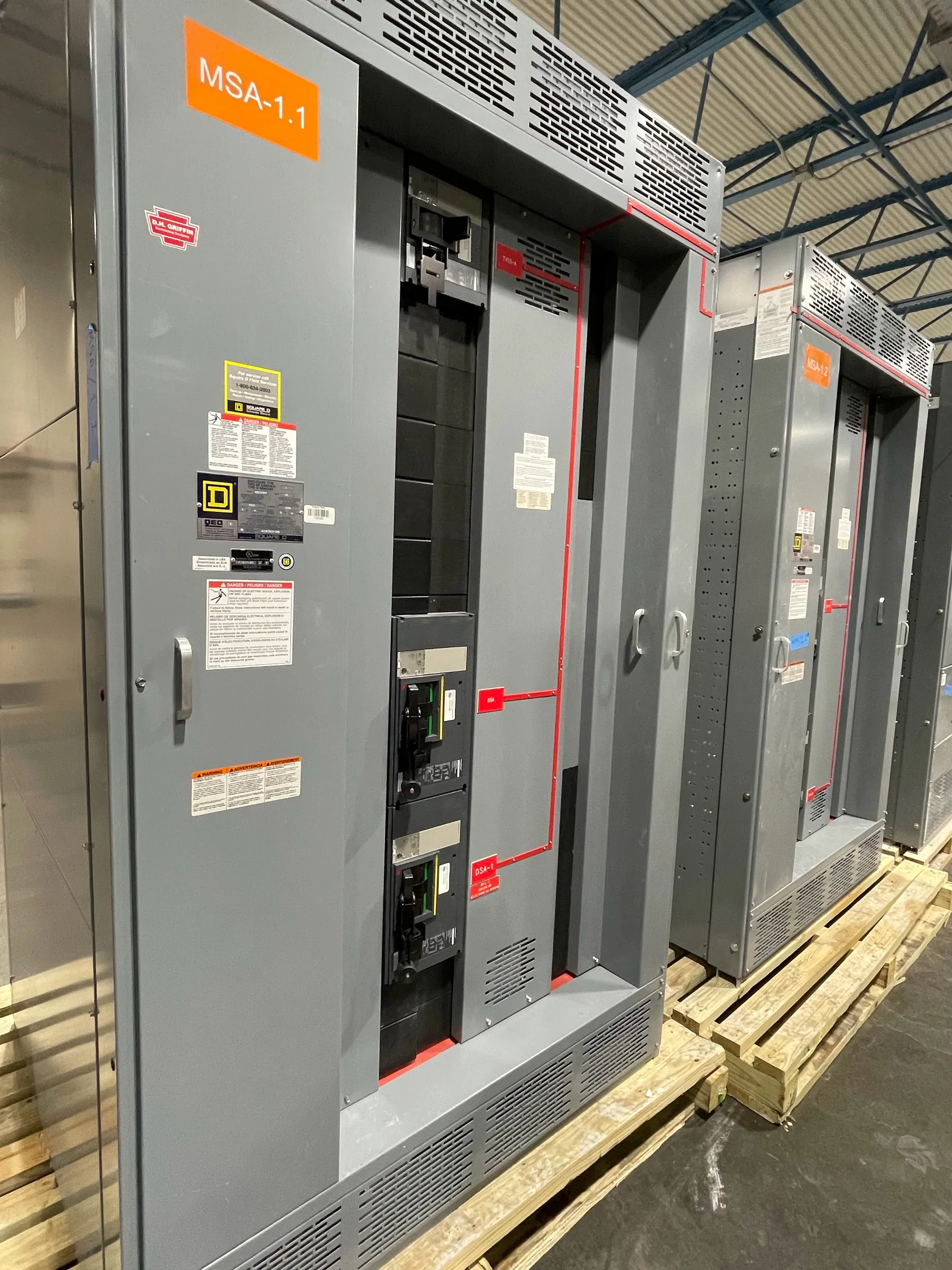
Utility Distribution Projects in North Las Vegas
Utility electrical distribution work in North Las Vegas can involve a new service, a facility expansion, a replacement lineup, or equipment at a customer-utility interface. Each project has its own division of responsibility: the serving utility establishes its requirements for interconnection, metering, protection, grounding, and equipment acceptance, while the project team defines the facility distribution needs. A switchgear manufacturer can build to an approved project specification, but the utility and qualified electrical engineers must resolve those requirements before the design is finalized.
For a new custom assembly, the first useful step is to identify what the equipment must connect to and what it must supply. That includes the incoming source, downstream feeders, expected operating arrangement, and the boundary between utility-owned and customer-owned equipment. These details affect the lineup arrangement, compartments, bus configuration, instrument provisions, and space reserved for future connections. Assumptions about ownership or interface points can lead to late changes, so they should be recorded in the project documents.
Confirm Interconnection, Metering, and Protection Interfaces — Utility Switchgear in North Las Vegas, NV
Utility acceptance criteria are not interchangeable from one service or project to another. The serving utility may specify where metering is located, which components it furnishes, what provisions the customer must provide, and what drawings it needs to review. Protection requirements may also depend on the service arrangement and the utility’s coordination criteria. Obtain the applicable utility documents and written project requirements before selecting equipment details or releasing a layout for manufacture.
Protection settings and device selection require coordinated engineering review. The project engineer must evaluate available system information, downstream equipment, fault conditions, and coordination objectives; the utility must review items within its authority. A manufacturer can incorporate specified components and interfaces into an assembly, but cannot establish system settings or decide whether a design satisfies a particular utility’s rules without the necessary engineering inputs and approvals.
Choose Equipment Ratings for the Actual System
Equipment ratings describe limits or capabilities of the equipment; they are not simply another way to state system voltage. The design team should confirm system voltage, continuous current requirements, short-circuit duty, and other applicable ratings against the project’s electrical study and utility data. The required ratings and construction depend on the particular service and installation conditions. They should not be inferred from a city, facility type, or neighboring installation.
For applicable low-voltage switchboards, UL 891 may be relevant to the specified product and construction. It does not establish that every switchgear assembly is covered, nor does it apply universally to medium- or high-voltage equipment, busway, or every project configuration. Confirm the product category, requested listing, and documentation with the manufacturer and project engineer. Any listing, rating, or utility acceptance claim must be verified for the exact equipment being quoted and built.
Map Cable Routes, Clearances, and Site Access
Before fixing lineup dimensions for a North Las Vegas installation, map the incoming and outgoing cable routes from the equipment to their actual connection points. Note whether cables enter from above, below, or another direction; identify bends, pull spaces, trench or duct locations, and obstructions. These conditions influence enclosure depth, section arrangement, termination space, and the practical order of installation. A preliminary plan view is more useful when it includes the surrounding room or outdoor pad rather than only the switchgear footprint.
Working clearances and access requirements must be evaluated for the specific location and applicable project rules by qualified professionals. Also consider how the assembly will reach its final position: verify gate and doorway openings, turning space, floor or pad conditions, unloading arrangements, and the route from the delivery point. North Las Vegas projects may have different indoor, outdoor, and site-access conditions, so no single enclosure or shipping arrangement should be assumed.
Prepare a Complete Manufacturing Quotation Package
A useful request for quotation includes the one-line diagram, equipment schedule, utility requirements, relevant studies or available system data, and the required ratings. Include metering and protection provisions, bus and feeder details, cable entry information, enclosure conditions, drawings, and any requested product listing or inspection documentation. If information is pending, identify it explicitly and state who is responsible for supplying or approving it. This helps distinguish confirmed requirements from design questions before the equipment configuration is set.
Dimensions and interfaces deserve particular attention. Provide room or pad drawings, cable route information, connection orientation, and access constraints. Clarify whether the quotation should include only the manufactured assembly or also specified accessories and documentation. Final scope, ratings, listing details, and utility acceptance remain subject to review against the project documents; no generic specification can substitute for that review.
Build to the Approved Project Design
Our business manufactures new custom switchgear and power-distribution equipment in the United States using all-American components. We sell manufactured equipment to customers and ship nationwide, including to Nevada. Once project requirements and interfaces are established, the manufacturing package can reflect the agreed lineup arrangement, components, connections, and documentation. Short lead times are a stated capability, but a schedule depends on the confirmed scope, engineering approvals, component requirements, and project coordination.
For utility-related work in North Las Vegas, coordinate the equipment design with the serving utility, the electrical engineer, the installing contractor, and the facility team before dimensions and connections are fixed. Clear decisions about service ownership, metering, protection, grounding, cable paths, clearances, and delivery access give the manufacturer a sound basis for producing an assembly suited to the project rather than relying on assumptions.