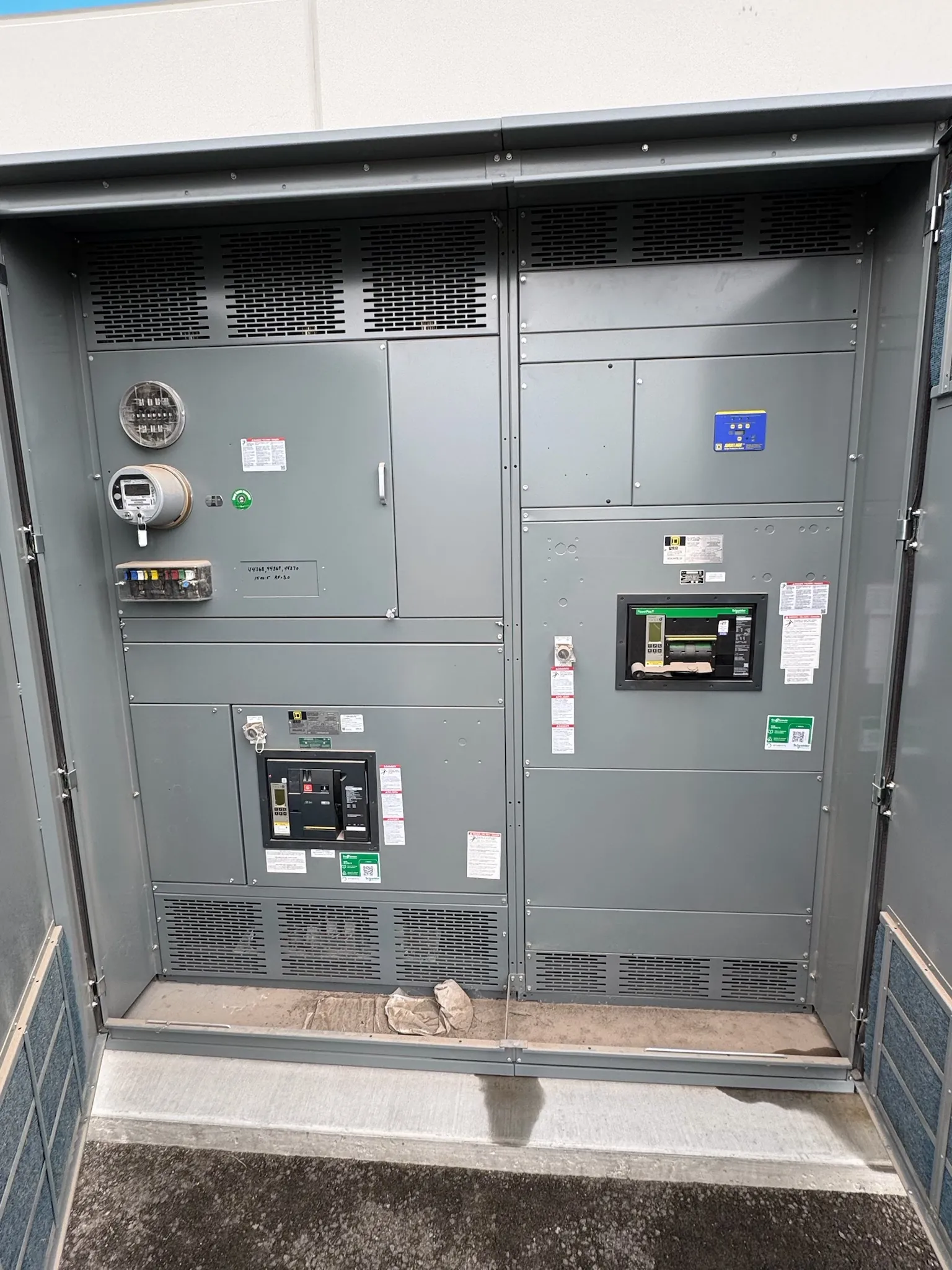
Metal-Enclosed Switchgear for North Las Vegas Projects
Metal-enclosed switchgear is an arrangement of switching or protective devices and associated components housed within a metal enclosure. For a North Las Vegas facility, the right design depends on the electrical system, the loads served, the required switching functions and the space available—not simply on the enclosure’s overall dimensions. Configurations may use switches with fuses or circuit breakers, with the choice shaped by equipment ratings, protection requirements, coordination with upstream and downstream devices, and the project’s operating needs.
Our company manufactures new custom power-distribution equipment in the United States using all-American components. We supply equipment to customers in Nevada and ship nationwide. A project-specific review is needed to establish the suitable construction, ratings, interfaces and layout; no single configuration is appropriate for every site.
Switch-and-Fuse or Circuit-Breaker Configurations — Metal-Enclosed Switchgear in North Las Vegas, NV
A switch-and-fuse arrangement combines a switching device with fuses selected for the intended circuit and application. It may be considered where the required switching function and fuse protection fit the system design. Fuse characteristics, interrupting capability and coordination with other protective devices must be evaluated against the available system information and the equipment served.
A circuit-breaker arrangement uses a breaker as the switching and protective device. Its selection involves the required continuous-current and interrupting ratings, trip functions, control interfaces and coordination objectives. Depending on the design, breaker construction and maintenance approach can affect enclosure layout and access. Neither option is inherently the correct choice in all cases. The engineer of record and equipment manufacturer should review the protection study, system data and operating requirements before the configuration is fixed.
Metal-Enclosed Construction Versus Metal-Clad
Metal-enclosed and metal-clad are not interchangeable descriptions. Metal-enclosed identifies equipment arranged within a metal enclosure; the internal partitions, barriers and device construction vary with the applicable design. Metal-clad switchgear generally denotes a more compartmentalized construction, with grounded metal barriers separating specified components. That distinction can affect accessibility, maintenance planning and the consequences of an internal fault, but the name alone does not establish a particular performance level.
When comparing proposals, review the actual construction drawings and specification rather than relying only on a product label. Confirm which devices and conductors are separated, how cable compartments are arranged, what access is provided, and what ratings or construction requirements apply to the requested equipment. The project specification and qualified engineering review determine whether metal-enclosed construction meets the intended application.
Barriers, Fault Duty and Grounding — Metal-Enclosed Switchgear in North Las Vegas, NV
Barrier placement should reflect the equipment arrangement, cable terminations, device access and the project’s maintenance expectations. More separation can influence the enclosure footprint and the routing space available for conductors. The design team should identify which sections require barriers and verify that those provisions are consistent with the specified equipment and applicable requirements.
Fault-duty selection requires reliable system data, including the available fault current at the equipment location and the conditions under which that value was established. Equipment withstand and interrupting ratings are not the same as nominal system voltage, and a rating cannot be selected from voltage alone. Grounding design also needs coordination with the facility’s grounding system, incoming source, enclosure bonding and cable connections. These details require review by qualified electrical engineers; they cannot be settled from a city or product description.
Plan North Las Vegas Cable Routes and Access
Before fixing lineup dimensions, map the incoming and outgoing cable routes from the actual site plan. Note whether conductors enter from above, below or another defined connection point, and identify bends, transitions, trench or duct locations, and space needed for terminations. Routes that look clear on a simplified plan may conflict with structural elements, other services or equipment once field conditions are checked.
Working clearances and access should be reviewed alongside the lineup, not after dimensions are approved. Account for the equipment’s specified access arrangement, doors or removable panels, nearby walls and adjacent equipment, as well as the facility’s applicable electrical and building requirements. For North Las Vegas delivery planning, confirm the receiving entrance, turning and staging constraints, unloading method and path from the delivery point to the installation area. These details help avoid a design that fits electrically but cannot be brought into position as planned.
Information to Prepare for a Quotation
A useful quotation package includes the one-line diagram, system voltage and frequency, available fault-current information, requested continuous-current and interrupting ratings, protective-device preferences, and any project specification. Include cable entry and exit directions, preliminary routing, grounding requirements, interface details, room or outdoor installation conditions, and clearances shown on the current site plan. Note any required controls, metering or communications interfaces, while distinguishing firm requirements from preferences.
Our manufacturing team can use these inputs to develop a project-specific equipment proposal and identify open technical questions. Ratings, construction details, applicable listings and project interfaces require confirmation during engineering review. UL 891 applies to applicable low-voltage switchboards; it should not be treated as a blanket listing standard for metal-enclosed switchgear. Final suitability, code compliance and equipment selection depend on the project documents, qualified engineering and site conditions. U.S. manufacturing and nationwide shipping support Nevada projects, while lead time and delivery arrangements are confirmed for each order.