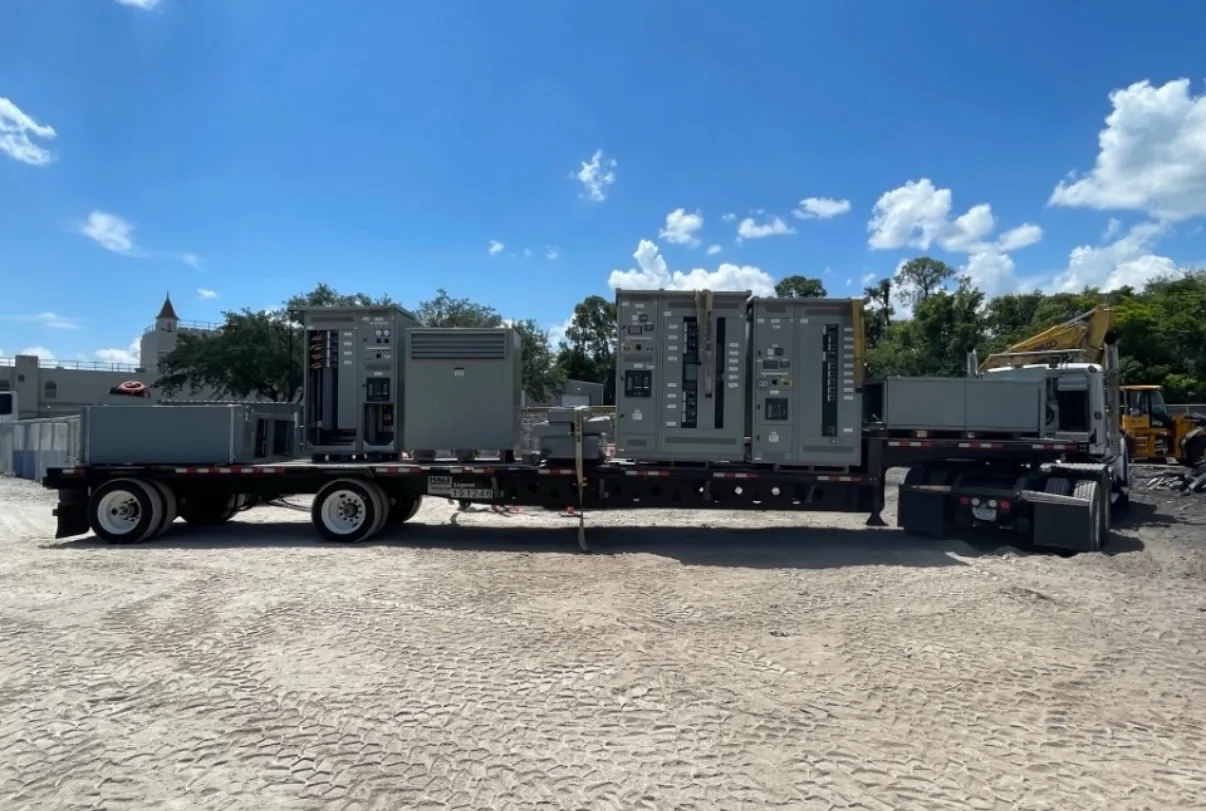
Pad-Mounted Switchgear for North Las Vegas Projects
Pad-mounted switchgear places switching and distribution equipment in a ground-level outdoor enclosure, making the equipment layout part of the site plan as well as the electrical design. For a North Las Vegas project, the enclosure, concrete foundation, cable paths, access space and delivery route should be considered together. A lineup that fits the electrical one-line diagram may still conflict with paving, underground utilities, fencing or the route needed to place the equipment.
We manufacture new custom power-distribution equipment in the United States using all-American components and ship nationwide, including to Nevada. The equipment configuration is developed around the project requirements; final dimensions, ratings and interfaces depend on engineering review and confirmed site information.
Enclosure and Environmental Protection
Outdoor enclosures must suit the installation environment and the equipment they contain. Project discussions should identify exposure to sun, windblown dust, moisture, irrigation, vehicle traffic, landscaping and other site conditions. These factors can influence enclosure construction, finish, ventilation approach, access features and the placement of controls or cable compartments. The appropriate design depends on the equipment configuration and applicable project requirements, not on a city name alone.
Clear access to doors and operating features should be preserved after installation. Consider nearby walls, bollards, curbs, gates, landscaping and future construction when laying out the equipment. Where vehicles or maintenance activity may approach the enclosure, the project team should evaluate physical protection and service access as part of the site design. Environmental protection details and enclosure requirements should be confirmed for the specific application.
Foundation, Cable Entry and Site Layout
The foundation must be coordinated with the equipment footprint, anchorage approach and cable-entry arrangement. Before dimensions are fixed, map incoming and outgoing cable routes, conduit locations, bends and underground obstructions. Confirm whether cables enter from below or through another project-defined interface, and provide the required space for terminations and cable handling. Foundation openings and conduits should align with approved equipment drawings rather than being based on preliminary dimensions.
Working clearances matter on all relevant sides, including the space needed to open compartments and perform planned service. For a North Las Vegas site, also review delivery access from the public road to the foundation: turning space, gates, overhead obstructions, surface conditions and staging areas can affect how the equipment reaches its final position. Coordinate these constraints with the site and civil teams early, before the lineup dimensions or foundation details are treated as final.
Utility Interfaces and Distribution Configuration
Utility requirements vary by service and project. Confirm the point of connection, incoming conductors, outgoing feeder arrangement, switching functions, grounding provisions, metering or other interface needs, and any utility-specified equipment features. The utility interface should be coordinated with the project electrical engineer and the serving utility; a general product description cannot establish utility acceptance or determine the required configuration.
The one-line diagram and load information help define how the switchgear is arranged and what functions it must perform. Project teams should also identify future feeder needs, operating coordination and any boundaries between utility-owned and customer-owned equipment. These decisions can affect compartment arrangement, cable space, device selection and enclosure dimensions.
Ratings, Drawings and Engineering Confirmation
Equipment ratings must be selected for the actual electrical system and installation. A rating is not interchangeable with system voltage, and neither should be assumed from a location or an equipment name. The qualified electrical engineer must evaluate applicable system conditions, protection and coordination requirements, fault considerations and the project’s governing documents. Ratings, listings and project details require confirmation before design is released.
UL 891 applies to certain low-voltage switchboards; it should not be taken as a blanket claim for every switchgear product or voltage class. Whether a particular assembly requires a listing, and which standard or project specification applies, must be established for that equipment and application. Review submittal drawings, ratings, interfaces and scope with the responsible engineers and other project stakeholders before construction or procurement milestones depend on them.
Information for a North Las Vegas Project Quote
A useful quotation package includes the one-line diagram, project specifications, load and feeder information, utility interface requirements, requested ratings and any applicable listing criteria. Include preliminary site plans showing the foundation, incoming and outgoing cable routes, working clearances, obstructions and delivery access. Identify environmental conditions, required compartment functions and the project schedule assumptions that affect coordination. If some details are not yet established, mark them as open items rather than treating estimates as final requirements.
Our team uses the available project information to develop a custom equipment scope and identify details requiring confirmation. Lead time depends on the final configuration, engineering coordination and project requirements; no delivery date should be assumed until the scope and schedule are reviewed. Careful early coordination helps align the outdoor enclosure and its interfaces with the North Las Vegas site without substituting a generic layout for project-specific engineering.