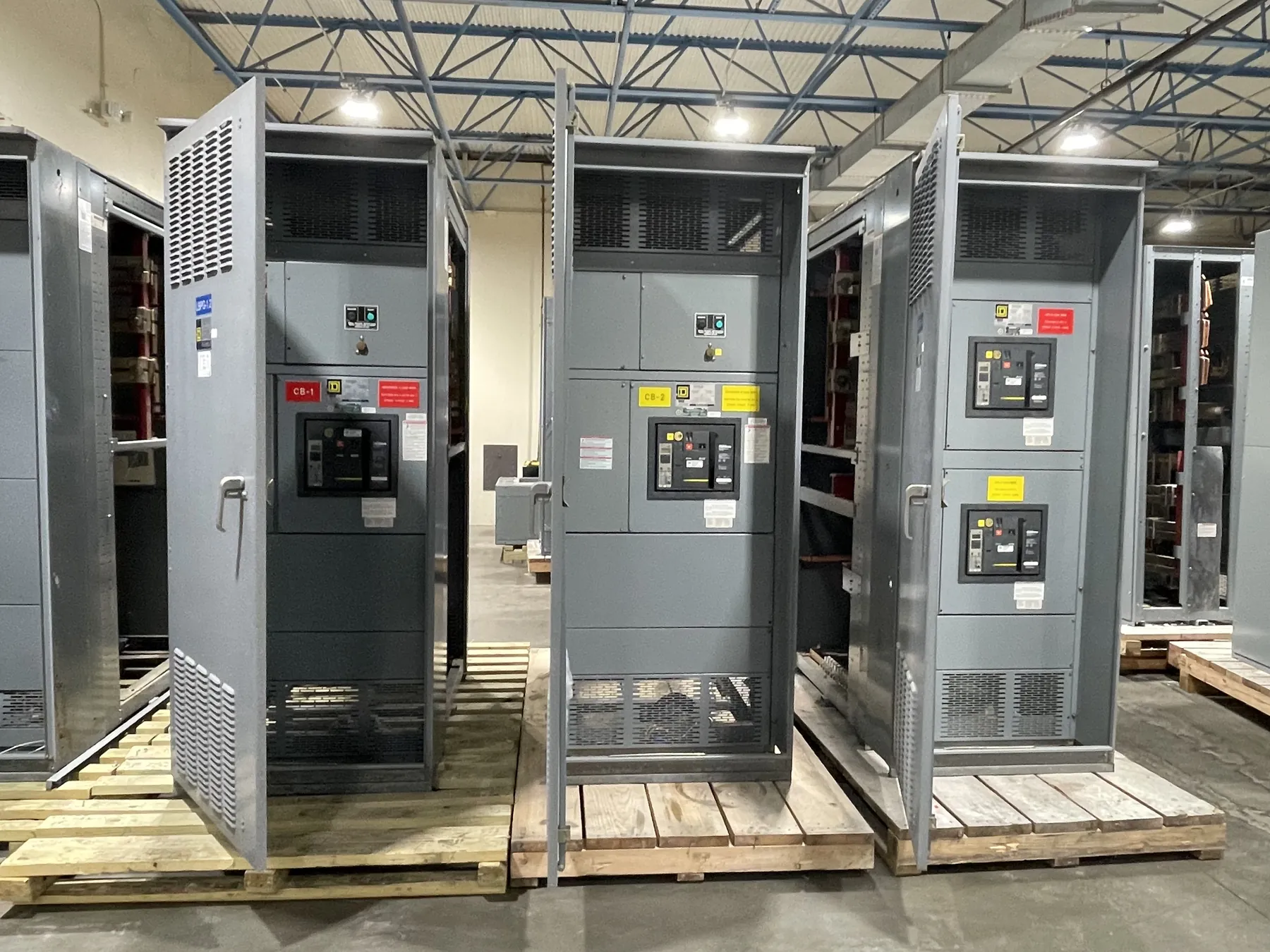
Service Entrance Switchboards for Mesquite, NV Projects
A service entrance switchboard is the point where a building’s incoming electrical service is received, metered, protected, and distributed downstream. For a Mesquite project, its configuration depends on the serving utility’s requirements, the building’s electrical design, and the equipment ratings—not simply on a nominal voltage or a preferred enclosure layout. Early coordination can help clarify which functions belong in the service section and which are handled elsewhere.
Our U.S.-manufactured service entrance switchboards are built new to project requirements, using all-American components. We serve customers in Mesquite and ship nationwide. Equipment arrangement, ratings, and applicable listing requirements must be established for the specific application and confirmed during engineering review; they should not be inferred from a general product description.
Coordinate Metering and Utility Requirements Early
Utility metering can shape the physical and electrical arrangement of the service section. The serving utility may specify the metering method, instrument-transformer provisions, compartment access, sealing arrangements, or other interface details. Those requirements can affect section dimensions, bus routing, barriers, and the sequence of incoming and outgoing equipment.
Before requesting a quotation, identify the utility and provide its current service requirements or project-specific instructions when available. Confirm who furnishes and installs metering components, where utility conductors terminate, and what access or separation the utility expects. Utility acceptance is not assumed by a proposed equipment layout; the design team must obtain and document applicable approvals.
Define the Main Disconnect and Service Arrangement
The main disconnect’s type, rating, and position depend on the service design and the intended distribution arrangement. A project may require a particular device configuration, a defined number of feeder sections, or space for future circuits. These choices influence switchboard footprint, internal bus connections, protective-device coordination, and access for inspection and maintenance.
Supply the electrical one-line diagram, service characteristics, anticipated loads, and feeder requirements so the equipment can be developed around the actual installation. A device rating is not the same as system voltage, and a rating alone does not establish suitability for the available fault current. The design engineer should verify the complete arrangement, including the protective devices and their coordination with downstream equipment.
Review Grounding, Bonding, and Fault-Current Information
Service grounding and bonding provisions must match the project’s electrical design and applicable code requirements. The service configuration, neutral treatment, grounding connections, and downstream distribution affect how the switchboard is arranged. These details should be resolved by qualified electrical professionals rather than selected from a generic catalog description.
Available fault current at the service is another essential input. Provide the value established for the project and identify any utility or engineering documentation that supports it. The equipment’s short-circuit and interrupting-related ratings, protective-device selection, and system conditions must be reviewed together. If fault-current information is not yet established, flag it as pending instead of treating an assumed value as final.
Account for Mesquite Ambient Conditions and Installation
Mesquite’s hot-weather conditions make the project’s design ambient temperature and ventilation provisions important review items. Compare the anticipated equipment environment with the selected switchboard’s published ratings and installation requirements. Consider the actual electrical room or outdoor location, exposure to heat, nearby heat sources, airflow, enclosure arrangement, and any ventilation limits. The site design should not assume that an indoor rating or standard layout will suit every location.
Installation access also matters. Confirm the available electrical-room dimensions, doorways and routes into the space, working clearances established by the project design, conduit entry locations, and the planned connection points. These conditions can affect section grouping and shipping configuration. Mesquite delivery planning should account for the destination, receiving access, unloading arrangements, and coordination with the installer; a shipment schedule depends on confirmed project and manufacturing details.
Prepare a Complete Request for Quotation — Service Entrance Switchboards in Mesquite, NV
A useful quotation package describes the service and the site, not just the requested switchboard label. Include the one-line diagram, utility metering requirements, system voltage and phase, service and feeder data, available fault current, main-device preferences, grounding details, enclosure and installation conditions, and any required authority reviews. Identify applicable project specifications and indicate which details are confirmed versus still under development.
Our team uses those inputs to review the proposed scope and clarify open items before equipment is finalized. UL 891 applies to applicable low-voltage switchboards; it does not cover every type of switchgear or establish that a particular assembly is listed. Any required listing, rating, and project-specific configuration must be confirmed for the equipment being quoted. Nevada projects benefit from the same careful utility, engineering, and authority coordination as projects elsewhere, with local site conditions incorporated into the design review.