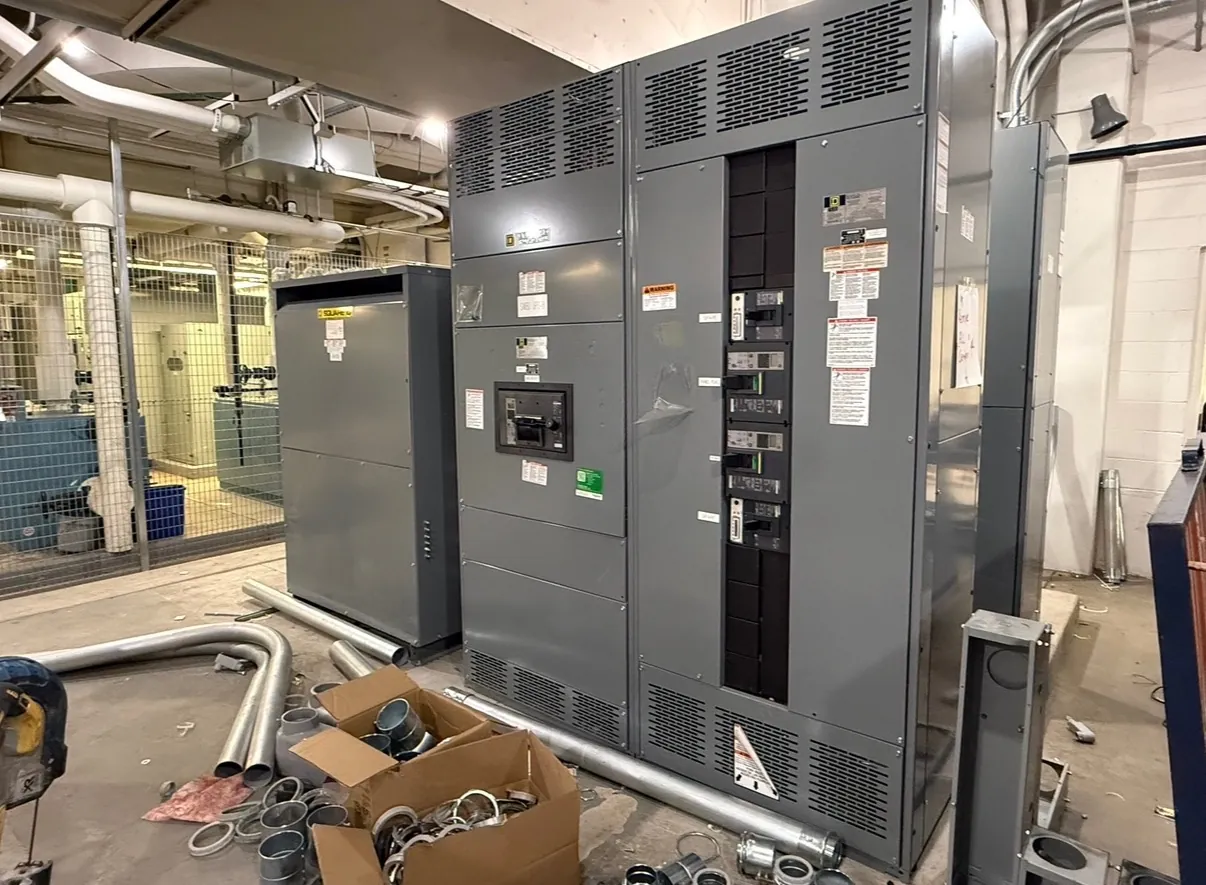
Utility Switchgear for Mesquite Service Projects
Utility electrical distribution projects in Mesquite require coordination between the serving utility, the facility owner and the engineers responsible for the site design. A switchboard or other distribution assembly must fit its role in the service arrangement, not just match a requested voltage or current value. Before equipment is specified, establish where utility facilities end and customer-owned equipment begins, how the service will connect, and which party sets requirements for metering, protection, grounding and acceptance.
Our U.S. manufacturing business builds new custom switchgear and power-distribution equipment for customer projects. We work from project-specific requirements rather than assuming that one assembly suits every utility or site. The applicable product type and construction depend on the electrical design, the service interface and the utility’s written criteria. Utility review, approval and acceptance remain matters for the serving utility and the project team.
Confirm the Service Interface and Metering Arrangement
Start with the utility’s service requirements and the project one-line diagram. Confirm the service configuration, system voltage, available fault-current information, incoming conductor provisions, connection location and ownership demarcation. These details affect the arrangement of the incoming section, bus, overcurrent devices and outgoing distribution. A stated equipment rating is not the same as system voltage; both must be evaluated for the application and verified against the design documents.
Metering requirements can also shape the assembly. The utility may specify a metering compartment, instrument transformers, physical access, seals, clearances or an arrangement separate from customer distribution equipment. Do not assume that a meter can be placed wherever space is available. Obtain the utility’s current metering details and identify who supplies and installs each component. Changes to the meter location or service layout can affect enclosure dimensions, conduit paths and the sequence of installation.
Coordinate Protection, Grounding and Fault Ratings
Protection is a coordinated system decision. The project engineer and utility need to establish the protective-device functions, settings responsibilities and coordination boundaries for the service. Equipment selection should account for the available fault current and the assembly’s applicable short-circuit and interrupting ratings, as well as the devices used in the design. A rating cannot be chosen from nominal voltage alone, and no particular rating or protective scheme can be confirmed without utility data and engineering review.
Grounding provisions likewise depend on the service arrangement and governing design requirements. Clarify the intended grounding and bonding points, neutral treatment, grounding conductor connections and any utility-specific details before the equipment is released for manufacture. These interfaces should be shown clearly in the drawings so the utility, electrical contractor and equipment manufacturer are working from the same configuration. Qualified engineers must resolve design questions using site conditions, applicable requirements and utility criteria.
Account for Mesquite Ambient Conditions and Ventilation
Mesquite’s desert climate makes the project’s design ambient temperature and equipment location important inputs. Compare expected ambient conditions at the installed location with the selected equipment’s published ratings and any applicable derating guidance. A shaded indoor electrical room may present different conditions from an outdoor enclosure exposed to sun, while heat from adjacent equipment and restricted airflow can further affect the environment.
Review ventilation paths, room layout, enclosure placement and heat sources as part of the equipment and facility design. Do not assume that a general-purpose ventilation approach will meet the equipment’s requirements. The project team should confirm whether environmental measures, a particular enclosure arrangement or other design provisions are needed, and document the conditions used for equipment selection. Site review and engineering judgment are essential where actual ambient conditions or airflow are uncertain.
Prepare Drawings and Acceptance Requirements Early
Utility acceptance requirements can influence equipment details well before installation. Request the current service, metering and equipment criteria; identify required submittals and review milestones; and confirm whether the utility expects specific compartment access, labeling, dimensions or connection provisions. Include the latest one-line diagram, site plan and relevant utility correspondence in the design package. If requirements are still pending, identify them as open items instead of treating assumptions as approved criteria.
For a quotation, useful project inputs include the service configuration and voltage, required equipment type, preliminary one-line diagram, utility specifications, available fault-current data, metering arrangement, protective-device requirements, indoor or outdoor location, ambient conditions, space constraints and requested submittal information. Ratings, listings and project details require confirmation against the final design and applicable requirements. UL 891 may apply to low-voltage switchboards when appropriate; it does not cover every type of switchgear or distribution equipment.
Plan Mesquite Delivery and Installation Coordination
Equipment shipped to a Mesquite project must fit the site’s receiving and installation plan. Confirm unloading access, laydown space, door and corridor clearances, equipment-room access and the path to the final location. These logistics can affect equipment sections, shipping configuration and installation sequencing. They should be reviewed with the contractor and site team rather than inferred from the city or project address. We build new custom assemblies in the United States using all-American components and ship nationwide; lead-time planning should be based on the finalized scope, engineering review and project schedule.
Early coordination among the utility, engineer, owner, contractor and manufacturer helps expose interface questions before production. With service criteria, site conditions and acceptance expectations documented, the team can evaluate a suitable distribution assembly and progress toward a design that fits the specific Mesquite application.