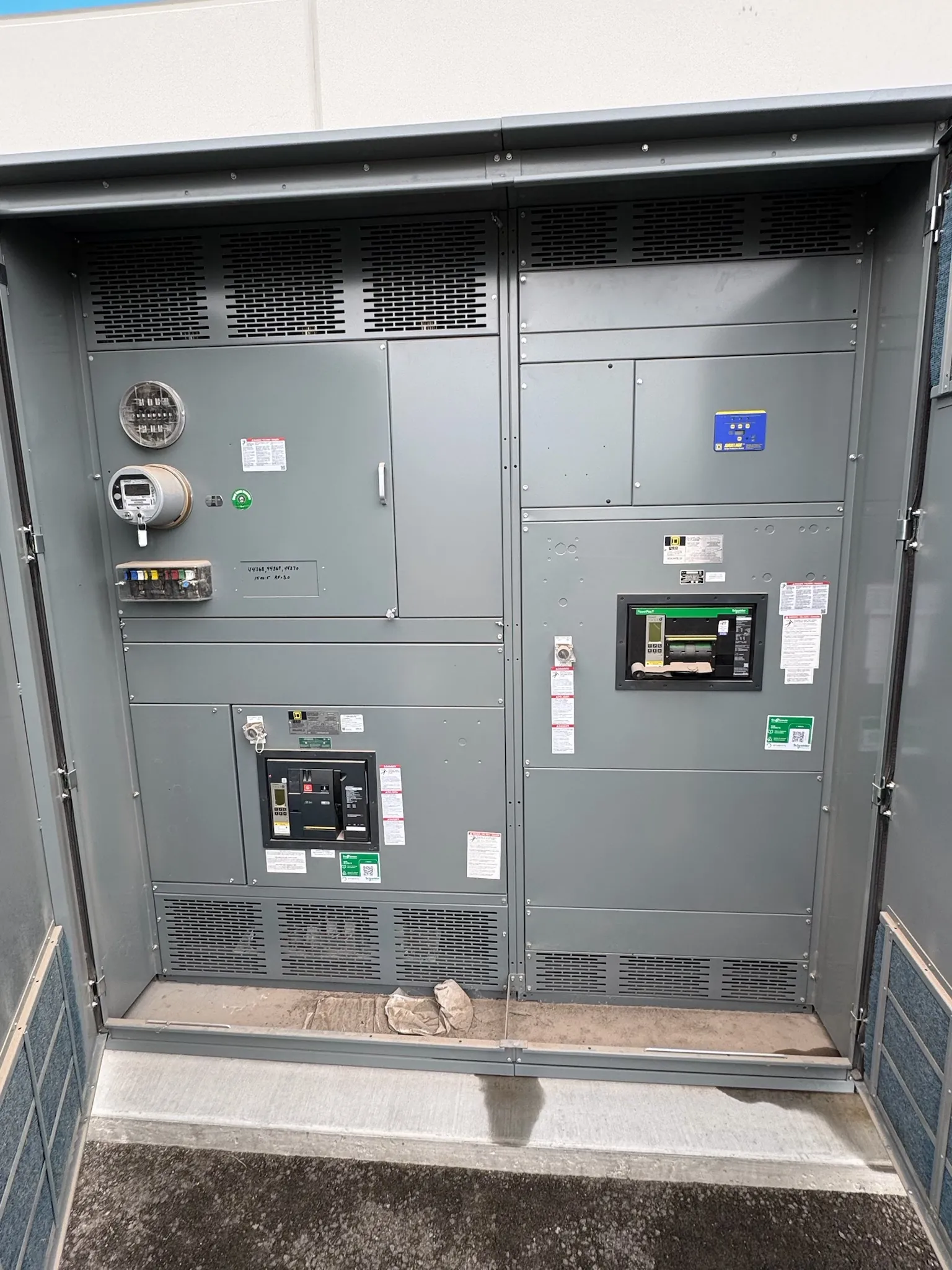
Planning Switchgear for Projects in Mesquite, Nevada
Mesquite projects can call for distribution equipment in a range of building types and operating environments. The right switchgear configuration depends on the electrical system, the loads it serves, the installation space and the conditions at the equipment location. As a U.S. manufacturer of new custom power-distribution equipment, we work from project requirements to define an assembly rather than assume that one standard arrangement fits every site. Equipment is built in the USA using all-American components and can ship nationwide, including to Mesquite. No local factory or completed Mesquite installation is implied.
Begin by identifying the intended function: for example, service entrance distribution, a main distribution point, or distribution to downstream panels and loads. The one-line diagram, load information and project specifications help establish the arrangement and interfaces. A qualified electrical engineer should confirm the design against the facility, applicable codes and the serving utility’s requirements.
Match the Assembly to the Electrical System
Specify system voltage and phase separately from equipment ratings. A voltage describes the electrical system; current, interrupting and withstand ratings, and other marked characteristics describe equipment capabilities. They are related but not interchangeable. Provide the nominal system details and ask the project engineer to identify required ratings based on available fault current, protective-device coordination and the intended application. Those values require engineering review and cannot be selected from a city name alone.
For low-voltage switchboards, UL 891 may be relevant when the product and application fall within its scope. It does not establish that every switchgear assembly, voltage class or related product is covered. Confirm the applicable product standard, listing needs and any project-specific acceptance criteria for the actual equipment being quoted. Do not treat a requested standard or rating as confirmation that a proposed assembly is listed or approved.
Review Heat, Ambient Conditions and Ventilation
Mesquite’s desert setting makes equipment-room conditions an important design input, but outdoor weather alone does not define the temperature at the switchgear. Share the expected design ambient temperature at the proposed installation location, whether the equipment is indoors or outdoors, and any enclosure or room conditions that may affect heat dissipation. The selected equipment’s published ambient and operating ratings must be checked against those conditions.
Describe the room layout, ventilation approach and nearby heat sources where known. Account for equipment losses, sun exposure on outdoor enclosures, restricted air movement and the possibility that cooling systems may not always operate as intended. Required clearances and ventilation provisions depend on the specific equipment and installation. A qualified engineer should review the facility conditions and the manufacturer’s published requirements before the design is finalized; do not assume a rating can be extended by adding ventilation without that review.
Define Interfaces and Physical Constraints Early
Useful quotation inputs include the latest one-line diagram, preliminary equipment schedule, service and load information, fault-current data when available, and the required incoming and outgoing connections. Identify whether conductors enter from the top or bottom, expected cable or bus connections, and any connection points to transformers, generators, transfer equipment or downstream distribution. These interfaces can affect compartment arrangement and should be coordinated with the other equipment suppliers.
Also provide the available equipment footprint, installation orientation, access route, room dimensions and constraints such as doorways or overhead obstructions. State whether the assembly is intended for an indoor or outdoor location and describe the enclosure requirements. If a project has specified metering, control devices, protective functions or communications interfaces, include those requirements and identify who is responsible for supplying and integrating connected systems.
Coordinate Protection, Utility Requirements and Submittals
Protective-device choices influence selectivity, fault interruption and coordination with upstream and downstream equipment. The responsible engineer should provide the protection objectives and review device data against the system study and project requirements. Utility service rules, metering arrangements and connection details vary; provide the applicable utility documents and obtain confirmation through the project’s utility coordination process. Neither a general equipment description nor a quotation substitutes for utility acceptance.
Before release for manufacture, review submittal drawings and documented ratings against the approved project documents. Check the main and branch arrangement, device designations, connection orientation, enclosure details and specified accessories. Changes to system data or interfaces after this review can affect the design and schedule, so record decisions through the project’s normal approval process.
Prepare for Delivery to a Mesquite Site
For a project quotation, provide the delivery destination, requested schedule, receiving hours, site contact and any restrictions on truck access or unloading. Mesquite sites may be some distance from major distribution routes, and site access, road conditions, gate dimensions and available unloading equipment can affect delivery planning. Confirm those details with the project team rather than assume a delivery vehicle can reach the final installation point. Nationwide shipping is available, but transit timing and site arrangements depend on the specific order and route.
Once equipment arrives, coordinate inspection, storage and installation with the electrical contractor and project engineer. Keep the assembly protected and stored in accordance with its manufacturer documentation and project requirements. Final installation, connections, settings and acceptance should be handled by qualified personnel using approved project documents and applicable rules.