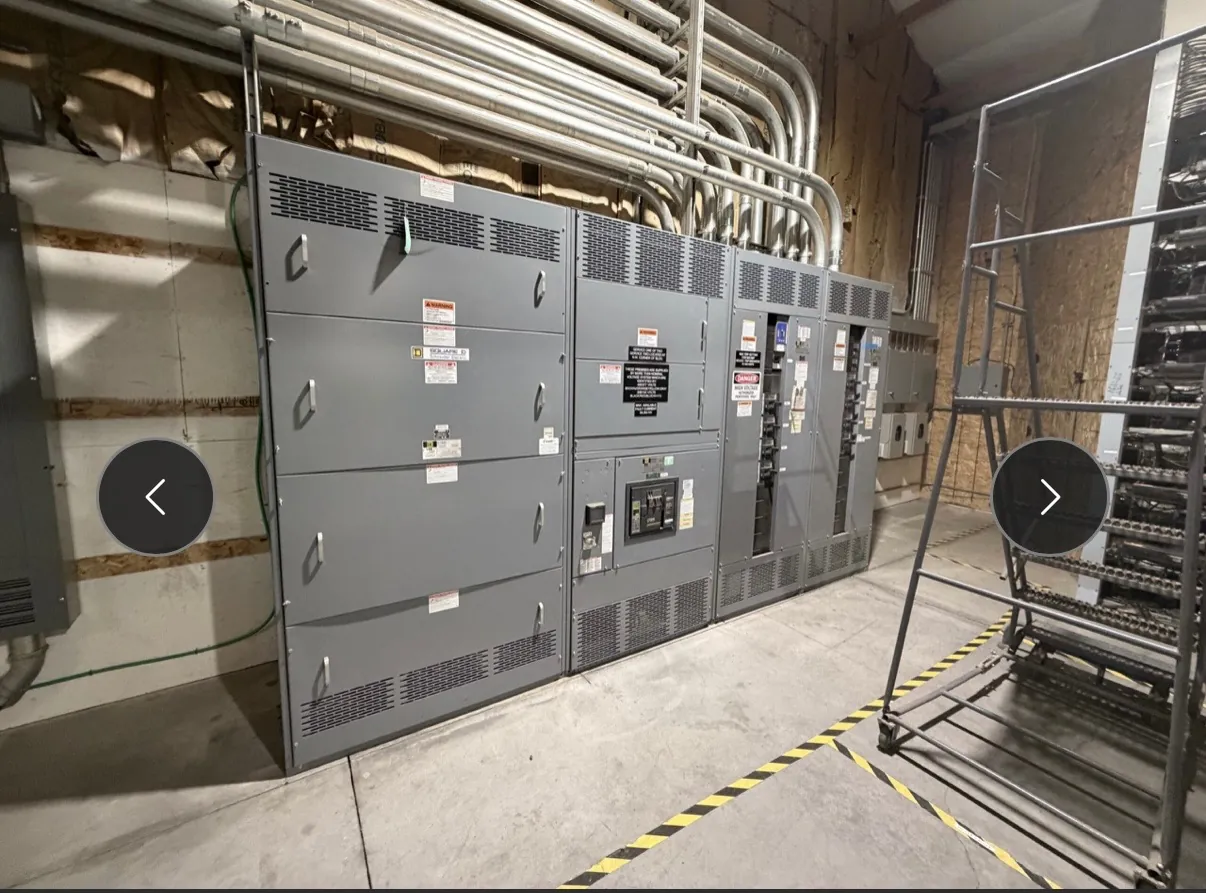
Low-Voltage Switchboards for Mesquite, Nevada Projects
Mesquite projects may call for a low-voltage switchboard serving a commercial building, public facility, industrial space, or other distribution system. The appropriate arrangement depends on the electrical design and the equipment’s role—not simply on the building’s size or the nominal voltage. A switchboard may receive power from a utility service or an upstream transformer and distribute it through feeder circuits to downstream panels, equipment, or other loads. For a custom assembly, the manufacturer needs the project’s one-line diagram and service requirements to develop a configuration that fits the intended interface and use.
We manufacture new custom power-distribution equipment in the United States using all-American components. Assemblies can be shipped to Mesquite and other destinations nationwide. Project schedules, configuration, and shipping arrangements are confirmed for each order; no particular lead time or delivery date should be assumed before review.
Choose a Service and Feeder Arrangement That Fits the One-Line
The service section and feeder layout establish how power enters the switchboard and reaches the loads. Design choices can include the incoming connection, main overcurrent protection, bus arrangement, feeder-device types, and the number and placement of outgoing circuits. These decisions should follow the approved electrical design and the requirements of the serving system. They also affect the footprint, access clearances, cable entry, and space available for future circuits.
For quotation, provide the current one-line diagram, service characteristics, feeder schedule, equipment locations, and any specified main or feeder devices. Identify whether the switchboard is intended to connect to a transformer, utility service, generator, or another source, and describe any source-transfer or tie arrangement shown in the design. Interface details must be reviewed rather than inferred from a general description such as “main distribution.”
Coordinate Bus Sizing With Loads and Connections
Bus sizing is an engineering decision based on the project’s electrical requirements, the switchboard configuration, and the applicable equipment ratings. Connected load alone may not provide enough information: demand assumptions, load type, feeder distribution, source characteristics, and specified temperature conditions can all matter. The bus must also suit the planned incoming and outgoing connections and the selected equipment arrangement.
Designers should state the required bus rating and any project-specific construction or connection requirements in the equipment schedule. If the design is not yet settled, provide the available load information and have the responsible electrical engineer establish the requirements. Do not treat a bus rating as the system voltage or assume one rating automatically establishes suitability for every operating condition.
Available Fault Current and Protective-Device Coordination — Low-Voltage Switchboards in Mesquite, NV
Available fault current at the switchboard’s installation point is essential to equipment selection. The specified short-circuit rating and protective-device combination must be appropriate for the system and supported by project documentation. The designer should determine the available fault current and coordinate the switchboard rating and overcurrent protective devices with the upstream source and downstream equipment. Where a series-rated combination is proposed, its acceptability and documentation require specific review; it should not be presumed from device names or a general equipment description.
Include the available fault-current information, protective-device requirements, and coordination assumptions with the quotation request. If source changes, transformer details, or operating modes could affect the calculation, those conditions should be identified for the engineer’s review. Final suitability depends on the actual installation and confirmed equipment documentation.
Check Mesquite Ambient Conditions and Ventilation — Low-Voltage Switchboards in Mesquite, NV
Mesquite’s desert climate makes the installation environment an important design input. The project team should check expected ambient temperatures at the equipment location against the selected switchboard’s published ratings. An indoor electrical room can still experience elevated temperatures, particularly if heat-producing equipment is grouped nearby or ventilation is limited. Outdoor exposure, enclosure location, solar loading, and site-specific conditions may also affect equipment selection.
Provide the proposed indoor or outdoor location, enclosure requirements, expected ambient conditions, and ventilation or cooling provisions for review. The equipment’s published ratings govern; a general description of local climate cannot replace checking those ratings against the actual site. Any required environmental or enclosure characteristics should be confirmed before the configuration is finalized.
Confirm UL 891 Scope and Project Documentation
UL 891 may apply to low-voltage switchboards within the standard’s scope. It does not establish that every switchboard configuration is listed, and it does not apply as a blanket claim to all switchgear or to medium- or high-voltage equipment. For a Mesquite project, request and review the listing documentation for the specific equipment and configuration, including the details required by the project specification. Listings, ratings, and device combinations must be confirmed for the ordered assembly; do not assume they from a general product description.
A complete request should include the one-line diagram, load and feeder schedules, system voltage, required ratings, available fault current, protective-device information, installation environment, and any applicable specification sections. This information lets the engineering and manufacturing teams review the proposed arrangement and identify details that need clarification. Final design acceptance, code interpretation, and site suitability remain matters for the project’s qualified electrical professionals.