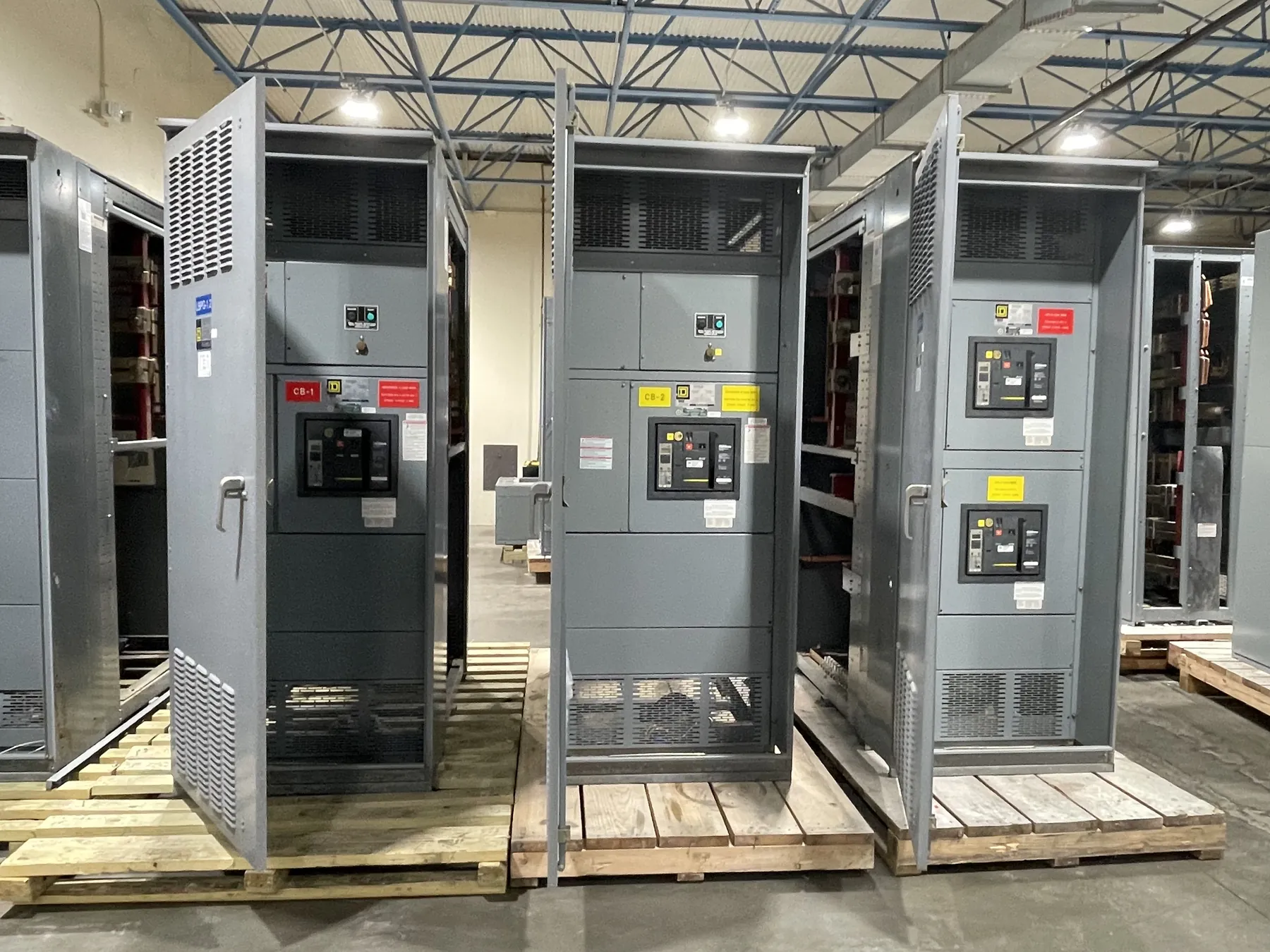
Power Plant Switchgear for Mesquite, Nevada Projects
Power-plant distribution equipment has to fit the generating units, the station’s operating modes and the loads that keep the facility running. For a Mesquite project, switchgear planning should begin with the one-line diagram and the division of responsibility between generator terminals, generator breakers, transformers, station service and downstream distribution. Those interfaces determine what equipment is needed; the location name alone does not determine a configuration or rating.
Our U.S. manufacturing business builds new custom switchgear and power-distribution assemblies using all-American components. Equipment can be shipped to Mesquite and other destinations nationwide. Project-specific design, ratings, listings and delivery expectations must be confirmed against the application and manufacturing requirements before an order is finalized.
Generator Connections, Synchronization and Operating Modes — Power Plant Switchgear in Mesquite, NV
Generator connections need to be reviewed alongside the plant’s intended modes: a unit may operate alone, in parallel with other units, or in coordination with an external grid, depending on the approved system design. Synchronization and generator protection involve relays, controls, breakers and instrument-transformer interfaces that must be selected and coordinated by qualified electrical engineers. A switchgear quote should identify which functions are part of the assembly and which are supplied by the generator, protection, control or plant-integrator packages.
Operating modes also affect bus arrangement and switching points. A single-bus scheme, sectionalized bus or other arrangement can change how loads are served during maintenance or an equipment outage. The right choice depends on reliability objectives, fault studies, operating procedures and the consequences of losing a bus section—not on a generic preference for one configuration.
Protection, Backfeed and Electrical Coordination
Protection design must account for all credible sources that can energize a circuit, including generators, utility connections and any alternate feeds. Backfeed conditions can change available fault current and the direction of power flow, so engineers need to evaluate them for each relevant operating state. Breaker interrupting capabilities, bus ratings, protective-device settings and coordination requirements should follow the project studies and applicable design criteria.
Provide the equipment manufacturer with the current one-line diagram, system voltage, available fault-current information, grounding approach and protection requirements. If these inputs are incomplete or still under review, identify the open items rather than assuming a standard value. System voltage and equipment ratings are related but not interchangeable; the applicable rating basis and any required listing must be confirmed for the specific assembly and application.
Station Service and Auxiliary Loads
Plant auxiliary loads can include pumps, fans, compressors, controls, lighting and other services needed to support generation. Their starting characteristics, duty, supply source and criticality influence feeder selection, protective-device coordination and whether separate sections or sources are appropriate. The design should distinguish loads that need continuity from those that can be shed or restarted, as well as identify any transfer or interlocking requirements.
For a useful quotation, provide load schedules and motor data where available, identify normal and standby sources, and note expected load growth or planned additions. Include control power and communications interfaces that must reach or pass through the switchgear. Clear scope boundaries help prevent gaps between the assembly, generator controls, relays, plant automation and field-installed equipment.
Mesquite Ambient Conditions, Ventilation and Enclosure
Mesquite’s desert setting makes site conditions an important design input, but it does not justify assuming a particular equipment rating or enclosure. Confirm the project’s design ambient temperature, installation location, elevation, dust exposure, moisture conditions and whether the equipment will be indoors or outdoors. For indoor gear, room temperature and ventilation are relevant; for outdoor installations, enclosure selection and environmental exposure require project review.
Compare those conditions with the selected equipment’s published ratings and installation requirements. Heat produced by electrical losses, room ventilation and nearby heat sources can affect the application. If site conditions exceed a published basis or differ from the assumptions used for selection, raise that issue early so qualified engineers can determine whether a different configuration, enclosure or environmental provision is needed.
Project Information for a Custom Equipment Quote
Useful quotation inputs include the one-line diagram, equipment schedule, system voltage, bus and feeder requirements, fault-study data, control and protection scope, physical dimensions, cable-entry preferences and installation environment. Identify the generator arrangement, operating modes, auxiliary-load priorities and any required interfaces with transformers or plant control systems. Also state the project’s applicable codes, specifications and documentation expectations; their applicability and compliance details must be reviewed for the actual scope.
Our team can use this information to define a new manufactured assembly and clarify unresolved engineering inputs before production. UL 891 may be relevant to applicable low-voltage switchboards, but it does not apply universally to all switchgear or voltage classes. Any requested listing, rating or standard should be confirmed for the specific product and configuration.
Delivery Planning for Mesquite Facilities
For a Mesquite site, confirm the receiving location, access constraints, unloading arrangements, indoor storage conditions and the sequence in which equipment is needed. These logistics can influence shipping coordination and packaging requirements, while the project schedule and approved drawings affect when manufacturing can proceed. We support short lead times and ship nationwide, but an exact schedule depends on the finalized scope, component requirements and production planning. Early coordination among the plant owner, engineer, integrator and equipment manufacturer helps align interfaces and reduce avoidable changes.