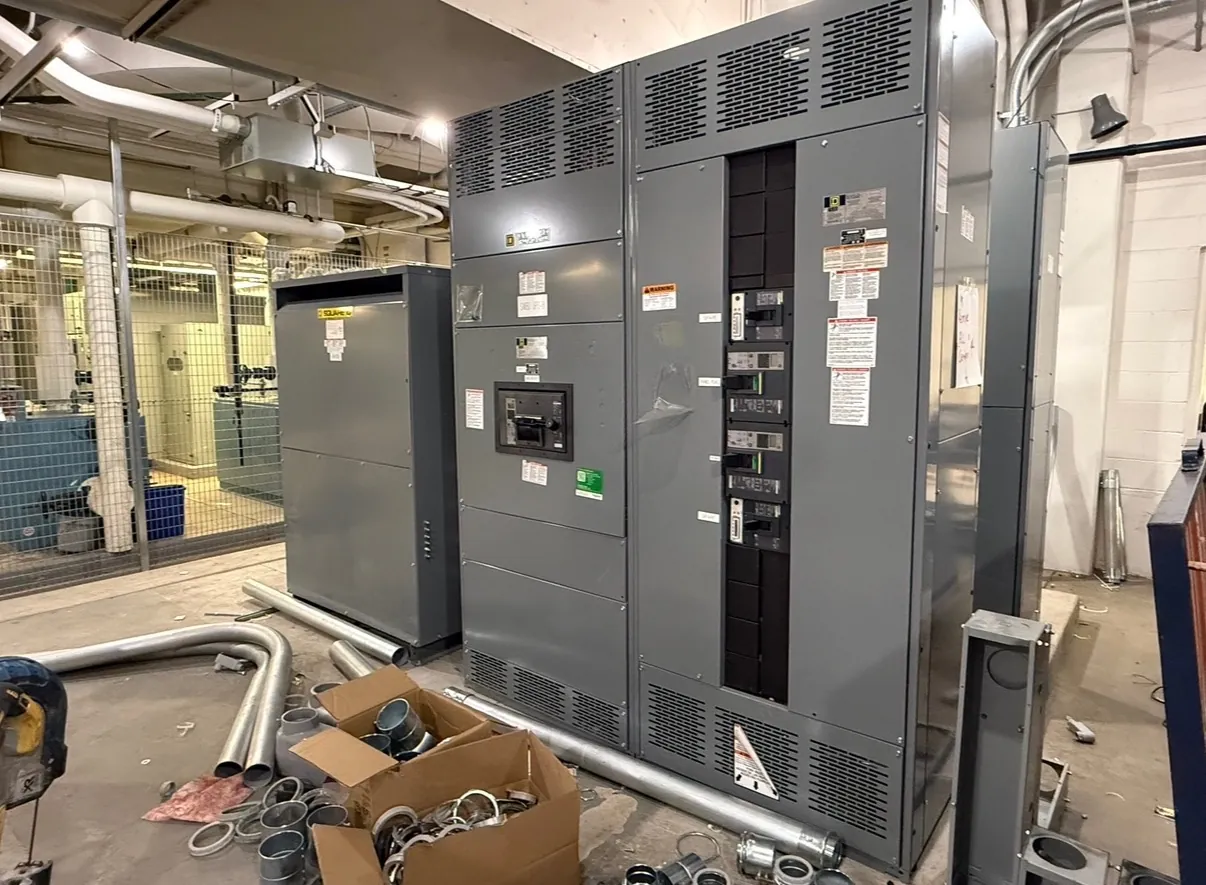
Metal-Enclosed Switchgear Choices for Mesquite, Nevada Projects
Metal-enclosed switchgear can be configured around a project’s switching, protection, and distribution needs, but the term does not by itself define a complete construction or rating. For a Mesquite facility, the design team should identify the system voltage, available fault current, load characteristics, operating environment, and required interfaces before selecting equipment. Those inputs help determine whether the assembly should use switches with fuses, circuit breakers, or a coordinated combination, and what enclosure and access arrangements are appropriate.
Mesquite’s hot, dry conditions make ambient temperature and ventilation important design checks. Compare the site’s expected design ambient temperatures and installation conditions with the selected equipment’s published ratings. Enclosure location, sun exposure, airflow, equipment loading, and nearby heat sources can affect whether the proposed arrangement is suitable. A qualified engineer should evaluate these conditions against manufacturer documentation and project requirements rather than assume that a general product description establishes performance at a particular site.
Choosing Between Switch-and-Fuse and Breaker Configurations
A switch-and-fuse arrangement may suit applications where the project calls for switching and fuse-based protection. Selection involves more than choosing a fuse size: the engineer must review the load, system voltage, available fault current, fuse characteristics, and coordination with upstream and downstream protective devices. Replacement access and the owner’s maintenance approach also matter. The proposed fuse and switch combination must be appropriate for the specific equipment and application.
Circuit-breaker configurations offer a different protection and operating approach. Relevant considerations include breaker ratings, trip functions, control power, auxiliary contacts, and the intended relationship with protective devices elsewhere in the system. A breaker’s interrupting capability and the switchgear’s short-circuit ratings require confirmation for the actual system conditions. Neither configuration is universally preferable; the choice depends on the protection study, operating requirements, and equipment design.
Construction, Barriers, and the Metal-Clad Distinction
Metal-enclosed switchgear is a broad construction description, not a synonym for metal-clad switchgear. Metal-clad equipment has specific construction features, including compartmentalization and barriers associated with its design. Metal-enclosed equipment may use other internal arrangements. A project specification should state the required construction and barriers clearly rather than rely on the terms interchangeably.
Barrier placement and separation influence how components are arranged and accessed, but they do not alone establish a safety outcome or make equipment suitable for every installation. The design review should consider the equipment’s construction, intended access, cable and bus connections, and applicable project requirements together. Published product documentation and the equipment’s confirmed configuration are the basis for evaluating these details.
Fault Duty, Grounding, and System Interfaces
Fault duty must be checked against the system’s available fault current and the equipment’s applicable ratings. Confirm the rating basis, system voltage, and relevant configuration with the manufacturer and the project engineer; a rating should not be treated as interchangeable with system voltage. Protective-device coordination may affect switch, fuse, breaker, and upstream equipment selections. The responsible electrical engineer should review the study assumptions and verify that the selected arrangement meets the project’s requirements.
Grounding details also need project-specific attention. The design should define the grounding method, equipment grounding connections, neutral treatment where applicable, and interfaces with the site grounding system. Cable entry direction, conductor sizes and terminations, control wiring, metering, and connections to transformers or other distribution equipment should be coordinated early. These interfaces can shape enclosure layout and installation planning, so they belong in the specification and quotation discussion.
Mesquite Site Conditions and Installation Planning
For a Mesquite installation, provide the equipment location, indoor or outdoor exposure, ambient-temperature design basis, ventilation approach, and any enclosure constraints. Also identify access clearances and the route for moving equipment into its final position. Site access, unloading arrangements, and delivery coordination can affect logistics, but they do not change the need to verify the equipment’s ratings and environmental suitability. Local code and utility requirements, where applicable, should be confirmed by the project team.
Do not assume that an enclosure’s general description settles questions about environmental protection, cooling, or installation suitability. The selected design and published ratings must be reviewed against actual site conditions. Final equipment selection, electrical design, code compliance, and protection settings require qualified engineering review and site-specific information.
Information for a Custom Switchgear Quotation — Metal-Enclosed Switchgear in Mesquite, NV
As a U.S. manufacturer of new custom power-distribution equipment, we build assemblies in the USA using all-American components, support short lead times, and ship nationwide, including to Nevada. To scope metal-enclosed switchgear for a Mesquite project, provide the one-line diagram, system voltage, available fault-current information, load data, protection preferences, grounding requirements, and any required construction details. Include interface points, cable-entry requirements, controls, metering, and site ambient and ventilation conditions.
Also identify the applicable project specifications and any requested listing or standard. UL 891 applies to certain low-voltage switchboards; it should not be assumed to cover metal-enclosed switchgear generally or medium- or high-voltage equipment. Ratings, listings, configuration, and project fit must be confirmed for the specific assembly. Complete, coordinated inputs help establish a design basis and identify questions that need resolution before equipment is finalized.