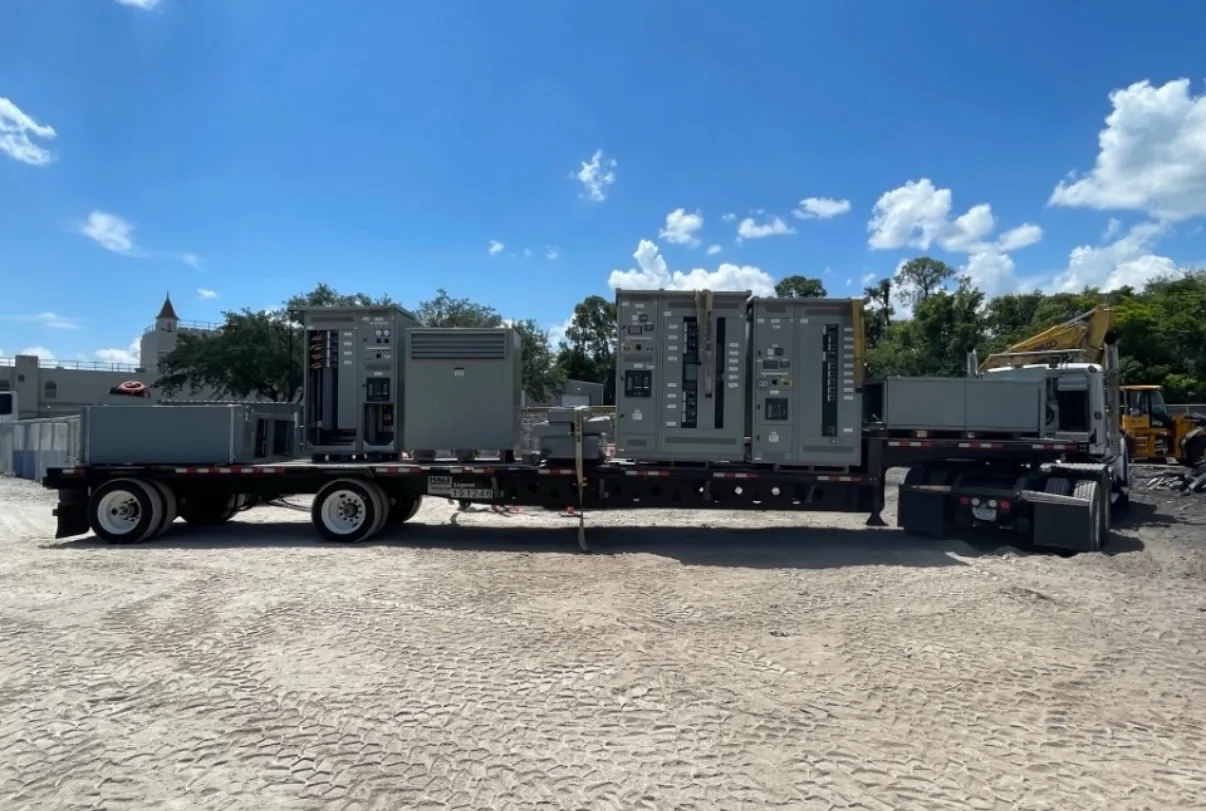
Industrial Switchgear for Mesquite Facilities and Projects
Industrial electrical distribution in Mesquite must be designed around the facility’s actual loads, operating patterns and environmental conditions—not a generic equipment schedule. A custom switchboard or switchgear assembly can organize incoming power and outgoing circuits for process equipment, pumps, fans, compressors, production lines and building services. The right configuration depends on the electrical system, applicable equipment type and ratings, the installation environment, and the project’s operating and maintenance requirements. For Mesquite-area projects, design review should include ambient temperature and ventilation conditions at the proposed equipment location, whether indoors or in an outdoor enclosure.
We manufacture new custom power-distribution equipment in the USA using all-American components, with short lead times and nationwide shipping. A quotation and proposed configuration should be based on project documents and engineering review; equipment ratings, listings and delivery details must be confirmed for the specific design.
Motor Starting and Variable-Frequency Drive Interfaces — Industrial Switchgear in Mesquite, NV
Motor loads affect both distribution equipment selection and how a system performs during startup and normal operation. Direct-on-line starting, reduced-voltage starting and variable-frequency drives have different electrical characteristics and may impose different requirements on upstream protective devices, conductors and equipment. The design team should identify motor nameplate data, starting method, expected starts, operating sequence and whether multiple large loads can start at the same time. These inputs help evaluate the expected load duty rather than treating every motor circuit as an interchangeable feeder.
Where drives are part of the project, clarify whether they are supplied within the distribution lineup or by another package vendor. Confirm the interface points, feeder and control responsibilities, drive input requirements, bypass arrangements if applicable, and any project-specific requirements for harmonic or power-quality evaluation. The appropriate solution depends on the drive and system design; a switchgear quotation should not assume that drive protection or performance can be determined from horsepower alone.
Load Duty, Fault Current and Protective Coordination — Industrial Switchgear in Mesquite, NV
Equipment selection must account for the expected operating load and the available fault current at the point of installation. A preliminary load list should distinguish continuous and intermittent loads, identify future additions where they are part of the design basis, and note which loads are essential to the process. The electrical engineer can use the one-line diagram, utility or source information, transformer data and feeder details to evaluate available fault current and select suitable equipment ratings.
Protective coordination is a system-level decision. Breaker or fuse characteristics, upstream and downstream devices, motor starting behavior and the consequences of an interruption all matter. The equipment configuration should support the project’s coordination study and documented protection strategy; simply selecting a larger rating does not establish coordination. Any proposed interrupting or withstand capability, protective device arrangement and related listing must be confirmed against the final design and applicable product requirements.
Mesquite Ambient Conditions, Ventilation and Enclosure Choices
Mesquite’s climate makes the installation environment an important design input, but site conditions should be verified rather than inferred from the city name. Provide the equipment location, expected ambient temperature range, exposure to direct sun, dust or moisture, altitude if relevant to the design, and any nearby heat-producing equipment. Also identify whether the lineup will be in a conditioned electrical room, a ventilated industrial space or an outdoor enclosure. These details allow the design team to compare the installation conditions with the selected equipment’s published ratings and any applicable derating considerations.
Ventilation and enclosure selection involve tradeoffs. A more protective enclosure may affect heat dissipation and access, while room ventilation and clearance depend on the building layout and the equipment manufacturer’s requirements. Document room dimensions, access routes, cable entry direction and available working space early. Final placement, environmental suitability and code compliance require qualified engineering review and site-specific confirmation.
Configuration, Ratings and Project Interfaces
A custom lineup may include an incoming section, main protective device, distribution sections, feeder devices, metering or control provisions, and provisions for future circuits where the design supports them. The project team should define the system voltage and frequency separately from equipment current and short-circuit ratings: these values describe different design conditions and are not interchangeable. Also identify the service or feeder arrangement, phase and wire configuration, neutral and grounding requirements, fault-duty basis, and any required control or communications interfaces.
UL 891 applies to applicable low-voltage switchboards; it should not be treated as a blanket standard for every switchgear assembly or voltage class. Whether a particular product configuration is listed, and which ratings apply, must be confirmed for the actual equipment and project scope. The engineer of record and relevant authorities determine the applicable design and installation requirements.
Information for a Mesquite Industrial Equipment Quote
To develop a useful quotation, provide the latest one-line diagram, load schedule, equipment specifications, available fault-current information and project schedule. Include motor and drive data, required device functions, metering or control needs, enclosure and environmental conditions, cable entry preferences, physical constraints and the intended shipping destination in Mesquite. Note which items are fixed requirements and which remain open for engineering review. Clear interface responsibilities are especially valuable when drives, transformers, process skids or controls are supplied by others.
Our team uses the project information to define a proposed manufactured configuration and identify details requiring confirmation before release. Shipping is available nationwide, including to Nevada; logistics planning depends on the completed equipment, site access and receiving arrangements. Final ratings, product details and schedule should be confirmed against approved project documents before equipment is released for manufacture.