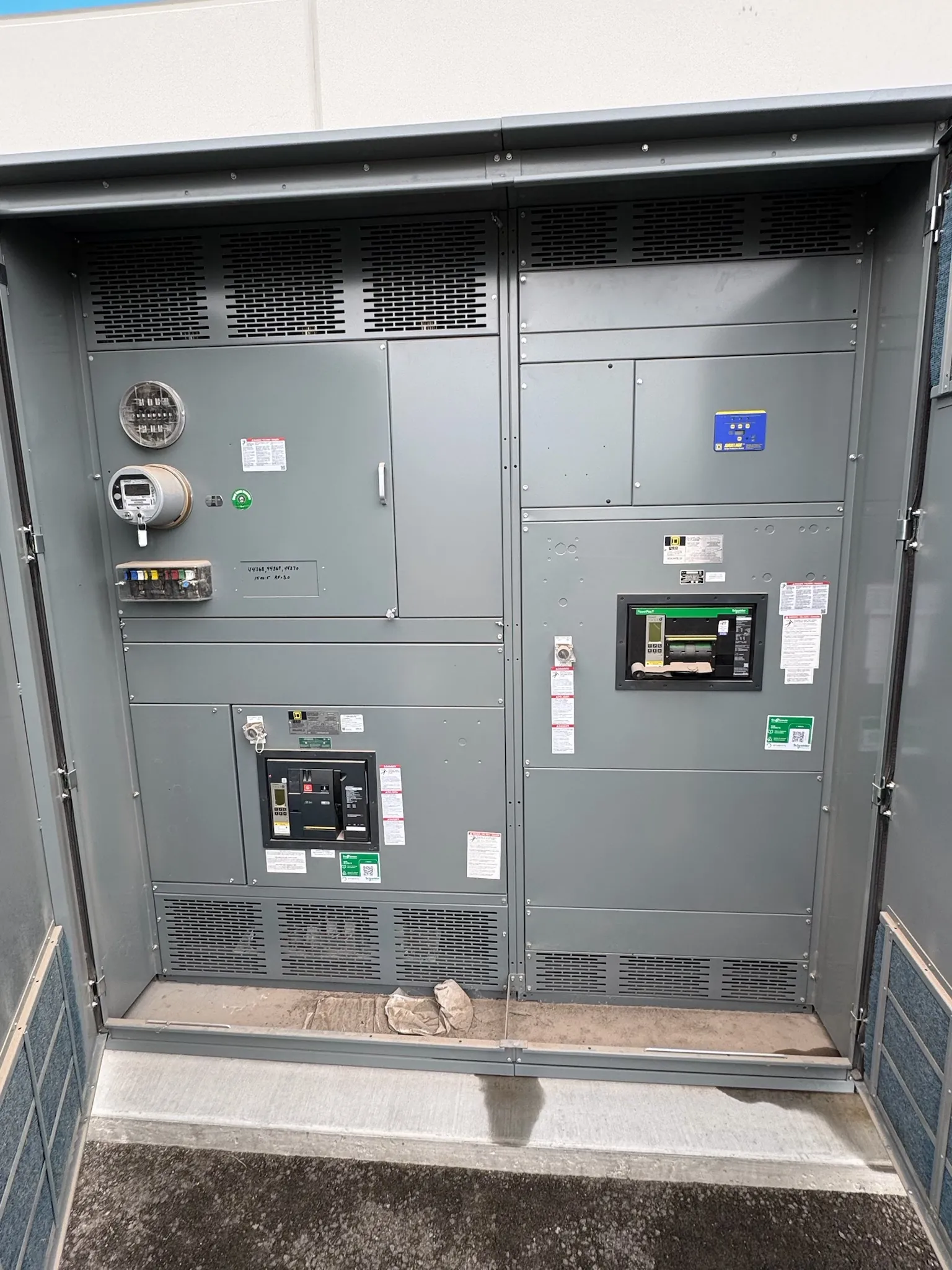
Pad-Mounted Switchgear for Mesquite, NV Projects
Pad-mounted switchgear places switching and, where specified, protective functions in an outdoor enclosure accessible from grade. For Mesquite projects, the design needs to account for the electrical system as well as the site: available space, equipment access, cable routes, exposure to weather, and the conditions around the proposed installation. A configuration suited to one service entrance or distribution layout may not suit another. Equipment selection should follow the project’s one-line diagram, utility requirements, load information, and review by qualified electrical professionals.
We manufacture new custom power-distribution equipment in the United States using all-American components. We can work from project requirements to develop a pad-mounted switchgear configuration for a Mesquite site and ship equipment nationwide. Final design details, ratings, listing status, and utility interface requirements must be confirmed for the specific application; they cannot be inferred from the city or product name alone.
Outdoor Enclosure, Access, and Site Conditions — Pad-Mounted Switchgear in Mesquite, NV
The enclosure protects electrical components from outdoor exposure while providing the access and clearances needed for the intended arrangement. Project teams should identify the installation location, nearby walls or traffic areas, access routes for installation and maintenance, and any constraints on opening doors or removing components. Landscaping, fencing, vehicle movement, and adjacent equipment can affect how the enclosure should be oriented and where it can be placed.
Mesquite’s desert climate makes ambient temperature and sun exposure important design inputs, but the local climate by itself does not establish an equipment rating. Check the expected design ambient temperatures and the selected equipment’s published ratings. Direct solar exposure, nearby heat sources, elevation, enclosure construction, and the installed equipment arrangement may influence thermal conditions. Ventilation needs must be evaluated against the manufacturer’s published requirements and the enclosure’s environmental protection; adding openings or changing the enclosure can affect that protection.
Foundation and Cable-Entry Planning — Pad-Mounted Switchgear in Mesquite, NV
The foundation interface should be coordinated before equipment dimensions and cable routes are finalized. Confirm the pad footprint, mounting and anchoring details, conduit locations, required working clearances, and any site-specific drainage or grading constraints. The civil and electrical teams should use the approved equipment drawings to coordinate the foundation rather than relying on a general product description. Final foundation design remains subject to site conditions and the responsible project professionals’ review.
Cable entry is another early decision. The project should establish whether cables enter from below or through another approved arrangement, where conduits will emerge, and how bending space and termination access will be maintained. Conduit positions need to align with the switchgear compartments and the selected cable and termination approach. Changes made late in construction can create conflicts with internal barriers, cable access, or the foundation, so these interfaces belong in the initial design review.
Utility Interface and Switching Arrangement
Pad-mounted switchgear may form an interface between a utility source and a customer’s distribution system, but the exact boundary and arrangement vary by project. Identify the source configuration, incoming and outgoing feeders, switching functions, protective devices, metering or indication needs, and responsibility for each interface. Utility requirements should be obtained and reviewed directly for the project. A product description cannot establish utility acceptance, connection details, or operating responsibilities.
The one-line diagram and equipment layout should agree on feeder count, bus arrangement, device functions, and connection points. Where utility-owned and customer-owned equipment meet, clarify compartment boundaries, access expectations, and documentation responsibilities. These details help prevent a mismatch between the requested equipment and the project’s service design. Any operating, protection, or interconnection decisions require qualified engineering review and coordination with the relevant utility.
Project-Specific Ratings and Environmental Protection
Specify system voltage separately from equipment ratings. The design review should identify the applicable system conditions and confirm voltage, continuous current, short-circuit and interrupting requirements, insulation considerations, and other ratings for the selected configuration. Ratings are not interchangeable, and a value associated with one component does not automatically establish the capability of the complete assembly. The basis for selection should be confirmed by qualified engineers using project data and applicable equipment documentation.
Also define the site’s environmental exposure and any required enclosure protection. Dust, moisture, temperature, and physical exposure can affect enclosure and component choices, but the appropriate construction depends on the installation and published product ratings. Do not assume a particular listing or standard applies to every pad-mounted switchgear configuration. Any required listing, standard, or project specification should be identified and verified for the exact equipment being quoted.
Information for a Mesquite Equipment Quote
A useful quotation request includes the project one-line diagram, system information, feeder and switching requirements, preliminary site layout, cable-entry plan, foundation constraints, expected ambient conditions, and utility interface criteria. Include applicable specifications and any required documentation or listing criteria. If some details are still under development, identify them as open items so they can be reviewed rather than treated as settled requirements.
We build new custom equipment to project requirements, with short lead times supported where the design and component requirements allow; timing depends on confirmed scope and should be established for the specific order. Early coordination among the owner, electrical engineer, utility, civil team, and equipment manufacturer helps align the enclosure, foundation, cable routes, ratings, and interfaces before release. Final equipment selection and installation details require qualified engineering review and site-specific confirmation.