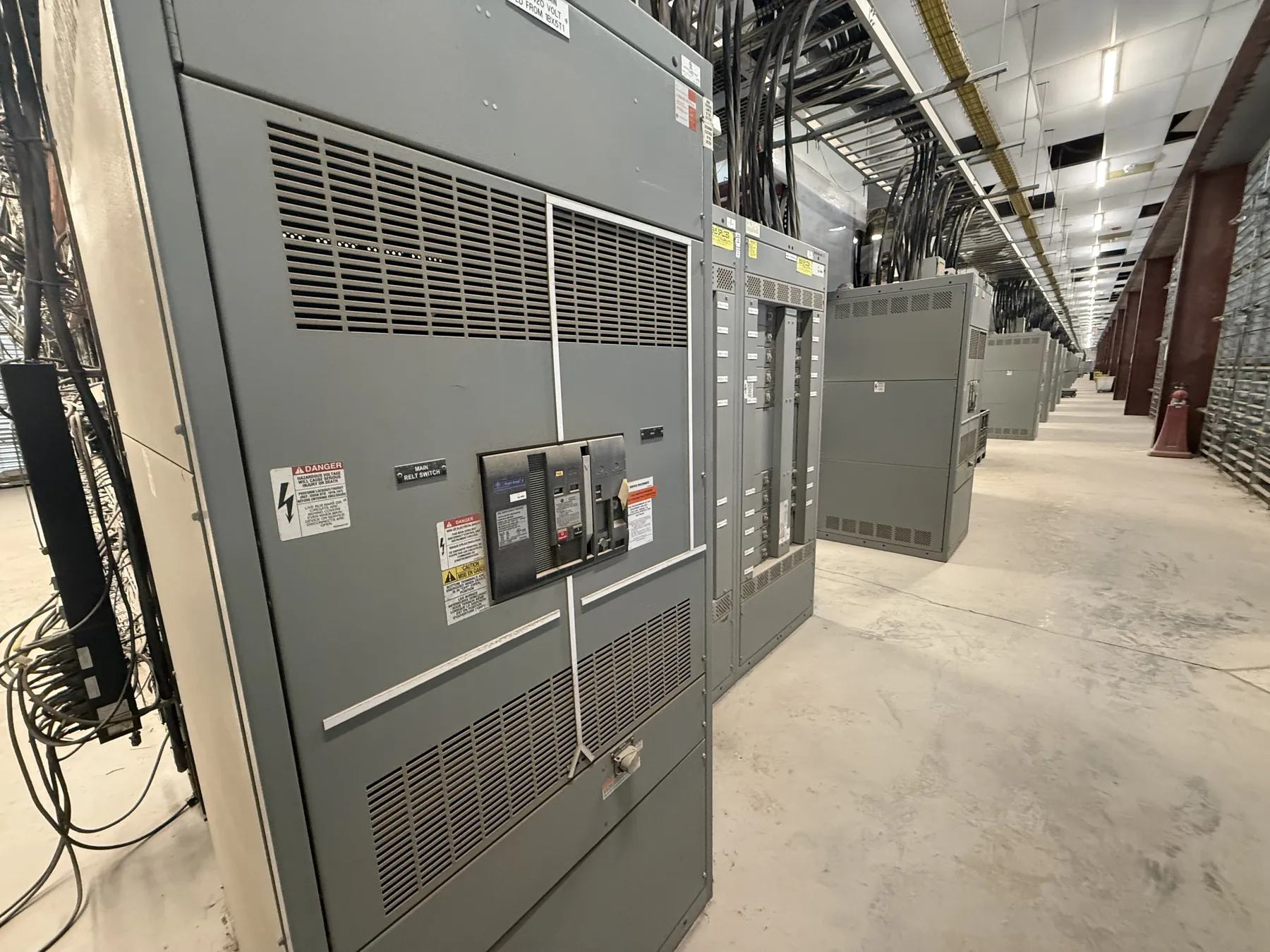
Service Entrance Switchboards for Las Vegas Projects
A service entrance switchboard is the point where a building’s incoming electrical service is received, metered as required, and distributed through a main section and downstream feeders. For a Las Vegas project, its configuration needs to reflect the actual service characteristics and the serving utility’s metering requirements—not assumptions based on the building’s location or a typical installation. Establishing those details early helps align the switchboard layout with the project’s electrical design, utility interface, and installation conditions.
We manufacture new custom switchboards in the United States using all-American components and ship equipment nationwide, including to Nevada. A project-specific quotation can be developed from the electrical documents and utility information available at the time of inquiry. Final equipment configuration, ratings, listings, and approval requirements must be confirmed for the application with the project’s qualified electrical professionals and the relevant authorities.
Confirm the Service and Utility Metering Interface
Before sizing the main section, confirm the service voltage and phase, conductor arrangement, service configuration, and other characteristics specified for the project. These are system details; they are not interchangeable with an equipment rating. The switchboard’s voltage and current ratings must be selected for the application, with available fault current and the specified protective devices considered as part of the design review.
Metering requirements can affect the physical arrangement as well as the electrical interfaces. Confirm whether the utility requires a particular metering compartment, instrument transformers, barriers, access provisions, or other arrangements, and identify which components or details are subject to utility review. Utility practices can vary, so a generic service-entrance configuration should not be assumed to meet the requirements for a Las Vegas site. Provide current utility criteria and project direction with the quotation request when available.
Coordinate the Main Disconnect and Service Section — Service Entrance Switchboards in Las Vegas, NV
The main disconnect must be coordinated with the service design, the switchboard’s intended use, and the project’s distribution plan. Its type, rating, and position can influence the enclosure arrangement, incoming conductor termination space, bus configuration, and relationship to feeder sections. The electrical engineer should establish the required device characteristics and protective-device coordination; equipment selection should follow that documented design rather than substitute for it.
Service grounding and bonding details also need to be resolved as part of the overall service design. The switchboard arrangement must align with the project documents and applicable requirements for the service, including the intended grounding and bonding provisions. The manufacturer needs clear direction on the specified configuration, while the design professional and authority having jurisdiction determine how those requirements apply to the installation.
Evaluate Fault Current, Ratings, and Protection
Available fault current at the equipment location is a critical input. It informs evaluation of the switchboard’s short-circuit and protective-device requirements and must come from the project’s electrical design or other qualified source. Do not infer it from nominal system voltage, service size, or the equipment’s nameplate rating. If utility or system information changes, the design team should reassess the equipment requirements before release for manufacture.
Ratings describe defined equipment capabilities and conditions; they do not establish the service characteristics of the building. The specified assembly, main device, and any applicable short-circuit rating must be reviewed together for the intended system and installation. UL 891 applies to applicable low-voltage switchboards, not to every type of switchgear or every product configuration. Any required listing, standard, or project-specific acceptance must be confirmed for the selected equipment and scope.
Plan for Las Vegas Site and Installation Conditions
Las Vegas projects may involve different building layouts, service-room access, ambient conditions, and construction schedules. Those site factors can affect enclosure selection, equipment dimensions, access clearances, conduit entry, cable routing, and the sequence for receiving and installing the switchboard. Share the available room plans and installation constraints so the equipment layout can be reviewed against the intended location. Do not treat general regional conditions as a substitute for the actual site data.
Shipping nationwide supports Nevada projects without implying a local manufacturing facility or office. Delivery planning should be coordinated with the jobsite’s receiving capability, access route, construction phase, and storage conditions. The project team should confirm the required delivery window and any handling constraints during quotation and order coordination; timing depends on the finalized scope and manufacturing schedule.
Prepare a Complete Quotation Package — Service Entrance Switchboards in Las Vegas, NV
Useful quotation inputs include the one-line diagram, service and metering requirements, available fault-current information, main-device and feeder schedules, required ratings, enclosure and installation details, utility criteria, and any specified listing or approval requirements. Include the project location and target schedule, plus drawings or notes that clarify cable entry, space limitations, and interface responsibilities. If details are pending, identify them explicitly so they can be resolved rather than treated as confirmed.
Our team can use the project documents to develop a custom new service entrance switchboard proposal and identify information that needs clarification. The final design requires review by qualified engineers and coordination with the utility and applicable authorities. This process helps ensure that the manufactured equipment is based on the confirmed service, metering, protection, and site requirements for the Las Vegas installation.