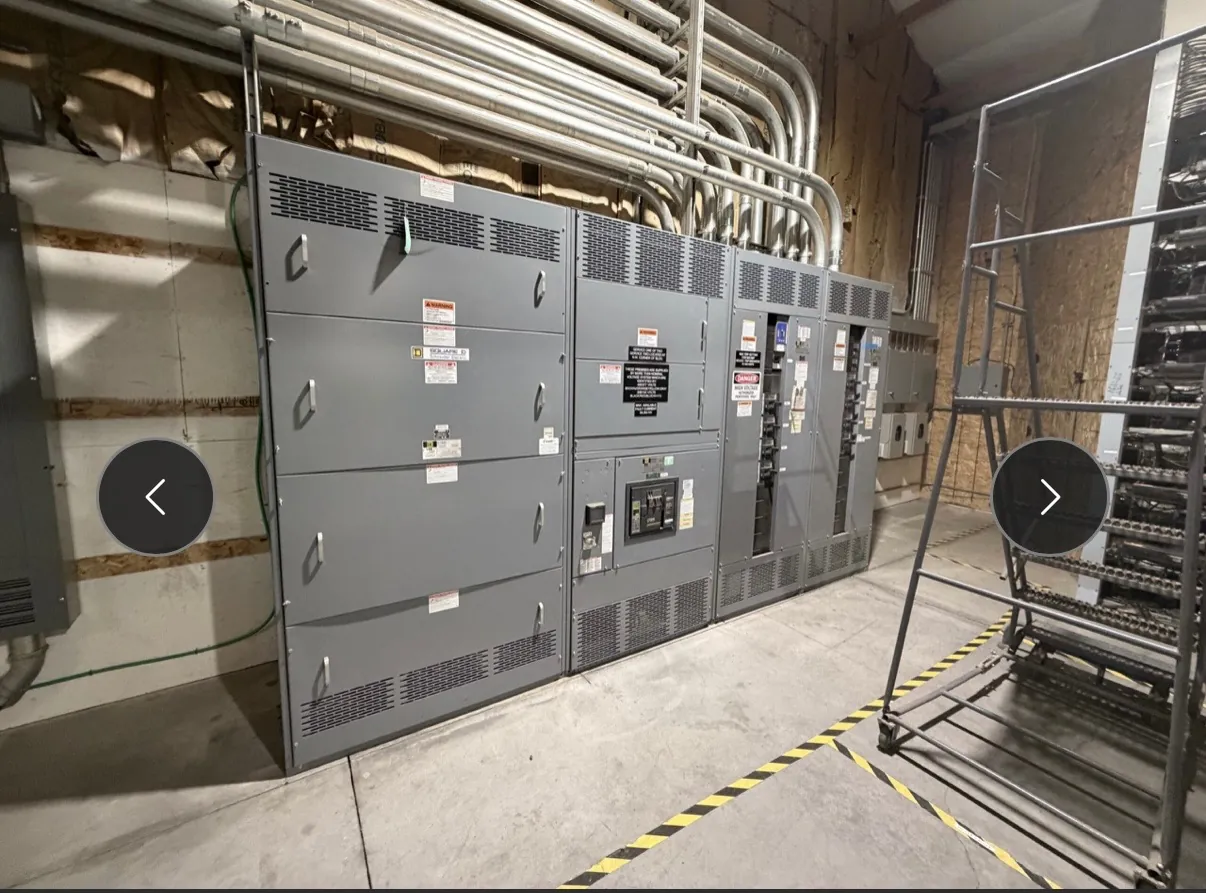
Casino Switchgear for Las Vegas Electrical Distribution
Casino electrical distribution has to support more than gaming-floor lighting and receptacles. A Las Vegas project may include hotel rooms, restaurants, kitchens, event spaces, offices, back-of-house operations, security systems and building services, each with different operating priorities. Switchgear planning starts by mapping those loads to the facility’s electrical architecture, identifying where distribution sections serve distinct areas and where they connect to utility, generator or other project-defined sources.
Custom switchgear should be developed around the project’s one-line diagram and equipment requirements, not selected from a generic assumption about casino demand. Existing buildings, expansions and new construction can have different constraints, including available electrical-room space, access routes and the need to keep adjacent operations functioning during construction. The final arrangement depends on engineering review of the site and the electrical design.
Separate Critical, Life-Safety and General Loads — Casino Switchgear in Las Vegas, NV
Load classification is a foundational design decision. Critical operational loads, life-safety loads and general building loads may have different source arrangements, transfer requirements and restoration priorities. The project team should define these categories with its electrical engineer and relevant disciplines rather than treating all casino loads as one group. The distinction affects feeder assignments, protective-device coordination, emergency-power interfaces and the way distribution is organized.
For example, life-safety systems may be subject to specific code and design requirements, while selected operational systems may require a separate continuity strategy established by the owner. General loads can have different expectations for interruption and restoration. Switchboard sections, breakers and connections must be coordinated with those intended functions. Equipment ratings alone do not determine whether a particular load is appropriately served or whether an overall system meets project requirements.
Coordinate Emergency Power and Source Interfaces
Emergency-power planning calls for clear definition of the sources and interfaces that the switchgear must accommodate. The engineer’s design should identify which loads are served by emergency or standby sources, how those sources connect to distribution, and what transfer equipment or controls are provided elsewhere in the system. Generator characteristics, operating modes, grounding approach and protective-device settings can influence equipment selection and coordination.
These details should be resolved across the electrical engineer, generator and transfer-equipment suppliers, controls team, utility, and other parties responsible for the system. A switchgear quotation can reflect specified interfaces, but it cannot establish the correct emergency-power architecture without the project’s design information. Any required separation, interlocking, metering provisions or control connections should be shown in the documents used for quotation and design review.
Confirm Las Vegas Service and Metering Requirements — Casino Switchgear in Las Vegas, NV
Before sizing the main section, confirm the proposed service characteristics and utility metering requirements for the specific Las Vegas site. The project team should verify the service voltage and configuration, available fault-current information, service entrance arrangement, metering location and utility-required details. These inputs can affect the main device, bus arrangement, compartment layout and interfaces between utility equipment and customer-owned distribution.
Voltage, current and interrupting or withstand ratings are distinct considerations. A system’s nominal voltage does not by itself establish the necessary equipment ratings, and a rating should not be treated as evidence of a listing or approval. Applicable ratings, listings and project-specific details require confirmation against the design documents and requirements of the relevant authorities and utility. For low-voltage switchboards, UL 891 may apply when specified and appropriate; it does not apply universally to every type of switchgear or to medium- or high-voltage equipment.
Plan Phased Maintenance Around Casino Operations — Casino Switchgear in Las Vegas, NV
Renovations and maintenance may need to proceed in phases so that unaffected areas can continue operating. That objective has electrical consequences: the team must establish which sections can be isolated under the project’s approved plan, what loads remain served, and how temporary construction connections or future expansion provisions are handled. Room dimensions, equipment access, cable entry, feeder routing and the sequence of work should be reviewed early, because a compact layout can be difficult to maintain or expand if clearances and interfaces are not planned.
Maintenance planning is a design and operations coordination task, not a substitute for qualified review of energized electrical systems. The owner, engineer and contractor should resolve outage boundaries, work sequencing, load transfers and any required temporary arrangements through the project process. Switchgear documentation should make section functions and connections clear to the teams responsible for installation, commissioning and ongoing facility maintenance.
Prepare a Project-Specific Switchgear Quotation — Casino Switchgear in Las Vegas, NV
Useful quotation inputs include the current one-line diagram, equipment schedules, service and metering information, fault-current data, load classifications, emergency-power interfaces, specified ratings, physical dimensions, cable entry requirements and project phasing notes. Identify whether the equipment is for a new facility, an addition or a replacement, and document constraints such as restricted equipment-room access or planned future sections. Missing or preliminary information should be identified so the design team can resolve it before final equipment details are established.
We manufacture new custom switchgear and power-distribution equipment in the United States using all-American components, with short lead times and nationwide shipping, including to Nevada. Final configuration, ratings, applicable listings and schedule depend on the project documents and engineering coordination. Clear requirements at the outset help align the equipment with the casino’s distribution plan, utility interface and operational priorities.