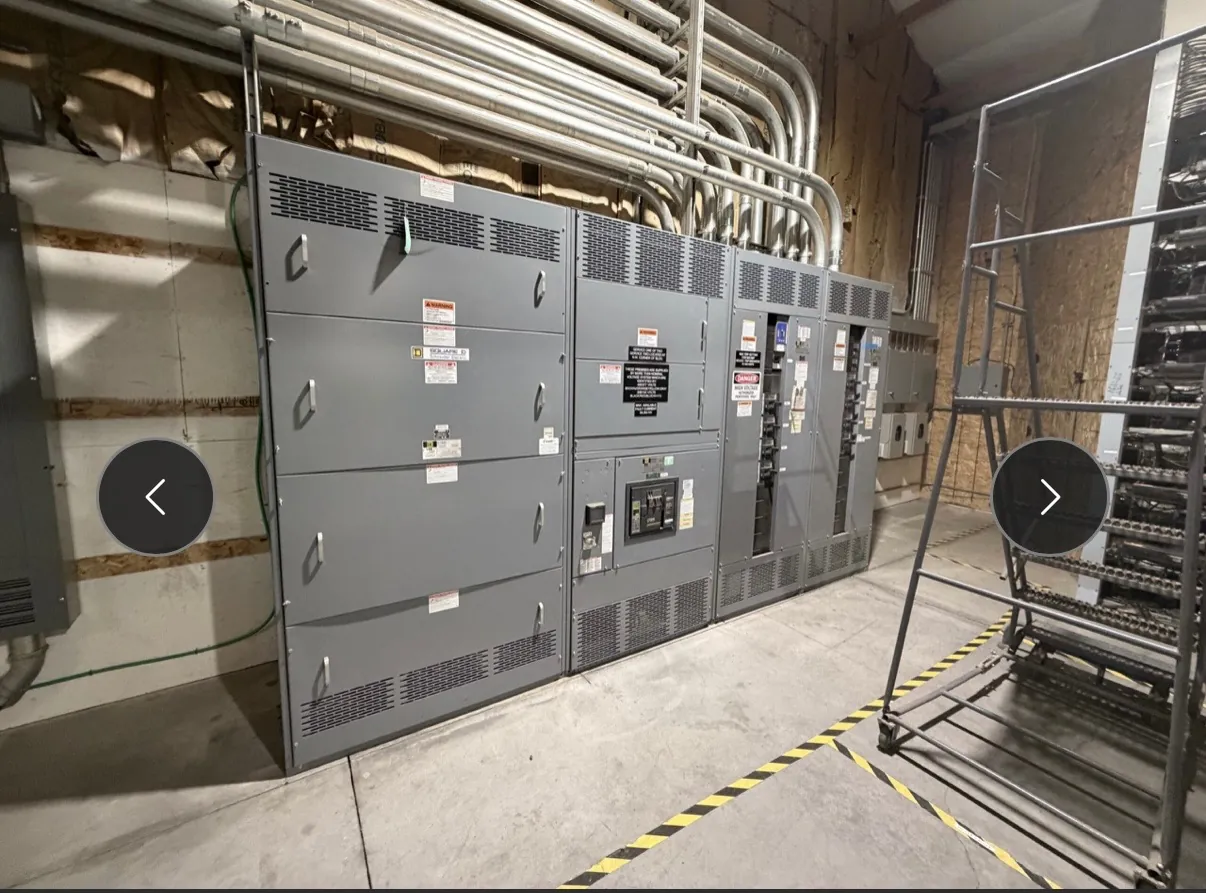
Casino Switchgear for Distinct Load Priorities
A casino depends on more than gaming-floor power. Hotel rooms, kitchens, elevators, security systems, data networks, back-of-house operations and life-safety equipment may all have different continuity requirements. Switchgear planning should make those priorities visible in the distribution architecture rather than treating the property as one undifferentiated load. Custom switchboards and related power-distribution assemblies can be configured around the project’s documented circuits, sources and operating requirements.
The design team typically begins by separating life-safety loads, other critical loads and general loads. These categories are not interchangeable: applicable codes, the adopted design, and the authority having jurisdiction determine what belongs in each. A casino’s operational priorities also matter. For example, a gaming floor may need a different continuity strategy from guest-room or administrative areas. Qualified electrical engineers must establish the actual classifications and distribution arrangement for the specific facility.
Emergency Power Interfaces and Transfer Boundaries
Emergency power planning involves more than identifying a generator connection. The project should clarify which loads are served by each source, where transfer equipment sits in relation to the switchgear, and how normal and alternate sources are isolated and distributed. Coordination with generator, automatic transfer switch, fire alarm, and building-management system suppliers helps define required interfaces, control signals, and responsibility boundaries.
Designers should also consider what happens when emergency capacity is limited. Load sequencing, load shedding, and restoration priorities may affect which areas can operate at the same time. The switchgear configuration must align with the engineered sequence and source characteristics; the manufacturer should not assume that every connected load can be supported during an outage. Source data, system grounding, protective-device coordination, and available fault-current information are among the inputs engineers need to evaluate.
Planning for Phased Casino Maintenance
Casinos often need maintenance plans that account for occupied spaces, continuous guest activity, scheduled events, and restricted access to electrical rooms. Phased work can reduce the scope of an outage, but it requires a carefully reviewed distribution plan. Designers and facility teams should identify which boards, sections, feeders, or downstream areas can be isolated independently, and whether temporary power or a planned shutdown is part of the project.
Physical arrangement matters as well. Section layout, incoming and outgoing connections, working clearances, cable access, labeling conventions, and equipment-room constraints affect installation and future serviceability. Maintenance windows should be coordinated with facility operations and qualified electrical contractors. No switchgear configuration alone can guarantee uninterrupted service or determine a safe work method; site conditions, approved procedures, and qualified personnel govern that work.
Ratings, Construction, and Project-Specific Fit
Switchgear and switchboard selection depends on the system design, not simply the building’s stated voltage. Relevant details can include nominal system voltage, continuous current, short-circuit withstand or interrupting requirements, bus configuration, enclosure conditions, service entrance role, and the specified protective devices. These terms describe different characteristics. A current or interrupting rating is not the system voltage, and equipment ratings must be checked against the actual application.
UL 891 applies to certain low-voltage switchboards when the product and application fall within its scope; it should not be taken as a blanket standard for every switchgear assembly or voltage class. Any required listing, labeling, construction details, or code provisions must be confirmed for the specific product and project. An engineer’s review, site information, and applicable requirements are essential before the configuration is finalized.
Information That Supports a Useful Quotation — Casino Switchgear
Early project documents help define a buildable scope and identify open engineering questions. A quotation request can include one-line diagrams, equipment schedules, source and load information, fault-current and coordination studies when available, specified protective devices, metering and communications needs, and project requirements for enclosures, cable entry, and physical dimensions. Include the planned emergency-power arrangement and any phased construction or maintenance constraints.
It is also useful to state what is already selected and what remains subject to engineering review. For example, clarify whether transfer equipment is furnished separately, which party provides controls and field wiring, and whether the switchgear must interface with existing equipment. Complete inputs help the manufacturer assess the requested assembly; they do not replace design approval or site verification by the responsible professionals.
U.S.-Manufactured Assemblies for Nevada Projects
Custom switchgear and power-distribution assemblies for casino projects serving Nevada are manufactured in the United States using all-American components, with nationwide shipping. For a Nevada installation, project teams should account for transportation, receiving access, equipment-room dimensions, construction sequencing, and coordination with local contractors and reviewing authorities. Those site and project conditions can influence configuration and schedule planning; a specific lead time or delivery date requires confirmation against the final scope.
Keeping life-safety, critical, and general loads distinct—and coordinating emergency sources and maintenance phases early—gives the project team a clearer basis for equipment selection. Final ratings, listings, interfaces, and construction details should be confirmed against the engineered design and site requirements before release for manufacture.