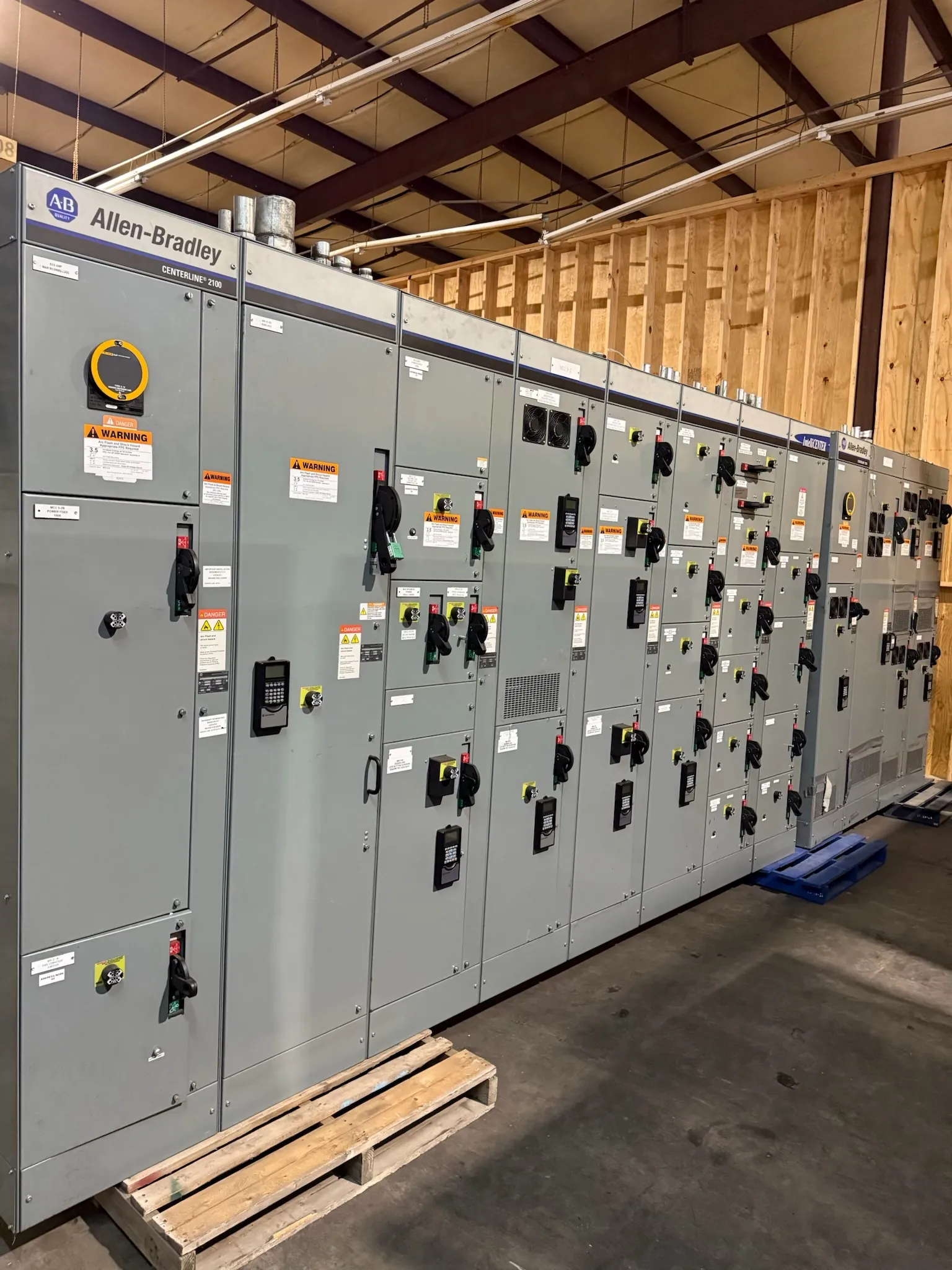
Metal-Enclosed Switchgear for Las Vegas Projects
Metal-enclosed switchgear can serve as a coordinated assembly for switching, protection and distribution where the project calls for equipment in a common metal enclosure. For Las Vegas facilities, the starting point is not a catalog size: it is the electrical service and the job-specific arrangement. Confirm the available service characteristics, utility metering requirements and project one-line diagram before determining the main section, device configuration or enclosure details. Service conditions can differ between sites, even within the same city.
We manufacture new custom power-distribution equipment in the United States, using all-American components, and ship nationwide, including to Nevada. A project review can establish whether a metal-enclosed arrangement fits the intended application and what information is needed to develop a quotation. Final design and ratings require qualified engineering review and confirmation against the installation conditions.
Switch, Fuse and Breaker Configurations — Metal-Enclosed Switchgear in Las Vegas, NV
A basic design choice is whether the main or feeder function uses a switch with fuses, a circuit breaker, or a combination of devices. A fused switch may suit an application where the protection strategy and available fuse characteristics align with the system coordination plan. A breaker configuration may offer different operating, protection and coordination options. Neither choice is automatically preferable: the required functions, system study, maintenance approach and equipment interfaces all matter.
Project documents should identify which circuits require switching, overcurrent protection, isolation or metering, and whether the equipment must accommodate future feeders. Specify the intended device duties and any required control or trip features rather than assuming that all switches, fuses or breakers are interchangeable. Device interrupting capability and assembly fault-duty rating must be evaluated for the actual system; they are not determined by nominal system voltage alone.
Enclosure Barriers, Access and Construction
Metal-enclosed describes equipment arranged within a metal enclosure; it does not by itself establish the internal compartmentation or construction details. The design can include barriers that separate sections or reduce exposure between components, but the project must define the intended barriers, access points and service interfaces. Confirm which areas require access for inspection or maintenance, how cable and control wiring enter, and whether the installation layout permits the enclosure doors or panels to open as designed.
Metal-enclosed switchgear should not be confused with metal-clad switchgear. Metal-clad construction has more specific compartmentalization and component separation features. A project specification that calls for metal-clad equipment should not be treated as satisfied merely because an assembly has a metal enclosure. Review the specified construction, applicable standards, voltage class and equipment duty together before selecting a design.
Fault Duty, Grounding and System Interfaces — Metal-Enclosed Switchgear in Las Vegas, NV
Fault duty requires careful coordination among the source, protective devices, bus and connected equipment. The available fault current and clearing behavior influence the required ratings and device selection. Those values must come from qualified engineering analysis using project-specific system information; they cannot be inferred from a city, building type or service voltage. Confirm the required assembly rating and device ratings separately, and verify that the proposed combination is suitable for the documented system conditions.
Grounding provisions also need to match the service arrangement and project design. Clarify grounding conductors, bonding points, neutral treatment where applicable, and connections to upstream and downstream equipment. Other interfaces may include instrument transformers, metering compartments, control power, remote signals, cable terminations and provisions for future connections. Utility metering requirements deserve early attention because they can affect the main section layout and the boundary between utility and customer equipment.
Las Vegas Site and Logistics Considerations
For a Las Vegas installation, provide the site team’s practical constraints as part of the equipment review: indoor or outdoor placement, available footprint, access route, unloading and placement limitations, ambient conditions, and the intended cable approach. Heat, dust, building layout and exposure conditions may affect enclosure or installation requirements, but the appropriate design depends on the actual site and project specification. Shipping to Nevada can be coordinated around the project schedule; a delivery date should be established only after scope, manufacturing requirements and logistics are confirmed.
Coordinate equipment dimensions and connection locations with the electrical room or outdoor pad design before construction is fixed. Late changes to conduit entry, bus connections, metering space or service access can create avoidable field conflicts. The project engineer and installation team should review drawings and interfaces before release for manufacture.
Information for a Project-Specific Quotation — Metal-Enclosed Switchgear in Las Vegas, NV
A useful quotation package typically includes the one-line diagram, service characteristics, available fault-current information, utility metering criteria, required devices and functions, grounding details, enclosure environment, connection preferences, and applicable project specifications. Include the requested construction type and any required listings or standards. UL 891 applies to applicable low-voltage switchboards; it should not be assumed to cover every metal-enclosed switchgear application. Any listing, rating, standard, or project requirement must be confirmed for the specific assembly.
With those inputs, the equipment scope can be reviewed for configuration, ratings, interfaces and manufacturing needs. Short lead times are supported, but timing depends on the finalized design, component requirements and project schedule. A qualified engineer should confirm the design and site suitability before equipment is specified or installed.