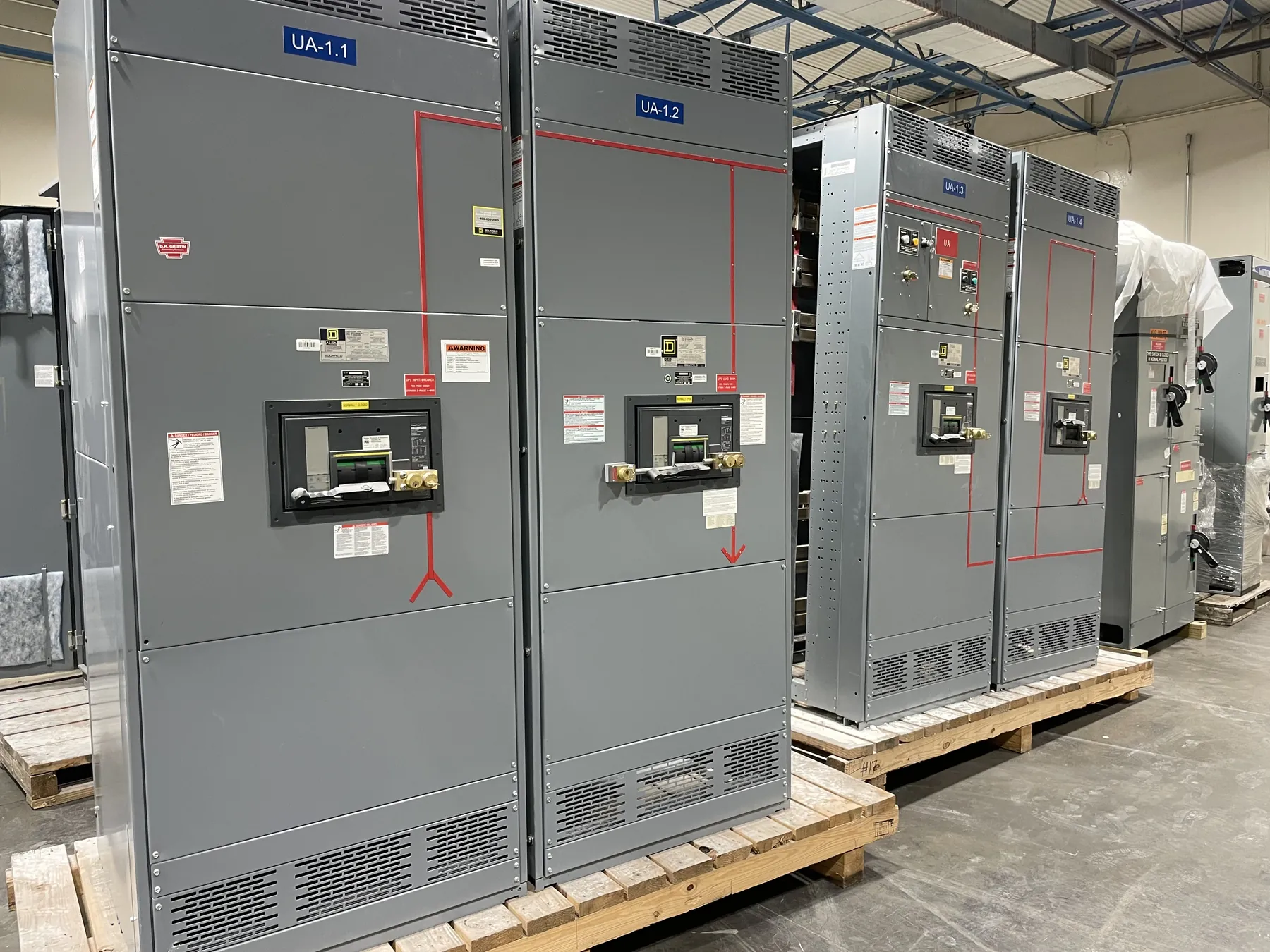
Pad-Mounted Switchgear for Las Vegas Projects
Pad-mounted switchgear places switching and, depending on the design, protection equipment inside a weather-resistant enclosure installed outdoors on a prepared foundation. For Las Vegas facilities, it can help locate electrical distribution near an outdoor service point while keeping equipment enclosed against routine environmental exposure. The right configuration depends on the project’s one-line diagram, service characteristics, utility interface, and site layout—not the city name alone. Service voltage, available fault current, load requirements, grounding approach, and the intended switching functions should be established with the project’s qualified electrical engineer and the serving utility before equipment is specified.
Enclosure, Site Conditions, and Foundation
Enclosure design should reflect the actual installation environment. Las Vegas heat, direct sun, airborne dust, and occasional wind-driven rain can affect equipment exposure and maintenance needs. The project team should identify whether the unit will be fully exposed or partly sheltered, how much clearance is available for access, and whether nearby walls, landscaping, vehicle routes, or other equipment could obstruct doors or service space. Enclosure materials, finish, ventilation provisions, access arrangements, and environmental protection features must be selected for the project conditions and manufacturer’s design limits.
The pad or foundation is part of the equipment interface, not an afterthought. Its dimensions, elevation, anchorage, conduit openings, and cable-pulling space must align with the approved equipment drawings and site civil design. Drainage and finished grade matter: water should not be directed toward the enclosure or allowed to collect around below-grade cable routes. Confirm the foundation layout before concrete work so conduit positions and working clearances match the switchgear configuration. Final foundation and structural requirements require review by the responsible design professionals.
Cable Entry and Utility Interfaces — Pad-Mounted Switchgear in Las Vegas, NV
Cable entry may be arranged from below grade, from the side, or through another configuration supported by the selected design. The choice affects foundation openings, conductor bending space, compartment layout, pulling access, and the relationship between incoming and outgoing circuits. Provide the expected conductor types and sizes, number of runs, termination requirements, and entry direction during design coordination. These details should be checked against manufacturer drawings and the project’s electrical design rather than assumed from a general product description.
Utility requirements are especially important when the switchgear connects directly to utility distribution or metering. Before sizing the main section, confirm service characteristics and utility metering requirements, including the utility’s accepted interface and any required space or compartment arrangement. Utility practices vary, and a design that works for one service arrangement may not meet another provider’s requirements. Coordinate the intended ownership boundary, access expectations, metering provisions, and connection responsibilities among the utility, engineer, contractor, and equipment manufacturer.
Ratings and Protection Must Match the System
Equipment ratings are not interchangeable with system voltage. The specified voltage rating, continuous current rating, short-circuit or fault-duty capability, switching functions, and protective-device requirements must be evaluated for the actual system and application. A rating cannot be selected from the facility’s nominal voltage alone; available fault current, upstream protection, load profile, and the one-line diagram are relevant inputs. The project engineer should confirm the required ratings and protection coordination, while the utility provides applicable service information.
Pad-mounted equipment can be configured for different circuit arrangements and operating functions, but not every feature is appropriate or available for every design. Identify the number and purpose of incoming and outgoing ways, anticipated expansion, and any required sectionalizing or protective functions. Applicable listings and standards depend on the specific equipment type and configuration. UL 891 applies to applicable low-voltage switchboards; it should not be treated as a blanket standard for all pad-mounted switchgear. Confirm the applicable requirements for the proposed assembly and project.
Information That Improves a Las Vegas Quotation
A useful quotation request includes the one-line diagram, service data, load and circuit information, utility metering criteria, site plan, foundation or conduit concept, and expected environmental exposure. Include required ratings, enclosure preferences, cable-entry direction, termination details, access constraints, and any project specifications or approved equipment schedules. If some inputs remain open, identify them clearly. The manufacturer can then flag design decisions that depend on engineering or utility review instead of treating assumptions as confirmed requirements.
As a U.S. manufacturer of new custom power-distribution equipment, we build assemblies using all-American components and ship nationwide, including to Nevada. Lead time depends on the finalized configuration, component requirements, engineering coordination, and production schedule; confirm timing against the complete project scope. Drawings, ratings, listings, and utility interfaces require project-specific confirmation before release for manufacture.
Installation Coordination and Long-Term Access
Coordinate equipment placement with the electrical contractor, civil team, utility, and facility representatives before installation. The site plan should preserve access for installation, inspection, and future maintenance while accounting for vehicle movement and adjacent equipment. Confirm that cable routes, grounding provisions, pad details, and service clearances agree across the electrical and civil documents. Any change to the service arrangement, cable plan, or utility requirements can affect the equipment design, so communicate revisions before drawings are approved. Final equipment selection and installation details belong with qualified professionals who can review the site and applicable project requirements.