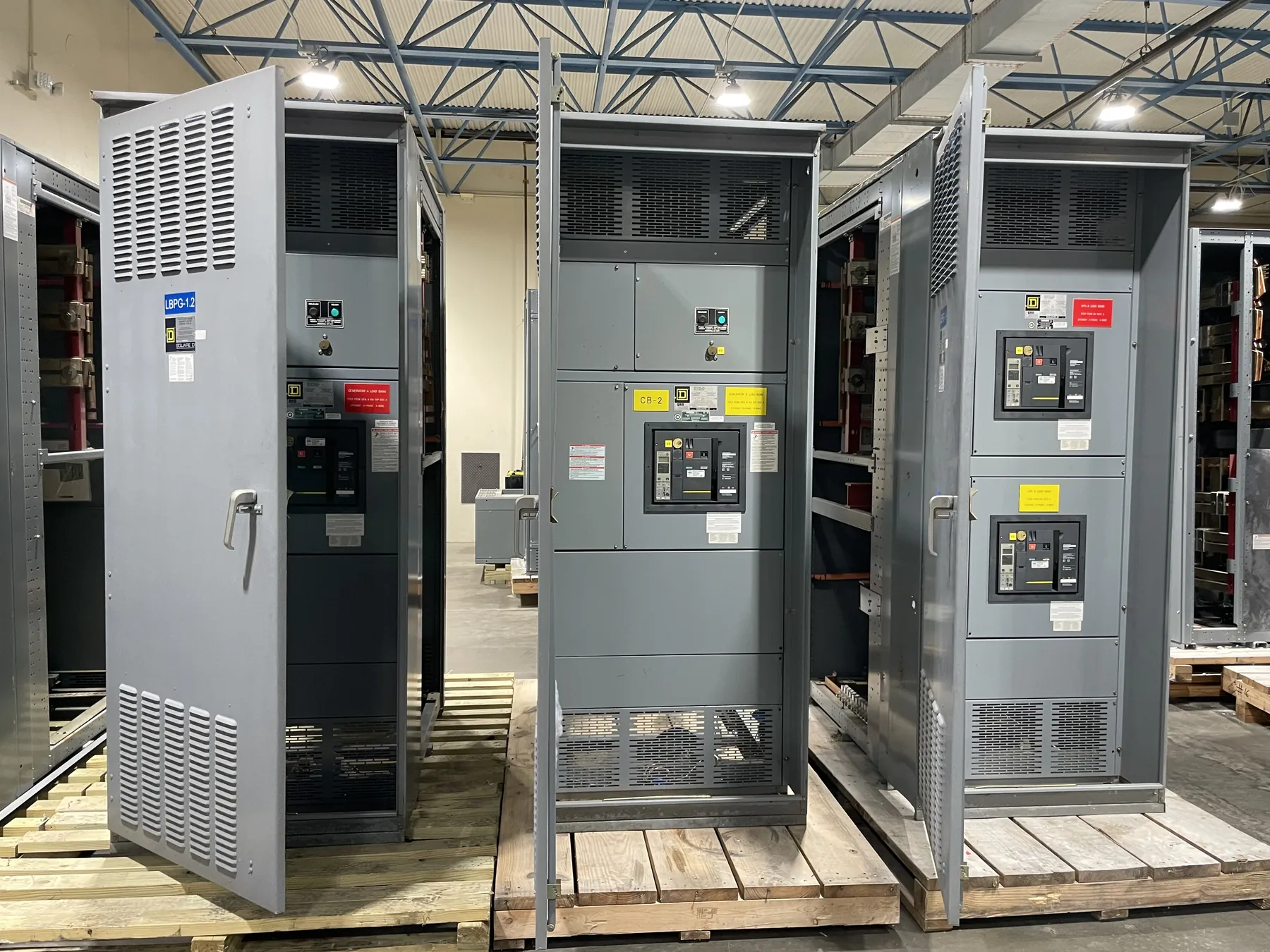
Planning Data Center Switchgear for Las Vegas Projects
Data center electrical distribution begins with the facility’s required service characteristics and the way each load must be supported—not with a switchboard size selected in isolation. For a Las Vegas project, confirm the available service voltage, phase and frequency, utility metering requirements, and applicable service conditions before defining the main section. Those details affect the incoming arrangement, metering space, protective-device selection and equipment ratings. The utility, electrical engineer and project team should resolve service and metering requirements for the specific site.
We manufacture new custom switchgear and power-distribution equipment for projects that need a defined interface between utility service, backup sources and critical loads. Our assemblies use all-American components, are built in the USA, and can ship nationwide, including to Nevada. Equipment configuration and delivery planning depend on the approved project requirements; a shipment destination does not establish local utility acceptance or a particular lead time.
Map Redundant Power Paths Before Configuring Sections
Redundancy is an electrical architecture decision, not simply a matter of adding another breaker. The design team should identify the normal and alternate paths from each source through the distribution system to the loads, including where paths are independent and where they converge. A shared bus, tie, control-power source or maintenance boundary can create a common point that affects the intended redundancy strategy.
For a main-tie-main or other sectionalized arrangement, project documents should define normal operating positions, transfer logic, interlocks and the circumstances in which a tie is permitted to close. Those choices influence bus arrangement, breaker functions, metering and control interfaces. The switchgear manufacturer can develop the equipment around an approved one-line diagram and control narrative, but the project’s qualified electrical engineer must determine the system architecture and operating criteria.
Coordinate UPS and Generator Interfaces — Data Center Switchgear in Las Vegas, NV
UPS systems and generators introduce distinct operating states that should be reflected in the switchgear design. Confirm how UPS input, bypass and output connect to the distribution system, which loads are served by each path, and how maintenance or transfer affects continuity. UPS equipment may have operating modes and load characteristics that affect upstream protection and coordination; the relevant manufacturer data and project studies should inform device selection.
Generator interfaces also require more than an incoming connection. Establish the source arrangement, transfer scheme, control and status signals, grounding approach, and whether sources may operate in parallel. Confirm generator and utility characteristics with the responsible design team before specifying breaker functions or ratings. These interfaces must be coordinated across the switchgear, transfer equipment, generator controls and facility monitoring system.
Design a Maintainable Bypass Sequence — Data Center Switchgear in Las Vegas, NV
A bypass can support service continuity during maintenance, but its value depends on a sequence that is clear, engineered and compatible with the equipment. Define which component is bypassed, what source serves the load during each state, and how the arrangement prevents unintended source connections. Interlocks, keying or control logic may be part of that design, subject to the approved operating philosophy and applicable project requirements.
Consider access for inspection and replacement, separation between sections, cable entry, working clearances and the route for future additions. In Las Vegas, site conditions such as available electrical-room space, equipment access, ambient conditions and construction sequencing should be confirmed by the project team rather than assumed from the city alone. Layout drawings and interface schedules help expose conflicts before fabrication.
Verify Ratings, Protection and Applicable Listings
Equipment ratings must be selected from the system study and confirmed against the actual application. A voltage rating is not interchangeable with system voltage, and interrupting, withstand and continuous-current requirements describe different characteristics. Available fault current, source configurations, conductor details and protective-device settings all matter. The design engineer should establish required ratings and verify that the proposed equipment is suitable for the installation.
Selective coordination is likewise a system-level objective. It depends on the upstream and downstream protective devices, their settings, available fault current and operating modes, including generator or alternate-source operation. Review coordination results for the relevant configurations instead of assuming a single-source study covers every state. UL 891 applies to applicable low-voltage switchboards; it should not be treated as a blanket listing for all switchgear or for medium-voltage equipment. Confirm the applicable product type, listing and project requirements with the manufacturer and project team.
Prepare a Complete Las Vegas Project RFQ
A useful quotation package gives the manufacturer enough information to configure the equipment without guessing at critical interfaces. Include the latest one-line diagram, service characteristics, utility metering requirements, fault-current and coordination information, source and tie logic, UPS and generator documentation, load or feeder schedules, control requirements, and room layout. Identify the intended equipment scope and any required communication or monitoring interfaces.
Also provide project location, access constraints, indoor or outdoor conditions, cable-entry preferences, submittal expectations and the required project schedule. Ratings, listings, dimensions and other design details require confirmation against the application and approved documents. With those inputs, the equipment can be developed for the project’s power paths and maintenance intent, while final engineering review remains essential to a dependable data center distribution design.