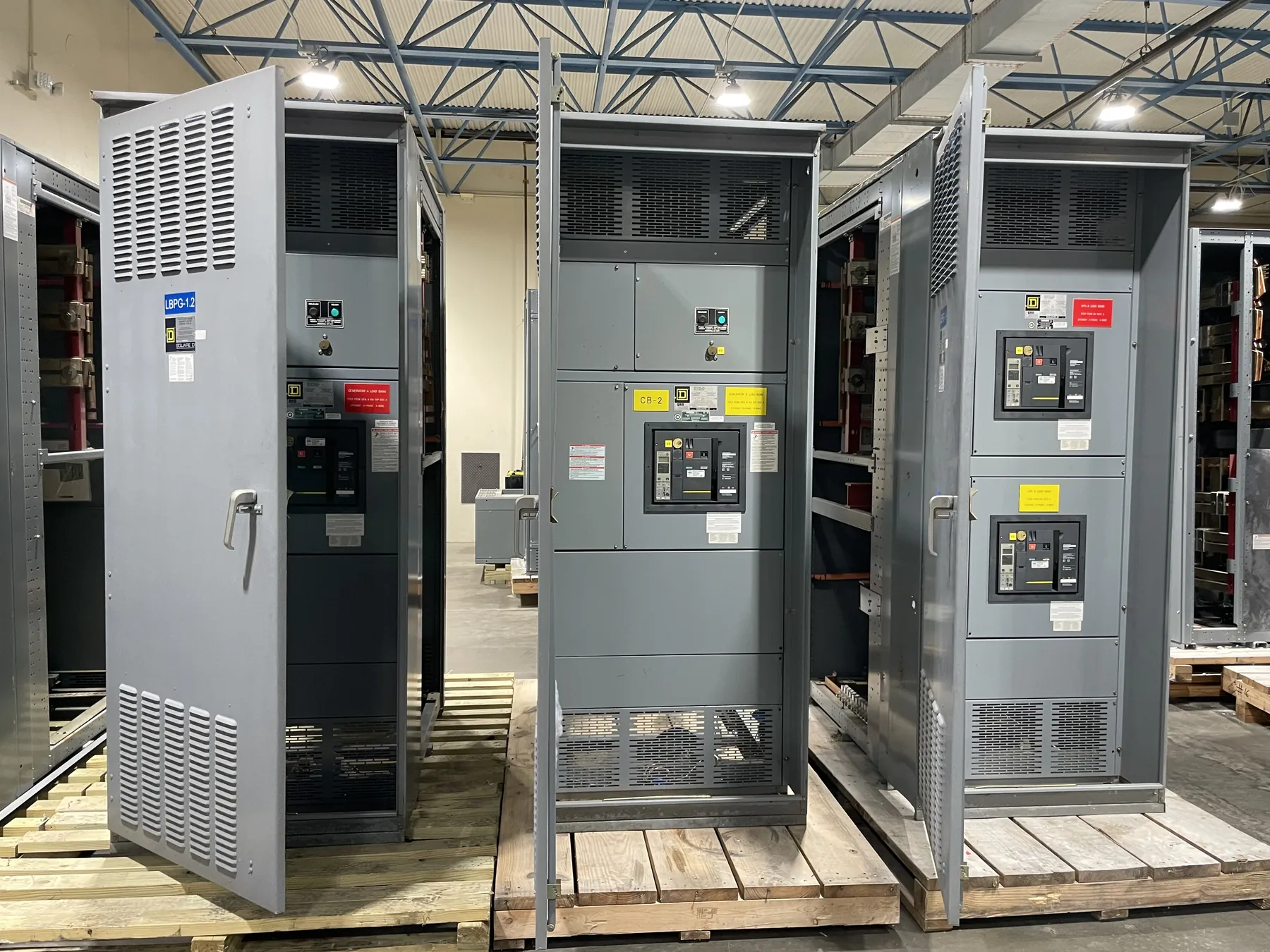
Medium-Voltage Switchgear for Las Vegas Projects
Medium-voltage switchgear is the controlled interface between an incoming power source and the distribution equipment serving a facility. For a Las Vegas project, selecting it begins with the actual electrical service—not a product label or a nominal voltage alone. The design team should confirm the utility’s service characteristics, the facility’s load requirements and the intended point of connection before defining the lineup. Utility metering requirements also need to be established early, since meter location, compartments, instrument transformers and access provisions can affect the main-section layout.
We manufacture new custom power-distribution equipment in the United States using all-American components. Assemblies can be configured for project requirements and shipped nationwide, including to Las Vegas. Final equipment design, ratings and configuration depend on qualified engineering review and confirmation of the project’s electrical conditions.
Define Voltage Class and Available Fault Duty
Voltage class identifies the equipment’s intended application, but it is not interchangeable with the system’s nominal operating voltage. The specified class must suit the service and the equipment’s insulation and switching requirements. The project team should provide the nominal system voltage, grounding arrangement, frequency where relevant, and any applicable operating conditions so the equipment can be evaluated for the actual system.
Available fault duty is another essential input. The switchgear’s short-circuit capabilities must be appropriate for the fault current available at its installation point, including the effects of upstream sources and system configuration. A rating cannot be selected reliably from facility size or voltage alone. Fault-current information and the current system study should be reviewed by qualified electrical engineers; changes to transformers, generators, utility supply or system topology can affect the analysis.
Match Insulation, Interrupting, and Switching Requirements
Insulation level addresses the equipment’s ability to withstand specified electrical stresses. It must be considered alongside the voltage class, environment and applicable design requirements—not treated as a substitute for interrupting or withstand ratings. The required switching devices and their duties likewise depend on the system design, protection scheme and expected operating conditions. These values and their applicability require confirmation for the specific equipment and project.
Designers should also consider how the lineup will be installed and maintained, including enclosure arrangement, cable-entry direction, clearances, access and environmental exposure. Las Vegas facilities may have site-specific constraints such as limited electrical-room space, heat exposure or dust control needs. Those conditions should be documented for engineering review rather than addressed through assumptions about a typical local installation.
Coordinate Protective Relays and System Interfaces
Protective relays detect defined abnormal conditions and initiate a response through the associated switching equipment. Relay functions, settings and instrument-transformer inputs must fit the protection philosophy for the source, bus, feeders and connected equipment. Coordination with upstream and downstream protection is critical: inappropriate settings or mismatched device characteristics can affect selectivity and system response. Relay selection alone does not establish a coordinated protection system.
For a quotation, provide available one-line diagrams, protection requirements, instrument-transformer information and the latest relevant fault-current and coordination studies. Identify any communications, control power, remote indication or interlocking interfaces required by the project. Qualified engineers should confirm relay application and settings against the complete system; final coordination may require information from the utility and other equipment suppliers.
Plan Cable Terminations and Metering Early
Cable termination arrangements influence compartment dimensions, access, cable bending space and the orientation of incoming and outgoing connections. Useful project inputs include cable type and size, number of cables per phase, entry direction, termination style and the space available for installation. These details should be checked against the selected switchgear configuration and the cable manufacturer’s requirements. Clearances and termination methods must be confirmed by the project’s engineering team.
In Las Vegas, utility metering and service requirements can shape the main section and its interfaces. Confirm who supplies and installs metering components, the required metering location, applicable instrument transformers and any utility-specific drawings or review process before the main lineup is finalized. Utility acceptance is determined by the relevant utility and project review; it should not be assumed from a general equipment description.
Prepare a Complete Switchgear Specification
A useful request for quotation identifies the system voltage and grounding, available fault duty, insulation and switching requirements, lineup arrangement, main and feeder functions, relay and control needs, metering provisions, cable data and site constraints. Include project drawings and applicable specifications, and flag unresolved items. A complete, coordinated input set helps clarify what is included and which ratings, listings, interfaces or details remain subject to confirmation. UL 891 applies to applicable low-voltage switchboards; it is not a standard for medium-voltage switchgear.
Our role is to manufacture new custom equipment to the confirmed design basis, not to determine a project’s electrical conditions without engineering review. We support short lead times and ship nationwide, but schedule depends on the approved configuration, required documentation and project coordination. Early discussion of service data, metering and cable interfaces helps the design team resolve decisions before they constrain the final lineup.