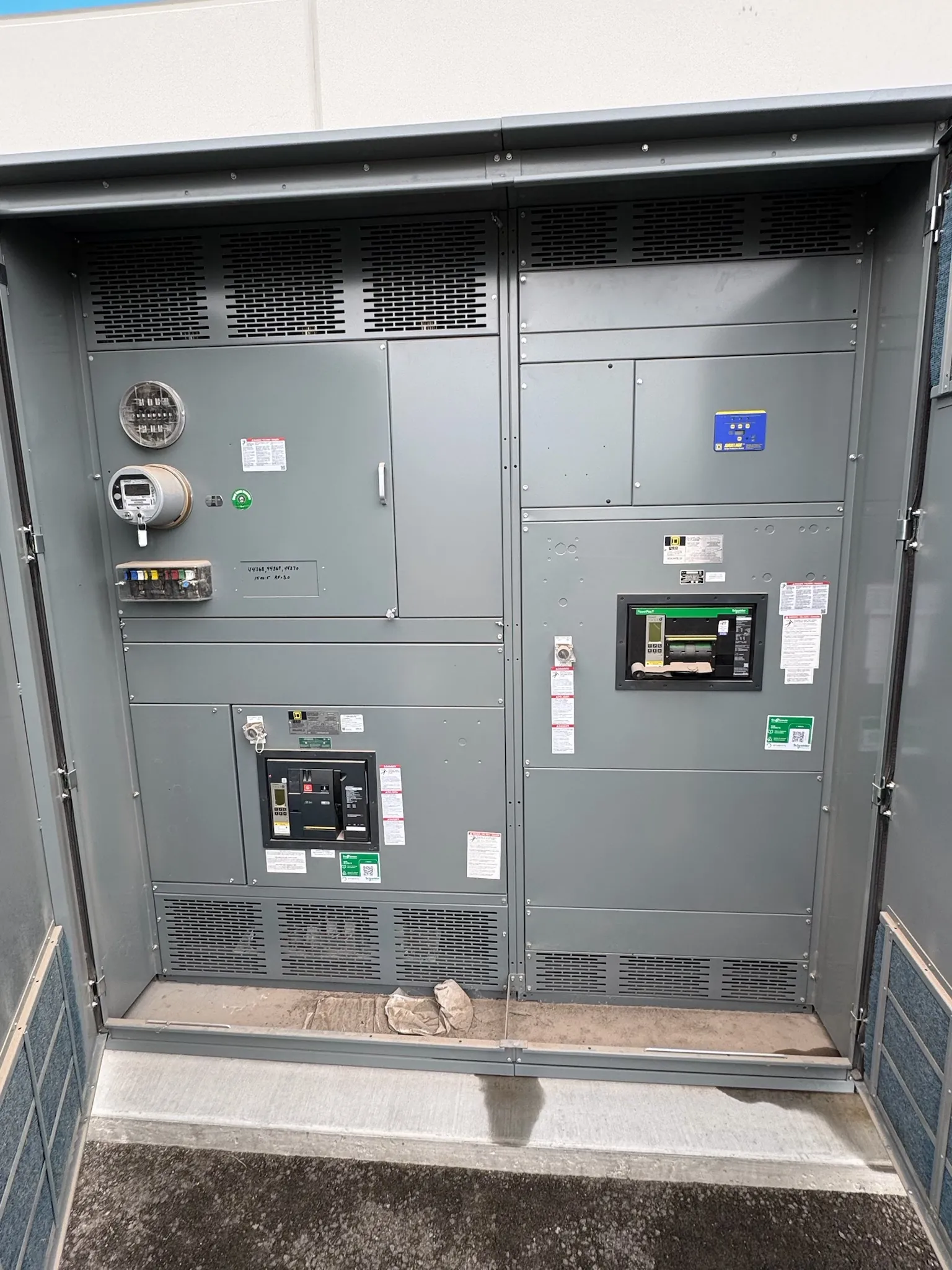
Low-Voltage Switchgear for Las Vegas Projects
Low-voltage power circuit breaker switchgear serves facilities that need a coordinated, engineered way to control and protect larger electrical distribution systems. For a Las Vegas project, the first design step is not selecting a breaker frame or lineup length: it is confirming the service characteristics and utility metering requirements that shape the main section. Available fault current, the intended system voltage, grounding arrangement, incoming conductors, metering location, and the utility’s service requirements all affect the equipment arrangement. These details should be established with the project’s electrical engineer and relevant utility before the main section is sized.
We manufacture new custom power-distribution equipment in the United States using all-American components. We can develop a low-voltage switchgear assembly around project documents and ship equipment nationwide, including to Nevada. Final configuration, ratings, applicable listing requirements, and delivery timing must be confirmed for the specific project; they cannot be inferred from a city or product description alone.
Choose a Breaker Arrangement for the Operating Strategy
Low-voltage power circuit breaker arrangements can differ in how breakers are mounted, connected, and accessed. Drawout construction may allow a breaker to be withdrawn from its connected position for inspection or maintenance, while fixed-mounted arrangements may suit a different space, maintenance, or project preference. A drawout design requires consideration of the breaker’s operating positions, cell construction, interlocks, and the procedures and equipment the facility will use. The choice is not simply a matter of convenience: it affects lineup dimensions, interfaces, maintenance planning, and potentially the cost and complexity of the assembly.
Designers should also consider how the main, tie, and feeder breakers relate to one another. A main-tie-main arrangement, for example, can support particular service-continuity strategies, but its usefulness depends on the one-line diagram, operating philosophy, source configuration, and protection scheme. It should not be selected by default. Where switching between sources is contemplated, control logic and interlocking requirements need to be clearly defined and reviewed by qualified project professionals.
Compare Bus Ratings with System Conditions
Bus ratings describe equipment capabilities under specified conditions; they are not the same as system voltage. The lineup’s bus and breaker ratings must be selected for the actual design, including continuous current needs, fault-duty requirements, temperature and enclosure considerations, and the equipment’s intended installation. A higher nominal bus rating does not by itself confirm adequate short-circuit performance, nor does a voltage designation establish that every component is suitable for the application.
For quotation and engineering review, provide the project one-line diagram and available fault-current information when available. Include the specified system voltage and frequency, grounding method, incoming source details, main-device requirements, feeder schedule, and any requested bus arrangement or future provisions. The engineer of record should verify that the selected ratings and protective devices fit the system and applicable project requirements.
Plan Coordination and Maintainability Together
Protective-device coordination is a system study, not a standalone switchgear feature. The engineer must evaluate upstream and downstream protective devices, available fault current, equipment withstand capability, and the facility’s operational priorities. Selective coordination or other performance objectives depend on the complete protection scheme and should be confirmed through project-specific engineering. Breaker trip-unit functions and settings must likewise be chosen and reviewed for the application rather than assumed from a generic equipment description.
Maintainability also depends on the room and the people responsible for the equipment. Review lineup access, working clearances, cable entry and bending space, breaker removal paths, ventilation, and provisions for future maintenance. Las Vegas sites can present different indoor environmental conditions, including dust exposure or elevated ambient temperatures in some locations. The project team should identify the actual installation environment and any enclosure or design requirements; no particular condition should be assumed based on the city alone.
Consider UL 1558 and Applicable Product Requirements
UL 1558 may be relevant to low-voltage metal-enclosed switchgear, depending on the product design and project requirements. It should not be treated as a blanket statement that a particular assembly is listed, or that every low-voltage distribution product falls within its scope. Confirm the required construction standard, listing expectations, labels, and documentation for the specific equipment and application. UL 891 applies to applicable low-voltage switchboards and is distinct from requirements for switchgear; the product category and project specification matter.
Before release, review drawings, device schedules, control and metering interfaces, cable connections, lineup dimensions, and project-specific requirements. A clear review helps resolve scope questions before manufacturing and supports coordination among the equipment supplier, electrical contractor, engineer, and utility where applicable.
Prepare a Las Vegas Switchgear Quotation
A useful request includes the latest one-line diagram, project specification, site and room information, service and metering requirements, feeder quantities, preferred breaker arrangements, control needs, and any required standards or documentation. Identify what is known and flag what remains subject to utility confirmation or engineering review. This allows the equipment configuration and quotation to reflect the actual project rather than an assumed service arrangement.
Our custom assemblies are manufactured in the United States and can be shipped nationwide. Lead time depends on the confirmed design, component selection, engineering review, and production requirements; it should be established during project discussions rather than presumed. For a Las Vegas installation, confirm receiving access, unloading arrangements, site schedule, and equipment-room constraints with the project team as part of delivery planning.