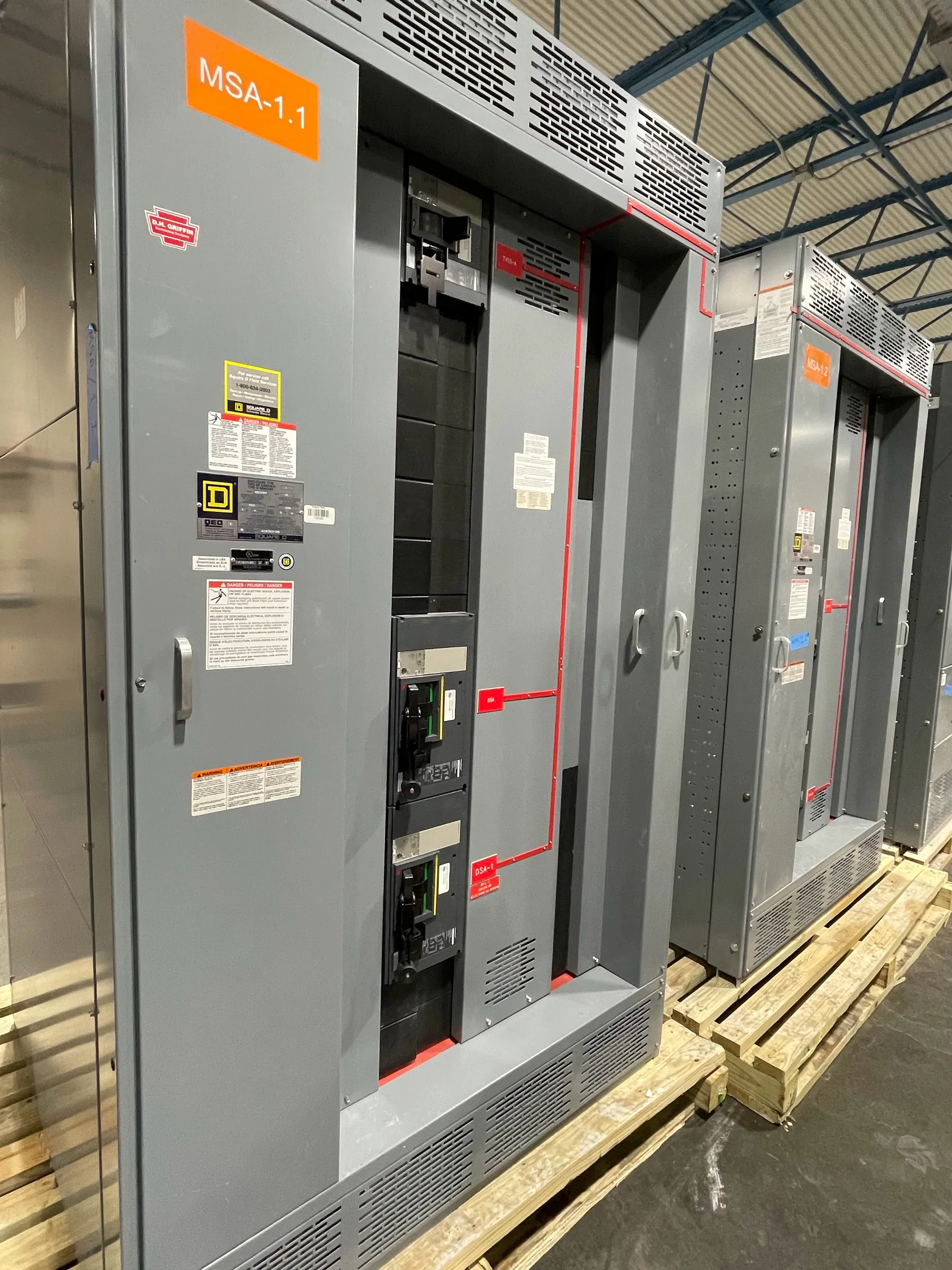
Low-Voltage Switchboards for Las Vegas Projects
Planning a low-voltage switchboard for a Las Vegas facility starts with the electrical service and the loads the equipment must serve—not simply with a preferred enclosure or main-breaker size. Service characteristics, distribution needs, available fault current, metering requirements and installation conditions all affect the configuration. Our company manufactures new custom switchboards in the United States using all-American components and ships nationwide, including to Nevada. Each proposed assembly is developed around the project information provided and requires engineering review before ratings and documentation can be confirmed.
Service and Feeder Arrangements — Low-Voltage Switchboards in Las Vegas, NV
The main section may be arranged for a service entrance or for distribution downstream of other equipment, depending on the project design. Feeder sections can accommodate the required outgoing circuits and their protective devices, but breaker count alone does not determine a workable layout. Feeder ratings, conductor entry and exit, cable space, termination provisions, and the intended sequence of sections need to be coordinated with the one-line diagram and installation plan.
For a Las Vegas project, confirm the service characteristics and utility metering requirements before sizing the main section. The utility’s metering arrangement and service rules can affect the location and configuration of metering provisions and the interface between utility and customer equipment. Requirements vary by project and utility; they should be established with the serving utility and project team rather than assumed from a general equipment description.
Bus Sizing and Available Fault Current — Low-Voltage Switchboards in Las Vegas, NV
Bus selection must reflect the design current, the switchboard configuration and the conditions identified by the project engineer. A nominal bus rating is not a substitute for confirming the service and feeder loads, temperature and installation requirements, or any project-specific design criteria. The main bus and feeder bus arrangements also need to suit the connected devices and the intended distribution scheme.
Available fault current at the proposed equipment location is a separate, essential input. It informs the required short-circuit ratings and coordination with upstream protective devices. A rating shown on one component does not automatically establish the rating of the complete assembly. Provide the available fault-current information, its point of reference and the upstream protection details for engineering review. If that information is not established, a qualified electrical engineer must determine it using the system data and site conditions before the switchboard design is finalized.
Where UL 891 May Apply — Low-Voltage Switchboards in Las Vegas, NV
UL 891 is a standard applicable to low-voltage switchboards; it should not be treated as a blanket standard for every type of switchgear or distribution product. Whether it applies to a particular proposed switchboard, and what listing documentation is required, depends on the product configuration and project scope. Do not assume a listing based on a product category or a component’s markings.
Project stakeholders should identify the required listing and documentation during specification and quotation review. The proposed assembly, ratings, options and documentation must be confirmed for the actual order. Requirements from the authority having jurisdiction, owner, engineer and utility may also affect acceptance. The project team should review applicable requirements and the submitted equipment documentation before procurement and installation.
Information Needed for a Useful Quotation — Low-Voltage Switchboards in Las Vegas, NV
A quotation is more useful when the request describes the complete application rather than only the desired main rating. Include the latest one-line diagram, service voltage and other service characteristics, main and feeder requirements, available fault current, upstream protective-device information, metering requirements and any specified listing documentation. Note the intended installation location, environmental conditions, cable-entry direction, space constraints and relevant project specifications as well.
These inputs help identify design questions early, such as whether feeder devices fit the intended section arrangement, whether access and cable termination space are adequate, and whether the specified ratings align with the system information. Missing or preliminary data should be identified as such; assumptions can change equipment selection and must be resolved before final engineering.
Delivery and Site Coordination in Las Vegas
Las Vegas facilities may have project-specific constraints involving indoor or outdoor placement, equipment-room access, electrical-room dimensions, cable routing and coordination with construction schedules. These details are not interchangeable across sites. The project team should confirm the delivery route, receiving arrangements, access limitations, placement plan and installation sequence with the relevant contractors before shipment. Shipping to Nevada is supported, but destination logistics and site readiness remain project-specific.
Manufacturing begins with review of the submitted requirements, followed by configuration and documentation coordination. Because lead time depends on the final design, component selection and order details, timing should be confirmed for the specific quotation rather than inferred from a general statement. Ratings, listing status, interfaces and final equipment details require confirmation by qualified engineering review against the project documents and site conditions.