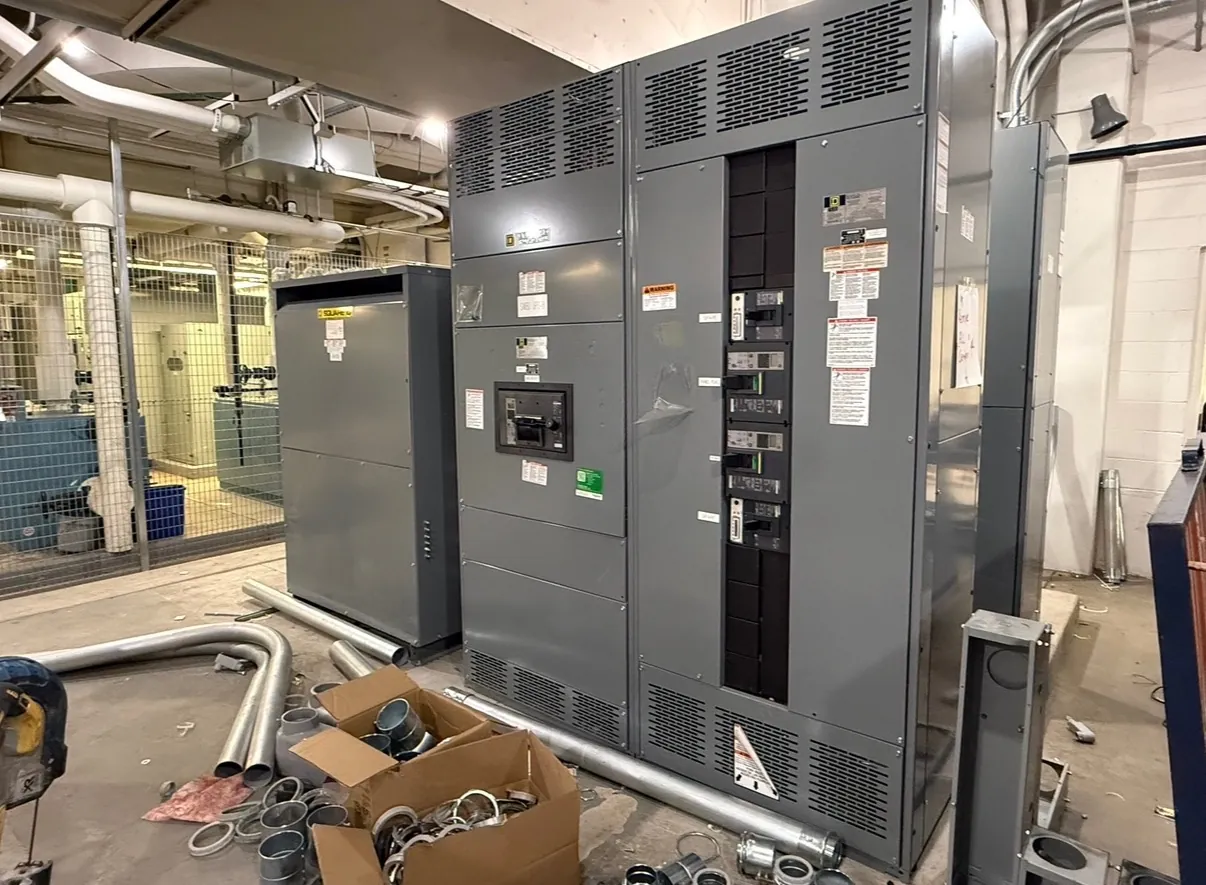
Automatic Transfer Switches for Las Vegas Facilities
An automatic transfer switch (ATS) connects a designated load to one of two power sources and changes the connection when its controls determine that a transfer is needed. For Las Vegas projects, the right arrangement depends on the facility’s service, standby source, load priorities and operating requirements—not just the switch’s ampere rating. New automatic transfer equipment is manufactured in the United States using all-American components and can be shipped to Nevada. Project-specific configuration and lead time should be confirmed during quotation.
Las Vegas facilities vary in occupancy, operating schedules, cooling demands and tolerance for interruption. A design for a commercial building, campus, industrial process or critical support system may call for different source arrangements and transfer behavior. The ATS serves only the loads assigned to it; it does not establish whether a generator or other alternate source can support those loads. The electrical engineer must review the complete system and site conditions before equipment is selected.
Transfer Transition and Source Sensing — Automatic Transfer Switches in Las Vegas, NV
Transfer equipment can use different transition methods. An open-transition switch disconnects one source before connecting the other, producing a brief interruption. Closed-transition equipment can overlap sources briefly where the system design and applicable utility requirements permit it. Delayed or in-phase transition options may be considered where load characteristics or the behavior of the alternate source make the transfer interval important. These methods are not interchangeable, and a particular option may not suit every source or load.
Source-sensing settings determine how the ATS responds to conditions such as loss or restoration of an acceptable source. The design team should establish which voltage and frequency conditions matter, how long a condition must persist before action, and whether retransfer should occur automatically or under a defined control strategy. Those decisions affect continuity and equipment coordination. The switch’s control functions must be reviewed alongside generator controls, protective devices, building systems and any supervisory interface; they should not be assumed from a product description alone.
Load Ratings, Withstand Ratings and System Conditions
ATS selection involves more than matching a nameplate current value. The continuous load rating must suit the connected load and the planned operating conditions. The equipment’s withstand and closing ratings address its ability to withstand or close into fault current under specified conditions; they must be evaluated with the available fault current and the upstream protective-device arrangement. A higher rating in one category does not by itself establish that the complete installation is suitable.
System voltage is distinct from a switch’s current and fault-related ratings. The quotation and engineering review need the project’s actual electrical characteristics, including phase, frequency, nominal system voltage, source configuration and grounding method. Load information should identify what the switch will serve, including significant motor, transformer or electronic loads where relevant. Confirming these details early helps avoid selecting equipment based on an incomplete description of the service.
Neutral Switching and Source Grounding
Whether the ATS switches the neutral depends on the grounding arrangement and how the normal and alternate sources are configured. A solid-neutral arrangement and a switched-neutral arrangement have different implications for grounding and fault-current paths. Generator grounding, transfer equipment, downstream distribution and the service configuration must be considered together; neutral switching should not be chosen simply as a default feature.
For a Las Vegas project, confirm service characteristics and utility metering requirements before sizing or arranging the main section. The utility’s service rules and the project’s metering configuration can influence the equipment interface, compartment layout and coordination with the ATS. Provide the available service information and any utility requirements for engineering review. Final decisions belong to qualified electrical professionals familiar with the installation and applicable requirements.
UL 1008 and Equipment Scope — Automatic Transfer Switches in Las Vegas, NV
UL 1008 applies to transfer-switch equipment where required by the product application, project specifications and applicable authority requirements. It is not a blanket qualification for every switchgear or distribution assembly, and a reference to the standard does not establish that a specific proposed unit is listed. The applicable product configuration, ratings, construction and required documentation must be confirmed for the actual project.
Transfer switches may be supplied as standalone equipment or integrated into a broader distribution arrangement, depending on the design. If a switchboard or other assembly is involved, its applicable standards and listing scope must be considered separately from the ATS. The project team should identify required standards, documentation and approval expectations before finalizing a specification.
Information for a Las Vegas ATS Quotation
A useful quotation package describes both the equipment and the installation it must serve. Include the normal and alternate source details, system voltage and grounding, load schedule, required transition method, neutral arrangement, controls or remote interfaces, available fault-current information, upstream protective devices, enclosure and installation conditions, and applicable project or utility requirements. Identify any required listing or specification language so it can be reviewed against the proposed configuration.
Las Vegas site conditions also affect practical coordination: equipment access, indoor or outdoor placement, available space, environmental exposure and the sequence for connecting the switch to other project systems should be established by the project team. Clear drawings and current service information help resolve interfaces before fabrication. Each assembly is made to the confirmed project requirements; ratings, listing scope, configuration and schedule remain subject to engineering review and confirmation.