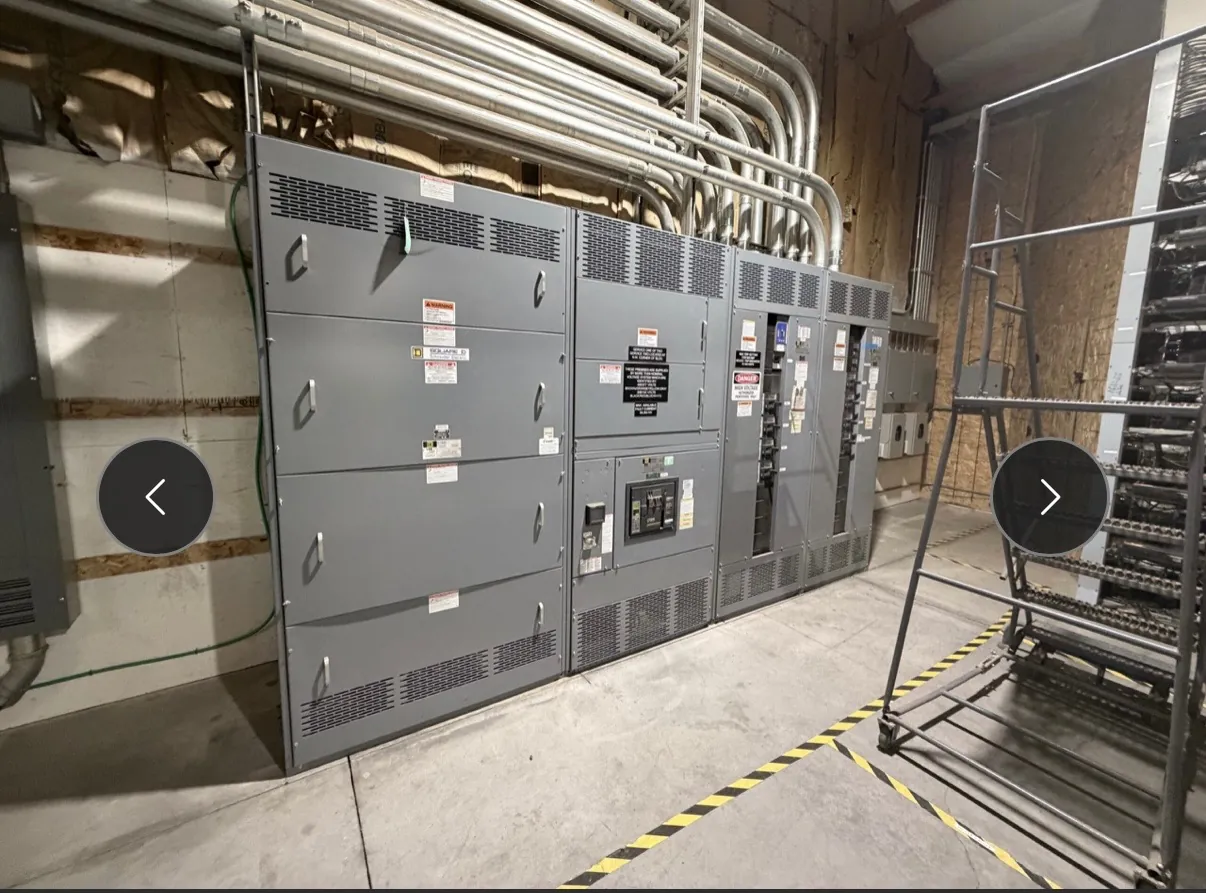
Metal-Enclosed Switchgear for Henderson Projects
Metal-enclosed switchgear is an assembly of switching or interrupting devices, bus, connections and protective barriers arranged within a metal enclosure. For a Henderson facility, its configuration should follow the electrical system design and the conditions at the installation site—not just a preferred product name. A useful first step is to document the connected load, the assumptions used to estimate demand, and planned expansion. Those inputs help engineers evaluate bus and feeder capacity alongside the service arrangement, available fault current and operating requirements.
We manufacture new custom power-distribution equipment in the United States using all-American components. Assemblies can be configured to project requirements and shipped to Henderson. Lead times depend on the approved design, component selection, engineering review and production schedule; the project team should confirm timing during quotation and submittal coordination.
Choose Switches, Fuses or Breakers Around the Application
Switch-and-fuse arrangements and circuit-breaker arrangements serve different protection and operating needs. A fused switch may be considered where the design calls for a switching device paired with specified overcurrent protection. A breaker configuration can offer different protection functions and control options, depending on the selected device and system requirements. Neither choice should be made from nominal voltage alone.
Selection requires coordination with upstream and downstream protective devices, including the intended response to faults and the equipment each device must protect. Engineers should review the system one-line diagram, load characteristics, source information, fault-current study and protection objectives. The final device ratings and settings require confirmation against the project design and actual installation conditions.
Understand Enclosure Barriers and Metal-Clad Construction
Metal-enclosed describes equipment housed in a metal enclosure, but it does not by itself establish a particular compartment arrangement or construction standard. The specified design should identify barriers between sections and components, access provisions, and the degree of separation required by the application. These details affect equipment layout, maintenance planning and how cables, bus and devices are arranged.
Metal-clad is a more specific construction term commonly associated with compartmentalized medium-voltage switchgear and defined separation features. It should not be treated as interchangeable with metal-enclosed. A project specification should name the required construction and applicable standard rather than rely on a broad label. The voltage class and product scope also matter; UL 891 applies to applicable low-voltage switchboards and should not be presented as a blanket standard for all switchgear.
Check Fault Duty, Grounding and System Interfaces
Fault duty is a system condition, not a synonym for voltage rating. The equipment’s interrupting and withstand capabilities must be appropriate for the available fault current and the protection scheme. That determination depends on the source, transformer and conductor information, system configuration, and protective-device coordination. The design team should provide the relevant study inputs and confirm ratings before release for manufacture.
Grounding arrangements require equal care. The drawings should define the equipment grounding path, grounding bus connections, neutral treatment where applicable, and interfaces to the facility grounding system. Cable entry locations, termination space, control wiring, metering and communications should also be coordinated with the connected equipment. Changes to any of these interfaces can affect enclosure layout and should be resolved during design review.
Plan Henderson Installation and Access Conditions
Henderson sites may have different indoor or outdoor locations, available working space, environmental exposure and delivery access. These are project-specific conditions to document, not assumptions to make from the city name. The installation team should confirm enclosure location, ambient and environmental requirements, cable approach, floor or foundation provisions, handling path and required service clearances with the responsible engineers and contractors.
Shipping nationwide supports projects in Nevada, but the receiving plan still needs coordination. Confirm delivery access, unloading responsibility, staging space and the sequence for moving equipment to its final location. Site constraints can influence enclosure dimensions, section arrangement and shipping configuration, so they belong in the design conversation early.
Prepare Complete Inputs for a Custom Quotation
A clear quotation package helps align the proposed assembly with the project rather than leaving critical choices open. Provide the latest one-line diagram, system voltage and frequency, source and transformer data, connected load, demand assumptions, planned expansion, available fault-current information and desired bus and feeder capacity. Include device preferences, metering and control needs, cable termination details, enclosure environment, access constraints and the applicable project specifications.
Ratings, listings, construction details, lead time and scope must be confirmed for the specific design. Qualified electrical engineers should review the system and site requirements, including coordination and fault duty, before equipment is finalized. With those inputs defined, a custom metal-enclosed assembly can be evaluated against the actual Henderson project rather than a generic equipment description.