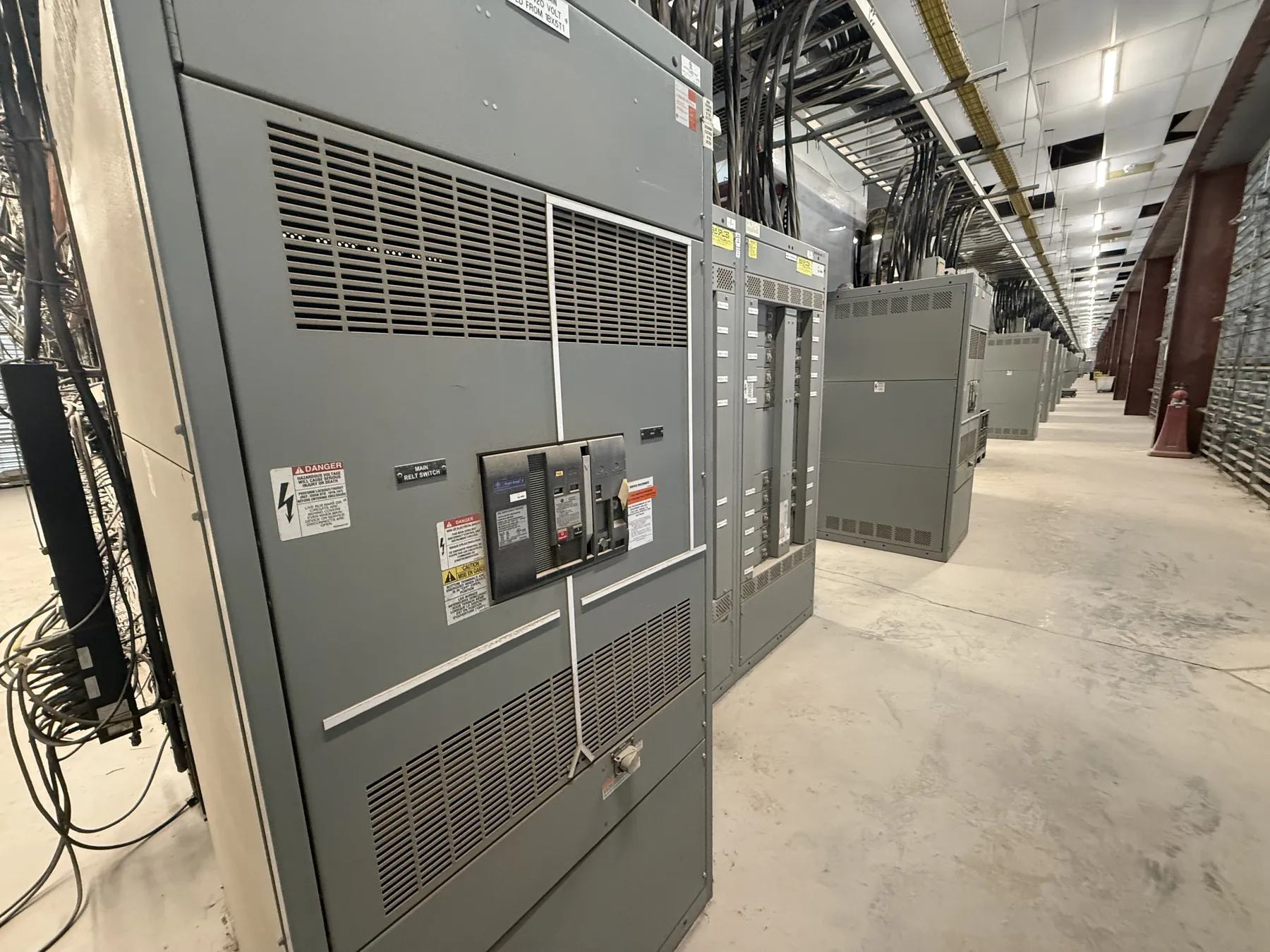
Planning Switchgear for a Henderson, Nevada Project
Distribution equipment for a Henderson facility should be specified from the electrical requirements of the project—not from a general description of the building or an assumed standard lineup. Start by documenting the connected load, expected demand, major equipment, and likely operating patterns. Separate existing loads from planned additions, and identify which loads may operate at the same time. These details help the design team evaluate bus and feeder capacity without treating every nameplate value as simultaneous demand or overlooking future needs.
Also describe the facility type and the equipment’s role in the distribution system. A switchboard serving a new commercial space, an industrial process, or an addition to an operating site can have different requirements for incoming service, outgoing circuits, metering, and coordination with upstream and downstream equipment. A U.S. manufacturer can use a defined project scope to develop a custom equipment proposal; final design decisions still depend on qualified engineering review and the site’s electrical documents.
Document Demand, Expansion, and Load Priorities
Prepare a load schedule that identifies equipment, voltage, phase, estimated or specified load, and any known starting or operating characteristics. Flag loads that are intermittent, seasonal, continuous, or expected to run together. Demand assumptions should be stated explicitly, including the basis for any diversity applied. If the project may add production equipment, tenant areas, charging infrastructure, or other substantial loads, describe that plan rather than relying on a vague allowance for “future capacity.”
Expansion can affect more than the main bus rating. It may influence spare feeder positions, enclosure layout, space for future protective devices, and the practical route for later connections. Reserving physical provisions is not the same as establishing usable electrical capacity, so distinguish between planned circuit spaces and capacity supported by the system study. Ask the project engineer to confirm both against the expected load and the available service.
Choose Bus and Feeder Capacity from Project Data
Bus and feeder choices should follow the documented load, demand assumptions, service characteristics, and applicable design requirements. A larger rating is not automatically the right answer: it can affect equipment dimensions, connection arrangements, cost, and coordination with upstream protection. A rating also does not, by itself, identify the system voltage. Confirm voltage, phase, frequency, neutral requirements, and the applicable continuous-current and short-circuit ratings separately.
For each feeder, provide the intended load or served equipment, required protective-device characteristics where known, and any special connection or metering needs. The design team must evaluate conductor and protective-device coordination, available fault current, and other system conditions. These selections cannot be resolved from a city name or a load total alone; they require qualified engineering and review of the project’s one-line diagram and site information.
Coordinate Interfaces and Henderson Facility Conditions
Before quotation, identify the incoming service arrangement, upstream equipment, grounding approach, and downstream loads. Share the latest one-line diagram and note who is responsible for service equipment, transformers, metering, protective devices, and field connections. Clarify whether the switchboard will connect to existing equipment or form part of a new distribution system. Interface assumptions left unstated can lead to revisions even when the equipment ratings appear suitable.
Henderson projects should also account for the actual installation environment and delivery route. Confirm indoor or outdoor placement, available electrical-room dimensions, access openings, floor and handling constraints, ventilation, ambient conditions, and exposure to dust or moisture. Nevada heat and site conditions may affect enclosure and installation considerations, but the appropriate design depends on the specific location and equipment arrangement. Do not assume a standard enclosure or room condition is adequate without project review.
Prepare Quotation Inputs and Review Equipment Details
A useful quotation package includes the load schedule, one-line diagram, service data, requested ratings, feeder schedule, preferred lineup dimensions, enclosure requirements, and desired metering or control features. Include the project schedule, delivery location, receiving limitations, and any required submittal information. Identify open items clearly, so the manufacturer and project team can distinguish confirmed requirements from assumptions that need engineering resolution.
Review the proposed drawings and equipment schedule for incoming and outgoing arrangements, device functions, labels, dimensions, and interfaces with adjacent gear. UL 891 applies to applicable low-voltage switchboards; it should not be treated as a blanket standard for every switchgear assembly or for medium- or high-voltage equipment. Confirm the applicable construction standard, listing status, ratings, and project-specific requirements for the exact proposed assembly. Any required listing or approval must be verified rather than assumed.
Plan U.S. Manufacturing and Delivery to Henderson
Custom distribution equipment built in the United States can be supplied for projects in Henderson and shipped nationwide. Domestic components and manufacturing support the stated short-lead-time approach, but a specific production or delivery date cannot be determined without the final scope, design review, component requirements, and schedule confirmation. Coordinate shipping and receiving early: the site team should confirm unloading capability, delivery access, storage conditions, and when the electrical room will be ready.
Keep the approved equipment drawings, final ratings, and installation responsibilities aligned among the owner, electrical contractor, engineer, and manufacturer. A complete project record helps ensure that the manufactured assembly reflects the reviewed requirements and that field interfaces are addressed before installation. The result is a project-specific path from documented Henderson loads to appropriately specified, U.S.-built distribution equipment.